


A first filler appointment should be about informed choices, not committing to a particular look. If you’re wondering what to expect first time getting fillers, it’s natural to have questions about the consultation, the injections, and whether the result will still feel like you.
You don’t need to arrive with a treatment plan already chosen. A thoughtful consultation gives you space to explain your goals, share concerns, and learn whether filler may be appropriate for you. Recommendations should reflect your features and priorities, not an online trend or a one-size-fits-all approach.
This guide walks you through what may happen before, during, and after treatment, including how a provider assesses your goals, discusses options, and reviews possible side effects and aftercare. You’ll also find questions to ask so you can make a considered decision and leave with realistic expectations. At Reviive Lounge Aesthetics in Chino, an education-first consultation is an opportunity to explore your options without pressure.
Key Takeaways
- Learn what to expect first time getting fillers, from discussing your goals to deciding whether treatment may be appropriate.
- Understand why an initial assessment may lead to a treatment plan rather than injections on the same visit.
- Compare filler options by their intended purpose, and ask how each recommendation relates to your goals and health history.
- Prepare for your visit with relevant health information, a list of medications and allergies, and questions. Ask the clinic directly for pre-appointment and aftercare instructions.
- Explore Reviive Lounge Aesthetics’ filler offerings and personalized treatment planning at its Chino practice.
What to Expect the First Time You Get Fillers: Start With a Consultation
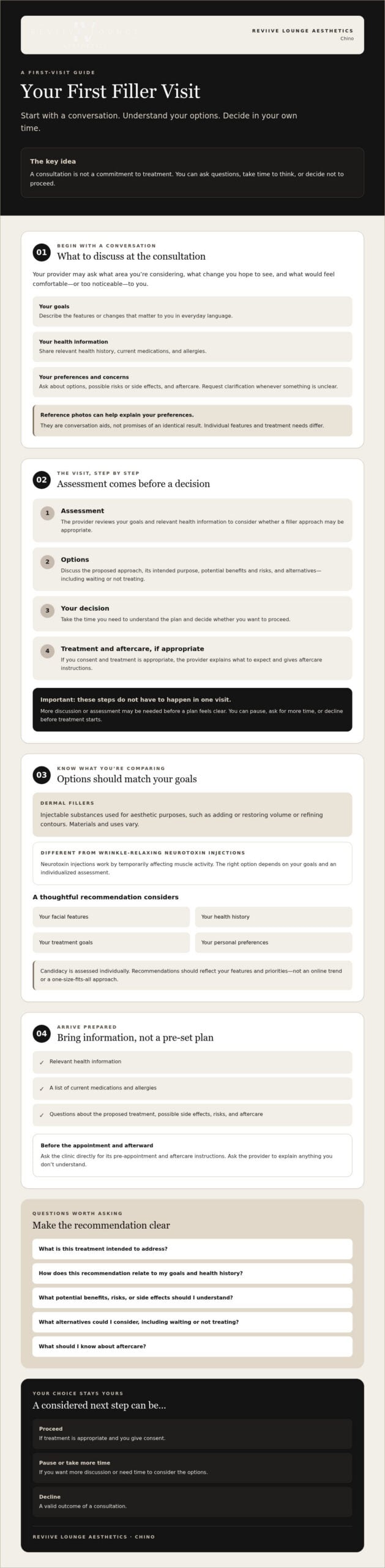
Your first filler consultation is a conversation, not a commitment to treatment. If you’re wondering what to expect first time getting fillers, start by knowing you can ask questions, consider the options, and decide to wait without proceeding that day.
Dermal fillers are injectable substances used for aesthetic purposes, such as adding or restoring volume or refining contours. Their materials and uses vary. This overview of what fillers are made of provides general background. Fillers are different from wrinkle-relaxing neurotoxin injections, which work by temporarily affecting muscle activity. The right option depends on your goals and an individualized assessment.
Candidacy must be assessed individually. Facial features, health history, treatment goals, and personal preferences all affect whether a filler approach may be appropriate. A recommendation shouldn’t be based on a trend or a single feature in isolation.
What happens during a first filler consultation?
Expect to discuss the area you’re considering, the change you hope to see, and what would feel comfortable or too noticeable to you. The provider may review relevant health history, current medications, and other information needed to understand your circumstances and discuss options.
Bring questions about what the proposed treatment is intended to address, what risks or side effects to consider, and what aftercare may involve. Ask for clarification if something is unclear. You can take time to think or decide not to proceed. Those are both valid outcomes of a consultation.
How to describe the result you have in mind
Focus on the features or changes that matter to you rather than relying on labels from social media. For example, you might explain that you’d like your lips to look more balanced or that you’re concerned about a particular area appearing hollow. Specific, everyday language can make the conversation more useful.
Reference images can help communicate your preferences, but they’re conversation aids, not promises of an identical result. People have different facial structures and treatment needs, so a provider may suggest another approach, recommend discussing a different option, or advise against treatment. A thoughtful plan should reflect your individual assessment, not simply reproduce a look from a photograph.
At Reviive Lounge Aesthetics in Chino, an education-first consultation is an opportunity to discuss goals and options before making a decision. Use the visit to clarify what matters to you and determine a comfortable next step, including taking more time to decide.
How a Filler Appointment Is Planned and What Treatment Day May Involve
Knowing what to expect first time getting fillers means understanding the decision process, not assuming injections will happen as soon as you arrive. A careful appointment moves from assessment to a discussion of options, then to an informed decision. Treatment may be considered if appropriate, followed by aftercare guidance.
- Assessment: The provider reviews your goals and relevant health information.
- Options: You discuss a proposed approach, its potential benefits and risks, and alternatives, including waiting or not treating.
- Decision: You have the information and time needed to decide whether you want to proceed.
- Treatment and aftercare: If treatment is appropriate and you consent, the provider explains what to expect and gives you aftercare instructions.
Assessment and treatment don’t have to happen at the same visit. More discussion or assessment may be needed before a plan feels clear. A provider should explain potential benefits and risks in language you understand, answer your questions, and obtain your consent before proceeding. The U.S. Food and Drug Administration’s Dermal filler risks and safety information can also help you prepare questions about uses and safety.
What may happen before filler is administered?
Before treatment begins, confirm that the proposed plan matches the goals you discussed, including the area to be treated and what the treatment is intended to address. The provider may review consent and check whether you have remaining questions. If anything feels unclear, ask for an explanation. You can pause, request more time, or decline before treatment starts.
What should you expect during and after treatment?
Sensations during an injection vary, and no one can promise a painless experience. Ask the provider what sensations may occur and how you can communicate if you feel uncomfortable during the process.
Responses after treatment can vary from person to person. Don’t rely on a fixed recovery timeline. Ask what changes may be expected and what symptoms warrant contacting the clinic or seeking medical attention. Follow the aftercare instructions provided for your treatment, and contact your provider if you notice a concerning change or aren’t sure how to interpret a symptom.
For a low-pressure next step, you can learn about Reviive Lounge Aesthetics and consider whether a conversation about your goals would be useful.
Dermal Filler Options, Risks, and Questions First-Timers Should Compare
Filler options aren’t interchangeable, and a treatment that suits one person may not suit another. Reviive Lounge Aesthetics offers lip filler, dermal filler, and Sculptra. These names describe available treatments, but they don’t determine what’s appropriate for your concern. Ask a clinician to explain how each option differs and whether it aligns with your goals.
Injectable fillers can differ in their materials and properties. For background on how dermal fillers work, review this scientific overview, then discuss any questions with your provider. A useful comparison focuses on the intended purpose of a proposed treatment, its potential benefits and risks, and whether another approach or no treatment may be preferable.
Filler choice depends on your treatment goal and an individual assessment, not a universal ranking of products. That’s why a popular treatment or a friend’s experience can’t tell you what will be suitable for you.
How do filler types differ from wrinkle-relaxing injections?
Dermal fillers and neurotoxin injections are distinct categories of injectable treatment. They aren’t automatically alternatives for the same concern. Ask which category is being proposed and what it’s intended to address. If you’re comparing categories, Reviive’s Botox injection information may offer additional context.
Which questions help you evaluate your options?
Use your consultation to understand the reasoning behind a recommendation rather than simply selecting a treatment name. Consider asking:
- What concern is this option intended to address, and why do you recommend it for my goal?
- How does it differ from the other options you’re discussing, including lip filler, dermal filler, or Sculptra?
- What potential benefits, risks, and alternatives should I consider?
- What aftercare should I follow, and what changes should prompt me to contact you?
You don’t need to decide until your questions are answered. If you want more background before your visit, read the dermal fillers clinical guide, then use the consultation to clarify how general information applies to your circumstances. Understanding what to expect first time getting fillers includes knowing that a provider may recommend a different approach or advise against treatment after assessing your needs.
How to Prepare for Your First Filler Visit and Follow Aftercare Guidance
A little preparation can make it easier to use your appointment time well. If you’re researching what to expect first time getting fillers, focus on bringing accurate information and asking questions, not following a universal online checklist. Pre-appointment guidance can vary, so ask the clinic what, if anything, you should do before your visit.
What should you ask before the appointment?
Prepare a short list to refer to during the conversation. Share relevant details openly so the treating provider can assess your circumstances and explain options in context.
- Your goals: Note the area you’re considering and what you hope to change or enhance.
- Your health information: Bring relevant health history, allergies, and a current list of medications and supplements.
- Your questions: Ask who will assess you and perform treatment, and what relevant qualifications they have.
- Your care plan: Ask about potential risks and alternatives, what aftercare involves, and how to raise follow-up questions or concerns.
Don’t stop or change a medication based on general internet advice. If you have questions about how your medications or health history relate to treatment, discuss them with the treating provider. Ask the clinic directly for preparation instructions rather than assuming general recommendations apply to you.
What should you do if you have concerns afterward?
Aftercare guidance should come from the provider who understands your treatment and circumstances. Follow the specific instructions you’re given, and ask for clarification if a direction isn’t clear. Generic advice may not fit every person or treatment plan, so don’t substitute online rules for your provider’s guidance.
If something feels unexpected or concerning, contact your provider for direction rather than trying to diagnose the cause yourself. Ask in advance how to get in touch with questions and what symptoms require prompt attention. For urgent or severe symptoms, seek appropriate emergency medical care.
Being prepared also means knowing what support and guidance to expect after your visit. If you’re considering a consultation, you can learn more about Reviive Lounge Aesthetics and explore whether a conversation about your goals feels like a useful next step.
Choosing a Personalized First Filler Experience at Reviive Lounge in Chino
For a first-time visit, the most useful next step is a conversation centered on your goals, not a commitment to a particular treatment. Reviive Lounge Aesthetics is located in Chino, California, and offers lip filler, dermal filler, and Sculptra. A personalized discussion can help you understand how these offerings differ and whether any option may be appropriate for your individual needs.
Searching for what to expect first time getting fillers can bring up strong opinions and trend-led recommendations. Your facial features, preferences, and individual assessment matter more than a popular label or someone else’s experience. Use the consultation to clarify what you hope to address and what a provider recommends, including whether another approach or no treatment makes more sense.
What a personalized plan should clarify
A considered plan should connect your stated goal with the provider’s assessment and explain why a particular option is being discussed. Ask what it is intended to address, what potential risks and alternatives you should understand, and what factors might make treatment unsuitable. You should have enough information to decide at your own pace, without pressure to proceed or expectations of a specific appearance.
How to take the next step in Chino
If you’re considering Reviive Lounge, use the first conversation to ask about candidacy, available options, and current availability for a consultation. You can also confirm what information to bring and how to raise questions before deciding. The practice’s education-first approach supports an informed discussion, but it doesn’t mean every treatment is right for every person.
It’s reasonable to leave with questions answered and a clearer sense of your options, even if you decide to wait. If you’d like to discuss your goals with Reviive Lounge Aesthetics, schedule a consultation at Reviive Lounge and use that conversation to explore a suitable next step.
Take Your Next Step With Confidence
Understanding what to expect first time getting fillers can make the process feel more manageable. Treat the initial consultation as a chance to discuss your goals and questions, not as a commitment to treatment. Recommendations should reflect your individual assessment, preferences, and health history.
Before deciding, make sure you understand the options being discussed, their potential risks and alternatives, and the provider’s aftercare guidance. It’s also reasonable to take time to think or decide that treatment isn’t right for you.
Reviive Lounge Aesthetics in Chino, California, offers education-first consultations and personalized treatment planning. Whether you’re researching fillers in Chino or nearby Norco, Corona, Chino Hills, Rancho Cucamonga, Ontario, Eastvale, Pomona, La Verne, Upland, or Fontana, begin with a conversation about your goals. If you’re ready to explore whether lip filler, dermal filler, or Sculptra may fit your needs, schedule a consultation at Reviive Lounge to discuss your goals and treatment options.
You deserve clear information and space to make a decision that feels right for you.
Frequently Asked Questions
What happens at your first dermal filler appointment?
A first dermal filler appointment commonly starts with a conversation about your goals, relevant health history, and questions. A provider assesses whether an option may be appropriate and explains potential benefits, risks, and alternatives. Treatment may be discussed or performed only if it’s appropriate and you choose to proceed. If you’re wondering what to expect first time getting fillers, know that the process can vary. Ask the clinic what to expect and follow its instructions.
Does getting fillers for the first time hurt?
Sensations vary by person, treatment area, and individual circumstances, so no one can promise a painless experience. Before deciding, ask the provider what sensations may occur and what comfort considerations are relevant to the treatment being discussed. Share any concerns during the consultation, and ask for clarification before proceeding. You can take time to consider the information or pause the discussion if you’re not comfortable moving forward.
How long does it take to recover from fillers?
There isn’t one recovery timeline that applies to everyone, and exact timing shouldn’t be promised. Your provider can explain what responses may occur with the option being considered and what aftercare guidance applies to you. Ask which changes should prompt you to contact the clinic and whom to reach with questions. Follow your provider’s specific instructions rather than relying on a generic online timeline or someone else’s experience.
Can I get filler at my first consultation?
Not necessarily. A consultation doesn’t automatically mean treatment will happen that day. The provider may need to assess your goals, health history, and candidacy before discussing options and risks. You can also take time to decide. Ask the clinic whether consultation and treatment may happen during one visit, and don’t feel obliged to proceed before your questions are answered and you’re comfortable with the plan.
How do I know which type of filler is right for me?
The appropriate option depends on your goals, facial assessment, health history, and provider recommendation. Reviive Lounge Aesthetics in Chino lists lip filler, dermal filler, and Sculptra among its aesthetic injectables. These aren’t interchangeable choices. Ask what the recommended option is intended to address, why it may fit your goal, what alternatives are available, and what potential risks and aftercare you should understand before deciding.
What should I avoid before getting fillers?
Preparation instructions depend on your circumstances and the treatment being considered, so ask the clinic what, if anything, you should do before your visit. Share relevant health history, allergies, and current medications with the provider. Don’t stop or change a prescribed medication based on general online advice. Discuss medication-related questions with an appropriate medical professional so you can receive guidance that takes your situation into account.
Are dermal fillers suitable for everyone?
No. A filler shouldn’t be assumed suitable for every person. Candidacy depends on an individualized assessment, relevant health history, your goals, and the provider’s clinical judgment. A consultation can help clarify whether a particular option may be appropriate or whether another approach, or no treatment, is preferable. Ask about potential risks and alternatives, and make your decision after you understand the information provided and have had a chance to ask questions.