


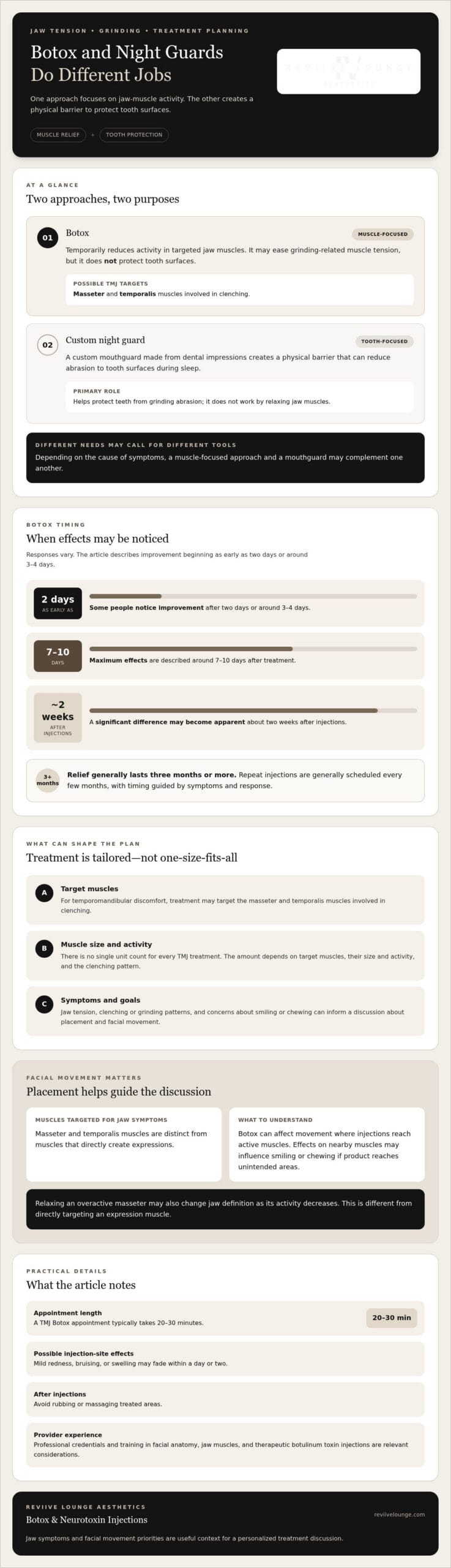
A night guard and Botox aren’t interchangeable: a guard helps protect teeth from grinding, while Botox can relax and weaken jaw muscles to reduce grinding. With Botox for TMJ in Chino Hills, some people notice symptom improvement in 3-4 days; maximum effects occur 7-10 days after treatment, and a significant difference may become apparent about two weeks after receiving injections. Relief generally lasts three months or more.
It’s reasonable to weigh tooth protection against muscle relief, and to wonder whether relaxing the jaw could affect your facial expression. This guide explains how Botox compares with a night guard, when relief may begin, how long it may last, and what to understand about possible facial effects. You’ll also learn how the approach is tailored to the symptoms being treated.
Key Takeaways
- Learn which jaw-related symptoms may be connected to muscle tension and how Botox can address muscle activity.
- See why the muscles targeted and treatment approach matter when considering possible changes to facial movement.
- Understand how symptom patterns and treatment goals can shape a discussion about Botox and facial effects.
- Reviive Lounge Aesthetics offers Botox & Neurotoxin Injections for readers exploring a personalized next step.
Onset and duration of symptom relief
Jaw pain, headaches, earaches, facial swelling, and difficulty chewing can accompany temporomandibular disorders. Teeth grinding, stress, injury, arthritis, and bite issues are among their possible causes. A dental examination of the jaw and joints can help identify the problem and guide care.
Botulinum toxin works by blocking acetylcholine signals at the neuromuscular junction, temporarily reducing activity in targeted muscles. Some patients notice improvement after two days or 3-4 days; maximum effects occur 7-10 days after treatment, and a significant difference may become apparent about two weeks after receiving injections. Relief generally lasts three months or more.
For people considering Botox for TMJ in Chino Hills, the key distinction is that relaxing jaw muscles may ease grinding-related tension, but it doesn’t protect tooth surfaces. A custom mouthguard made from dental impressions can reduce abrasion during sleep. Depending on the cause of symptoms, these approaches may complement one another.
To assess a Chino Hills provider, read reviews for specific details about communication, treatment planning, and follow-up. Review the provider’s listed credentials and experience with facial anatomy and therapeutic injections, then check published appointment options or call the practice to learn consultation availability.
The Chino Hills medical weight-loss page covers a separate wellness service; it isn’t a guide to jaw-pain treatment.
Whether Botox affects facial expression
Botox can affect movement where injections reach active muscles, so placement matters. For temporomandibular discomfort, treatment may target the masseter and temporalis muscles involved in clenching. These differ from the muscles that directly create expressions, but effects on nearby muscles can influence smiling or chewing if the product reaches unintended areas.
At a consultation, describe your clenching or grinding pattern, jaw tension, and any changes in smiling or chewing. The provider can assess jaw-muscle activity and discuss injection placement with both your symptoms and facial movement in mind. Relaxing an overactive masseter may also change jaw definition as its activity decreases, which is different from directly targeting an expression muscle.
Choose a provider with appropriate professional credentials and training in facial anatomy, jaw muscles, and therapeutic botulinum toxin injections. Experience assessing jaw symptoms can help inform placement around the jaw while taking facial function into account.
There is no single unit count for every TMJ disorder treatment. The amount depends on the target muscles, their size and activity, and the clenching pattern; repeat injections are generally scheduled every few months. A TMJ Botox appointment typically takes 20-30 minutes. Mild redness, bruising, or swelling at injection sites may fade within a day or two; avoid rubbing or massaging treated areas afterward.
For a clearer view of injection planning and facial treatment goals, explore Botox and neurotoxin treatment information before discussing your jaw symptoms and movement priorities at a consultation.
Reviive Lounge Aesthetics: Botox & Neurotoxin Injections
Reviive Lounge Aesthetics offers Botox & Neurotoxin Injections for people exploring muscle-relaxing treatment as part of their jaw-symptom plan. A consultation can help you discuss your symptoms, treatment goals, and concerns about facial movement, then consider whether this approach fits your needs.
Bring useful details to the conversation, such as when jaw discomfort occurs, whether you grind or clench your teeth, and which movements feel affected. This context can help focus the discussion on your priorities and distinguish therapeutic goals from cosmetic ones.
To discuss your goals and treatment options, schedule a consultation with Reviive Lounge Aesthetics in Chino.
Take the Next Step Toward a Thoughtful Plan
Before a consultation, note when jaw discomfort appears, which movements feel limited, and what matters most to you, including preserving natural facial expression. These details can make a discussion about Botox for TMJ in Chino Hills more focused and ensure your goals are considered. If symptoms affect eating, sleep, or daily activities, mention those examples too.
Reviive Lounge Aesthetics offers Botox & Neurotoxin Injections, along with Dermal Fillers and Medical Weight Loss Programs. If you’re ready to discuss your aesthetic goals and questions, contact Reviive Lounge Aesthetics. A considered next step can help you feel informed and confident about the care you choose.
Frequently Asked Questions
How is Botox different from a night guard for grinding?
A night guard creates a physical barrier that helps protect teeth from grinding abrasion. Botox acts on jaw-muscle activity instead, relaxing muscles involved in clenching. The approaches serve different purposes: a guard protects tooth surfaces, while muscle-focused treatment aims to reduce clenching activity. Depending on your symptoms and tooth wear, a dental professional may discuss a guard, while an individualized medical consultation can address whether injections are an option.
How long does therapeutic Botox last?
Relief from therapeutic Botox generally lasts three months or more. Some patients experience longer-lasting effects after subsequent treatments. Track when clenching, morning jaw soreness, or headaches return, and share that pattern during follow-up. Repeat treatments are commonly considered every few months, with the timing guided by symptom changes and treatment response.
Is Botox for teeth grinding safe?
Botox may relax jaw muscles, but it isn’t a universal solution for every cause of teeth grinding. Assessment of symptoms and jaw function helps guide treatment planning. Mild bruising or swelling may occur after injections. Avoid rubbing or massaging treated sites, since that could move the product into unwanted areas.
Should I Have TMJ Treatment?
Seek an evaluation if jaw pain, restricted opening, locking, or related discomfort interferes with daily activities. A dental examination of the jaw and joints can help identify a temporomandibular disorder and guide care. Causes may include grinding, stress, injury, or arthritis, so treatment depends on the underlying cause and may range from nonsurgical approaches to surgery.