


Telehealth can be a way to seek a semaglutide prescription in California, but a medical evaluation comes first, and a prescription isn’t automatic. To understand how to get prescribed semaglutide in California, know that a California-licensed clinician reviews your health information and determines whether treatment is appropriate. Coverage is a separate question: Medi-Cal removed coverage for Wegovy, Zepbound, and Saxenda for weight-loss use for members aged 21 and older effective January 1, 2026.
It’s understandable to want clear answers before starting a medication, especially when eligibility, insurance, and out-of-pocket costs can all affect the decision. This guide explains how a telehealth evaluation works, which licensed professionals may prescribe GLP-1 medications, and what factors influence coverage and medication costs. You’ll also learn what to consider when discussing treatment, so you can approach the next step with a clearer understanding of the process.
Key Takeaways
- Learn what health and treatment details an online clinician may review before deciding whether semaglutide is appropriate.
- Understand how California’s prescribing rules apply to nurse practitioners and telehealth evaluations.
- See why coverage can vary by plan, medication, and treatment purpose, and what to examine in your benefits.
- Recognize the health history and personal circumstances that can shape a provider’s safety assessment.
- Compare the factors that influence medication costs and understand why compounded and brand-name options differ.
How does the online intake work for California residents?
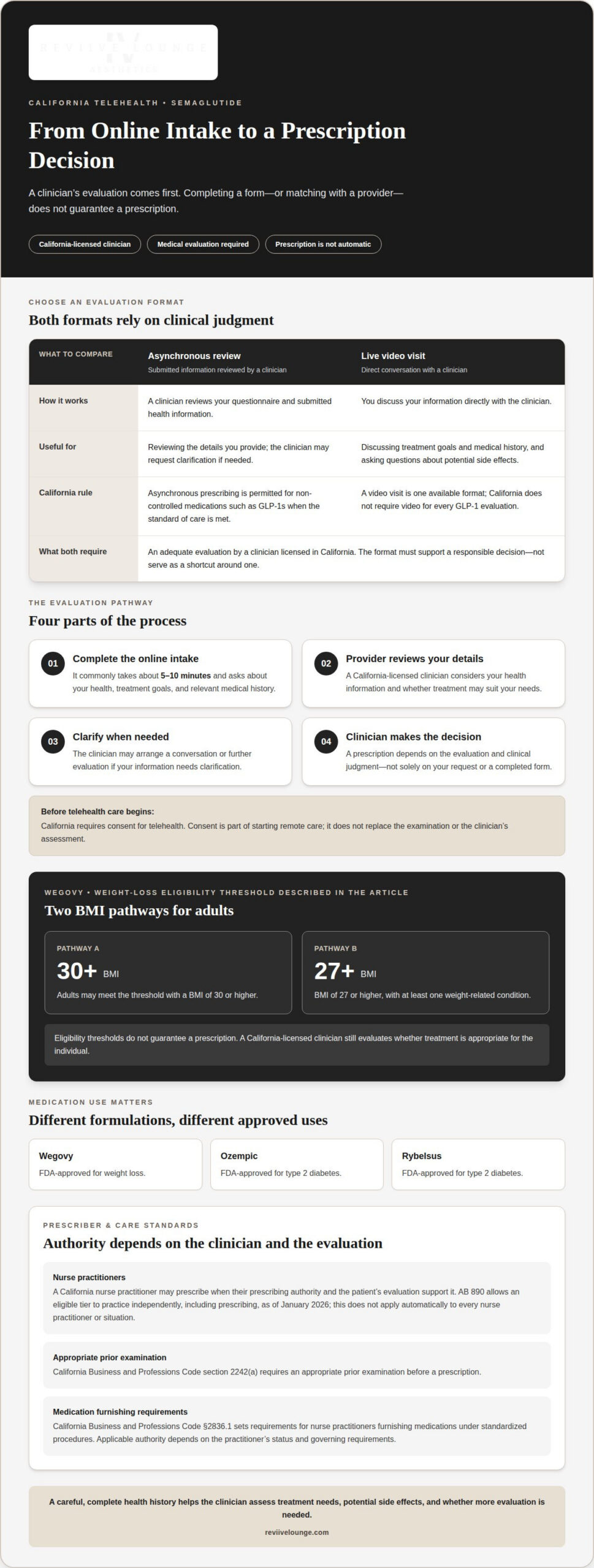
California residents can start with an online intake, followed by a review from a licensed clinician. The evaluation may involve a questionnaire, an asynchronous review, or a video visit.
Online Assessment and Provider Matching
An online intake commonly takes about 5-10 minutes and gathers information about your health, treatment goals, and relevant medical history. Answering carefully helps the clinician understand your circumstances, rather than treating the request as a medication order.
Some services match patients with a California-licensed clinician after reviewing their intake. Others let patients choose a visit type before a clinician evaluates their information. Matching with a clinician or completing a form is not the same as receiving a prescription.
Clinician Review and Prescribing Eligibility
A legitimate online GLP-1 service requires a medical evaluation before prescribing and uses clinicians licensed in the patient’s state. A California clinician reviews the intake and considers whether treatment suits the patient’s health needs. California permits asynchronous prescribing for non-controlled medications such as GLP-1s when the standard of care is met.
FDA-approved uses differ by formulation: Wegovy is approved for weight loss, while Ozempic and Rybelsus are approved for type 2 diabetes. Adults may meet Wegovy’s weight-loss eligibility threshold with a BMI of 30 or higher, or a BMI of 27 or higher with at least one weight-related condition.
Online Visits and Video Requirements
An online evaluation may use secure messages, a questionnaire reviewed by a clinician, or a live video visit. California requires consent before telehealth care begins. A video appointment allows direct discussion of treatment goals and medical history, while an asynchronous review relies on the information submitted.
The intake format does not replace clinical judgment. If the information needs clarification, the clinician may arrange a conversation before deciding on treatment. Provide complete information about current medications and health concerns so the clinician can consider these details during the evaluation.
Patients may seek semaglutide through an online medical service that evaluates them for treatment, including brand-name options such as Wegovy or Ozempic when appropriate. The medication’s approved use matters: Ozempic and Rybelsus are approved for type 2 diabetes, while Wegovy is approved for weight loss. Lifestyle goals and medical history also inform the discussion.
To identify a legitimate service, look for a medical evaluation by a clinician licensed in California. A service that offers medication without clinician review skips an essential step. Prescribing should follow an assessment, not rely only on a patient’s request or a completed intake form.
Can a nurse practitioner prescribe semaglutide or tirzepatide through telehealth in California?
A California nurse practitioner may prescribe these medications when their prescribing authority and the patient’s evaluation support it. The process must meet California’s requirements for examination, consent, and standard of care.
Telehealth Evaluation and Prescription Eligibility
A telehealth evaluation can support prescribing in California when the clinician meets the standard of care. An online form alone does not show that a prescription is appropriate. The clinician must assess the patient’s health history and treatment needs.
The assessment may cover current medications, relevant conditions, prior treatment, and potential side effects. The clinician then decides whether semaglutide or tirzepatide is appropriate and whether further discussion or evaluation is needed.
Examination and Consent Requirements
According to the California Legislature, California Business and Professions Code section 2242(a) requires an appropriate prior examination before a prescription. For telehealth, the examination must support a responsible clinical decision, rather than simply record a request for medication.
California Business and Professions Code section 2290.5(b) requires telehealth consent before care begins by telehealth. Consent is part of starting the remote care relationship; it doesn’t replace the examination or the clinician’s assessment.
Video Visit Requirements
A live video visit isn’t the only telehealth format available for a GLP-1 evaluation. California law permits asynchronous prescribing for non-controlled medications such as GLP-1s when the standard of care is met.
Depending on the available clinical information, a clinician may review submitted records asynchronously or use a video visit to clarify details. A video conversation can address questions about medical history, treatment goals, and side effects. The chosen format must allow an adequate evaluation, not serve as a shortcut around one.
Prescriber Rules
California’s AB 890 allows a tier of nurse practitioners to practice independently, including prescribing, as of January 2026. That authority applies to eligible nurse practitioners, not automatically to every nurse practitioner or every prescribing situation.
California Business and Professions Code §2836.1 sets requirements for nurse practitioners furnishing medications under standardized procedures. The applicable prescribing authority depends on the nurse practitioner’s practice status and the requirements governing that practice.
Before a telehealth evaluation, organize a current medication list and note relevant health history. This information helps the clinician assess eligibility, consider potential side effects, and decide whether further evaluation is needed. Payment and insurance coverage are separate from prescribing authority. Coverage depends on the patient’s plan and the medication.
Patients considering a remote wellness evaluation can explore medical virtual visits as a way to discuss their health goals and clinical needs.
Does Medi-Cal or insurance cover GLP-1s in California?
Coverage depends on the insurance program, medication, and prescribed use. In California, Medi-Cal’s weight-loss coverage rules changed in 2026, while Medicare and commercial plans follow their own coverage processes.
Medi-Cal Coverage for Weight-Loss GLP-1 Medications
Effective January 1, 2026, Medi-Cal removed coverage for Wegovy, Zepbound, and Saxenda when prescribed for weight loss for members aged 21 and older. Existing Medi-Cal Rx prior authorizations for weight-loss GLP-1 drugs expired on December 31, 2025.
For Medi-Cal members younger than 21, coverage for a weight-loss GLP-1 can continue when the prescriber or pharmacy provider submits a prior authorization request and it is approved. That request is a key step: eligibility depends on the member’s age, treatment indication, and approval.
Medi-Cal Rx coverage continues for certain GLP-1 medications used for type 2 diabetes or MASH when the prescriber or pharmacy provider submits a diagnosis code with the prescription. The same medication can therefore have different coverage outcomes depending on why it is prescribed.
Medicare and Other Insurance Plans
Medicare’s GLP-1 Bridge runs from July 1, 2026, to December 31, 2027, and requires prior authorization. The program has its own eligibility and approval process, so a prescription alone doesn’t establish coverage.
Commercial insurance plans also distinguish between weight management and other clinical indications. A plan’s formulary, prior authorization rules, and coverage criteria determine whether a specific GLP-1 is covered. For example, coverage for a diabetes indication doesn’t automatically mean coverage for weight loss.
Out-of-Pocket Costs and Coverage Steps
When insurance excludes weight-loss treatment, patients may face substantial out-of-pocket medication costs. The amount depends on the prescribed product, pharmacy, insurance benefits, and whether the plan applies a deductible or other cost-sharing. There is no single amount that applies to every patient.
For Medi-Cal Rx members, paying a pharmacy directly for a weight-loss GLP-1 doesn’t result in reimbursement. That rule took effect January 1, 2026. Patients should distinguish this from medication coverage for qualifying diabetes or MASH indications, which uses diagnosis coding and applicable coverage requirements.
To understand a plan’s decision, identify the medication and prescribed indication, then review the relevant formulary and prior authorization criteria. If a plan denies coverage, its written notice explains the decision and the available appeal process. Medi-Cal members generally have 90 days from a Notice of Action to request a State Hearing. To seek continued coverage while that hearing is pending, they generally must request it within 10 days of receiving the notice.
Insurance coverage and clinical eligibility are separate decisions. A clinician evaluates whether treatment fits a patient’s health needs, while the insurance plan determines whether it pays under its terms. Keeping the decisions distinct can clarify expected medication costs and the next coverage step.
Medication contraindications and provider assessment
A medical assessment connects treatment choice with health history, medication risks, and follow-up needs. For semaglutide, tirzepatide, or another GLP-1, the prescriber should review the intended use and relevant conditions before setting a plan.
Tell the clinician whether you have diabetes, which medications you take, and whether you are pregnant or planning to try to conceive. These details help the clinician assess whether treatment fits your circumstances and discuss relevant safety considerations.
The assessment also considers the specific medication and treatment goal. Ozempic and Rybelsus are approved for type 2 diabetes, while Wegovy is approved for weight loss. A clinician can use the indication, health history, and current treatment plan to determine which option is appropriate to discuss.
Starting doses and titration depend on the exact product and formulation. For semaglutide at 2.5 mg/mL, the supplied dosing schedule lists 0.25 mg weekly, or 0.1 mL (10 units), for weeks 1 to 4. This example is formulation-specific; it isn’t a universal dose for every semaglutide product. Follow the prescription and pharmacy instructions rather than converting doses between products yourself.
Do not change your dose or schedule based on appetite, weight changes, or side effects without clinical direction. At follow-up, describe effects such as nausea or other symptoms, when they occur, and how they relate to dosing. This information helps the prescriber decide whether the plan needs adjustment.
Shipping and storage are part of safe medication handling. Wegovy injections and Zepbound should be stored between 36°F and 46°F for longest-lasting storage. If a shipped Wegovy or Zepbound arrives warm or frozen, or appears cloudy or discolored, contact the pharmacy before using it. Delivery timing depends on the pharmacy’s processing and shipping arrangements, so plan medication continuity with the prescriber and pharmacy.
Compounded semaglutide requires particular care. Compounded GLP-1 medications should be reserved for limited situations, such as when an FDA-approved option isn’t appropriate or available. The prescribing clinician and pharmacy should coordinate the formulation, instructions, and follow-up so the program matches the patient’s clinical needs.
Medication is one part of a broader weight-management plan. Discuss sustainable lifestyle steps, including eating patterns and physical activity, alongside the prescription. A practical plan also covers follow-up for tolerability, progress, diabetes medications, and changes in health history.
Costs of compounded semaglutide and brand-name Wegovy
Wegovy, Ozempic, and Rybelsus are FDA-approved semaglutide products with different approved uses. Wegovy is approved for weight loss, while Ozempic and Rybelsus are approved for type 2 diabetes; compounded semaglutide is prepared by a compounding pharmacy and is not the same FDA-approved product.
Medication cost depends on the product, pharmacy, insurance benefits, and prescribed use, and is provided after a quote request. For a useful comparison, separate medication charges from any program or clinical services, then consider how insurance coverage affects your expected payment.
Compounded semaglutide in California is prepared per patient by a U.S.-licensed compounding pharmacy under FDCA §503A. A prescription and pharmacy preparation are part of that process. The compounded medication is not an FDA-approved version of Wegovy, Ozempic, or Rybelsus, so compare the product and its clinical purpose, not just the advertised payment structure.
Compounding rules have changed. A semaglutide shortage led the FDA to allow sales of compounded GLP-1 drugs in 2022. The FDA declared the semaglutide shortage over in February 2025. Since April 2025, prescribing and compounding GLP-1 medications that are essentially copies of FDA-approved drugs has been illegal. Compounded options should be reserved for limited situations, such as when an FDA-approved option isn’t appropriate or available.
These distinctions matter when a program presents a compounded injection as a routine substitute for Wegovy. The legal basis for compounding, the prescribed formulation, and the patient’s health history all matter. A clinician’s evaluation helps determine whether an FDA-approved medication or a limited compounding situation fits the treatment need.
Pharmacy licensing is another relevant consideration for California patients. Beginning July 1, 2026, nonresident pharmacies must have a California-licensed pharmacist in charge and undergo Board inspections. California law addresses a nonresident sterile compounding license under Business and Professions Code §4127.2. These requirements make the dispensing pharmacy’s role central to medication preparation and delivery.
Delivery and billing arrangements can also affect the overall expense. Ask how the prescription is sent to the pharmacy, what the quoted amount covers, and whether medication and clinical services are billed separately. Delivery timing depends on the pharmacy’s processing and shipping arrangements. The prescription, payment method, and pharmacy workflow can also affect the process.
For a treatment discussion that considers prescribed GLP-1 medication within a physician-supervised weight-management program, explore weight-management care.
Reviive Lounge Aesthetics
Reviive Lounge Aesthetics offers physician-supervised medical weight loss programs that include GLP-1 medications. If you’re considering semaglutide, this can be a next step for discussing your health history, weight-management goals, and treatment questions with a medical professional.
An evaluation helps clarify whether a medication may fit your needs, what follow-up involves, and how insurance or out-of-pocket payment may affect your decision. It also gives you a chance to discuss side effects, lifestyle changes, and ongoing care before choosing a treatment path.
Contact Reviive Lounge Aesthetics to discuss your medical weight-management questions and possible next steps.
Make Your Next Step a Focused Conversation
If you are considering how to get prescribed semaglutide in California, start with a clear conversation about your goals and health priorities. Consider what you want treatment to support, what concerns you have, and what would make a care plan workable in your daily life. Sharing these priorities can help make the evaluation personal and practical.
Use the conversation to clarify how follow-up could fit into your routine and what questions you want answered before deciding. A measured approach leaves room to discuss options without rushing into treatment. A suitable plan should reflect your circumstances and support informed decisions over time.
Contact Reviive Lounge Aesthetics to discuss your questions and possible next steps. A thoughtful conversation can help you move forward with greater clarity and confidence.
Frequently Asked Questions
Is compounded semaglutide available in California?
Compounded semaglutide may be prepared in limited situations, such as when an FDA-approved option isn’t appropriate or available. It isn’t the same FDA-approved product as Wegovy, Ozempic, or Rybelsus. A shortage led to allowed sales of compounded GLP-1 drugs in 2022, but the FDA declared the semaglutide shortage over in February 2025. Since April 2025, compounding essentially identical copies of approved drugs has been illegal.
What should I check before choosing an online provider in California?
Confirm that the service includes a medical evaluation by a clinician licensed in California. Look for a clear explanation of how the clinician reviews your health information, how follow-up works, and how prescriptions are handled. A questionnaire should be part of an assessment, not an automatic route to medication. Note whether care takes place through messages, a live visit, or both, and how questions are addressed.
Do you need a prescription to buy GLP-1s online?
Yes. GLP-1 medications such as Wegovy, Zepbound, and Foundayo require a prescription from a licensed healthcare professional in the United States. A product listing or online questionnaire doesn’t replace that prescription. For example, a service should have a clinician evaluate your information before medication is prescribed. The clinician’s decision depends on your health circumstances and the medication’s intended use, not simply on completing checkout or submitting a request.
Does the process work the same everywhere in California?
California’s telehealth rules apply statewide, but services may structure evaluations differently. Residents of Chino, Norco, Corona, Chino Hills, Rancho Cucamonga, Ontario, Eastvale, Pomona, La Verne, Upland, and Fontana may encounter an intake form, asynchronous review, or live appointment. In every case, the clinician must meet the standard of care and be licensed to treat patients in California.
Who can prescribe semaglutide in California, and what medical professionals are qualified to do so?
Licensed healthcare professionals with prescribing authority may prescribe semaglutide within their scope and applicable rules. California also allows a tier of nurse practitioners to practice independently, including prescribing, as of January 2026. Other nurse practitioners may furnish medications under standardized procedures subject to California Business and Professions Code §2836.1. The clinician’s license and practice authority matter, not merely their professional title or the telehealth platform they use.
What steps are needed to get evaluated and prescribed semaglutide in California?
To understand how to get prescribed semaglutide in California, start with an intake that accurately describes your health and medications. A California-licensed clinician reviews the information, may ask follow-up questions or arrange a visit, and assesses whether treatment fits your circumstances. If prescribing is appropriate, the clinician issues a prescription and coordinates the next steps. Have your medication list and relevant medical history ready for a focused evaluation.
Can California telehealth doctors prescribe semaglutide, and what rules apply to online prescriptions?
Yes, telehealth clinicians may prescribe non-controlled GLP-1 medications when the evaluation meets California’s standard of care. California Business and Professions Code section 2242(a) requires an appropriate prior examination before a prescription, according to the California Legislature. California Business and Professions Code section 2290.5(b) requires telehealth consent before care begins. The evaluation may be asynchronous or involve video; the format must support appropriate care.
How much do Wegovy, Ozempic, and compounded semaglutide cost in California without insurance?
Without insurance, the amount depends on the medication, pharmacy, dispensing arrangements, and whether clinical services are billed separately. Wegovy and Ozempic are FDA-approved products with different approved uses, while compounded semaglutide is prepared by a compounding pharmacy in limited situations. Compare what a quote includes, such as medication and any program services. The price depends on the case and is provided after a quote request; product and pharmacy arrangements affect the cost.