

A treatment that works quickly isn’t automatically the best fit for every sun spot. The best treatment for sun spots on the face may include pigment-targeting light or laser treatments, chemical peels, or topical ingredients such as retinoids, hydroquinone, and vitamin C. The right approach depends on what the spots are, your skin, and how much recovery time and daily care you’re comfortable with.
It’s understandable to want visible discoloration to fade without trading it for irritation or a lengthy recovery. Topical skincare can gradually lighten pigmentation, while in-office treatments address affected skin more directly. Before treating a spot, have it assessed if it’s changing, growing, irregular, itchy, painful, or bleeding. Some concerning spots can resemble sun spots.
This guide explains how lasers and intense pulsed light, chemical peels, and medical-grade skincare ingredients address facial discoloration, along with what to expect during aftercare. You’ll also learn how consistent sun protection helps protect treated skin and reduce the chance of new spots developing.
Key Takeaways
- Choose an approach based on the spot’s appearance, your skin’s needs, and the recovery involved; a changing or symptomatic spot should be assessed before cosmetic treatment.
- Laser treatments and IPL target excess pigment, but the treatment course and aftercare differ, and temporary darkening or redness can occur.
- Chemical peels exfoliate damaged surface layers to improve tone and texture; expect flaking, with deeper peels requiring more recovery.
- Ingredients such as retinoids, hydroquinone, and vitamin C can gradually lighten discoloration, so consistent use matters more than expecting an immediate change.
- Daily broad-spectrum sunscreen and protective clothing help limit further sun damage and maintain treatment results; HydraFacial Treatments are another skin-care option to explore.
Laser resurfacing and broadband light treatments
The best treatment for sun spots on the face depends on pigment depth, skin tone, and the area treated. Laser resurfacing, targeted lasers, and intense pulsed light (IPL) are options, alongside chemical peels and cryotherapy.
Laser Resurfacing Approaches
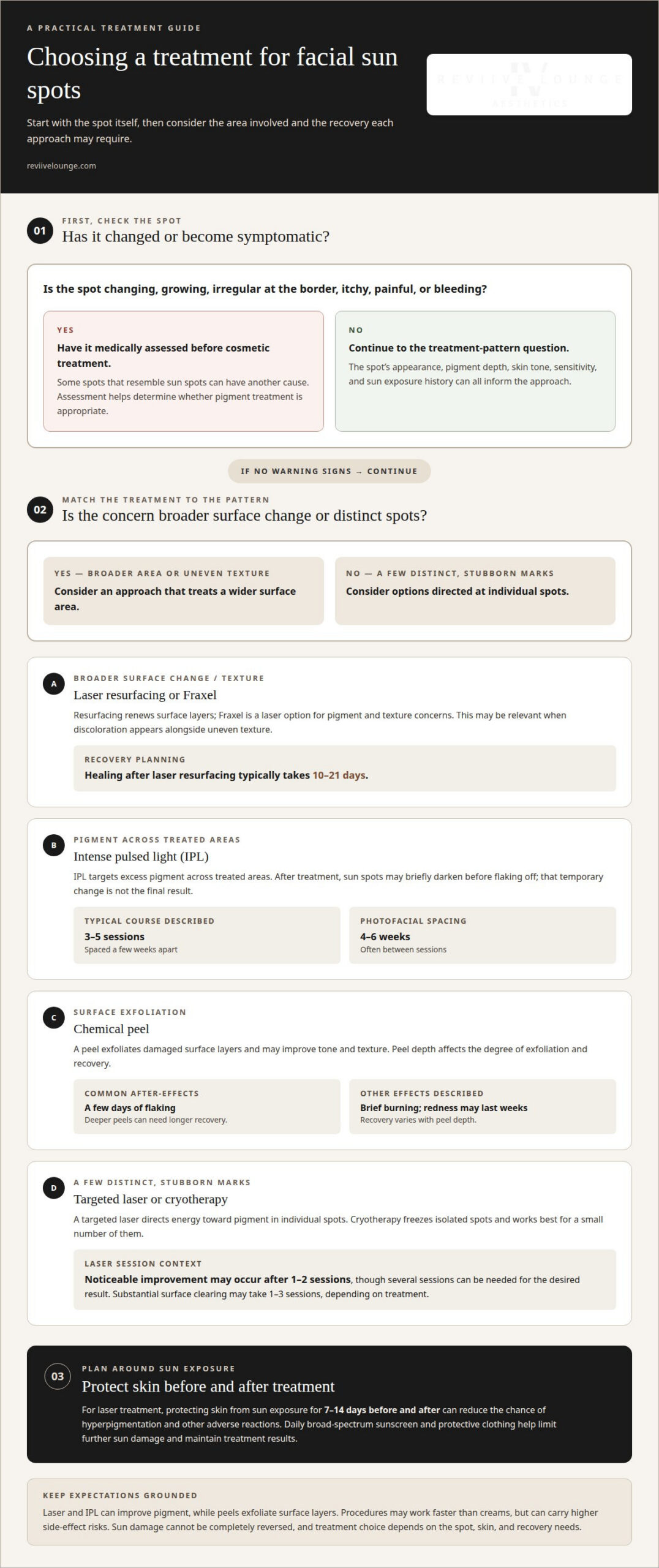
Laser resurfacing treats sun-damaged skin by renewing its surface layers, while Fraxel is a laser option used for pigment and texture concerns. This distinction matters when spots appear alongside uneven texture, since treatment can address more than discoloration alone. Healing after laser resurfacing for sunspots typically takes 10 to 21 days.
Fraxel and other resurfacing approaches differ from a laser aimed at individual marks. The clinician considers the spot pattern, pigment depth, skin tone, sensitivity, and sun exposure history when selecting an approach. Sun damage cannot be completely reversed, but treatment can improve its appearance. Protecting skin from sun exposure for 7 to 14 days before and after laser treatment can reduce the chance of hyperpigmentation and other adverse reactions.
Targeted Laser Spot Removal
Targeted laser therapy directs energy toward pigment in individual spots rather than resurfacing broader layers of skin. The pigment absorbs the energy, with treatment intended to limit effects on nearby tissue. This may make targeted treatment a relevant option for distinct, stubborn marks, while resurfacing may address broader surface concerns.
Laser therapy may show noticeable improvement after one or two sessions, although several sessions can be needed for the desired result. Some age spots are treated in one or two visits, while substantial surface clearing may take one to three sessions, depending on treatment. After IPL, sunspots may briefly darken before flaking off. This temporary change is part of the visible treatment response, not an immediate final result.
Treatment Effectiveness and Planning
Laser and IPL can improve pigment, while chemical peels exfoliate surface layers and cryotherapy freezes isolated spots. Their effectiveness depends on the spot and the method: cryotherapy works best for a small number of isolated sunspots, while light-based or laser therapy can target pigment across treated areas. These procedures can work faster than creams, but may carry higher side-effect risks.
Session needs vary by modality. IPL for sunspots typically involves three to five sessions spaced a few weeks apart; photofacials are often spaced four to six weeks apart. Laser therapy may show noticeable improvement after one or two sessions. In the United States, price depends on the case and is given after a quote request; modality, treated area, session count, and recovery needs shape the plan.
Before cosmetic treatment, have a spot assessed if it changes, grows, has an irregular border, or becomes itchy, painful, or starts bleeding. A spot that resembles an age spot can have another cause, so assessment helps determine whether pigment treatment is appropriate.
Chemical peels
A chemical peel exfoliates damaged surface layers, encouraging skin-cell turnover and potentially improving tone and texture. For facial sun spots, this may suit someone seeking broader surface renewal rather than treatment aimed at one isolated mark. Peel depth affects both the degree of exfoliation and the recovery that follows.
Peels use chemical solutions to remove the outermost skin surface. After treatment, patients commonly experience a few days of flaking; deeper peels can require longer recovery. A burning sensation may last a few minutes, while redness from treatment for age spots can persist for several weeks. These effects make aftercare and timing practical parts of deciding whether a peel fits your plans.
Results develop as treated layers shed and skin renews, rather than appearing immediately. In a study comparing treatments for age spots on the hands, 47% of patients who received a chemical peel saw 50% fading. That finding offers context, not a prediction for facial spots: the study involved hands, and individual results depend on the treatment and the skin being treated. Another study found half of patients receiving both microdermabrasion and a chemical peel had complete disappearance of their age spots. Because the combination included two procedures, it doesn’t isolate the peel’s effect.
Before cosmetic exfoliation, distinguish a sun spot from another skin condition. A brown mark that resembles an age spot can sometimes be skin cancer, and cosmetic treatment may delay needed care if the spot is misidentified. Changes in appearance, growth, irregular borders, itching, pain, or bleeding warrant medical assessment before a peel. A peel improves surface appearance; it doesn’t diagnose the cause of pigmentation.
Facials and chemical peels aren’t interchangeable. A facial can support general skin care, while a peel deliberately exfoliates surface layers to address concerns such as uneven tone and texture. For a peel selected around discoloration, the strength and depth should match the skin’s condition and tolerance. A VI Chemical Peel is an available treatment option for readers considering a professional peel.
Plan for the possibility of visible shedding rather than scheduling a peel immediately before an event. Recovery varies with peel depth, and redness or flaking may occur. Following treatment-specific aftercare instructions helps protect the renewing skin. A peel may improve the appearance of sun spots, but it doesn’t prevent new discoloration from developing.
Sun protection after treatment
Sun protection helps preserve treatment results and limits further UV damage. After laser treatment, protect the treated area from sunlight and self-tanning products for at least two weeks. This matters during recovery, when resurfacing and other procedures can leave skin more vulnerable to irritation or hyperpigmentation. Follow the aftercare instructions for the specific treatment rather than treating every procedure as interchangeable.
Make broad-spectrum sunscreen with SPF 30 or higher part of your daily routine. After age spot treatment, use broad-spectrum SPF 30 or higher on exposed skin outdoors. Apply it before going outside, including to skin not covered by clothing. A broad-spectrum, water-resistant formula is recommended for exposed areas. Reapply sunscreen every two hours when outdoors, since a morning application alone won’t cover a full day outside.
Build protection around more than sunscreen. Choose shade and protective clothing, such as a lightweight long-sleeve shirt, pants, and a wide-brimmed hat. UV-protective sunglasses help shield the eye area. These steps complement SPF and reduce direct exposure during outdoor activities. Avoid tanning beds, which expose skin to ultraviolet light associated with sun spots.
Timing matters, too. Avoiding peak UV hours can reduce exposure when the sun’s rays are strongest. Even brief periods without protection can contribute to long-term skin damage. Sunscreen and a hat provide practical protection during an outdoor walk, while shade can limit direct sun during a longer outing. Keep protection consistent instead of relying only on sunny-day precautions.
Maintenance continues after redness or flaking has settled. Age spots can return after treatment, and ongoing sun protection can help prevent their return. Retinoids and pigment-correcting creams may also help maintain results, prevent new discoloration, and support skin health over time. A dermatologist can tailor a skincare regimen to the treatment and your skin’s needs.
Allow time to assess a skincare regimen rather than judging it after a few applications. A customized routine for sun-damaged skin should be used regularly for at least 8 to 12 weeks before assessing results. This steady approach complements sunscreen: topical ingredients address pigmentation gradually, while daily protection helps limit new UV-related changes.
For a simple daily routine, apply broad-spectrum sunscreen before outdoor exposure, then reapply every two hours outside. Add shade, a hat, and protective clothing when practical. After laser treatment, continue protecting the treated area from sunlight and self-tanning products for at least two weeks. These habits help support recovery and reduce repeated UV exposure.
Intense pulsed light (IPL)
Intense pulsed light uses broad-spectrum light to target excess pigment in sun-damaged skin. Pigment absorbs the light and converts it to heat, helping break down discoloration. Unlike a laser’s focused beam, IPL delivers a range of light wavelengths across the treated area. An IPL session for sun damage typically takes 20 to 30 minutes.
For facial spots, IPL commonly involves three to five sessions, spaced a few weeks apart. Photofacial sessions are typically spaced four to six weeks apart. After treatment, spots may briefly appear darker before flaking away, and mild redness may follow. This response unfolds over time, so a single session doesn’t show the full course of change.
Light-based treatment isn’t appropriate in every situation. Avoid IPL after Accutane use within the previous six months. Recent sun exposure also matters because pigment and skin response can affect treatment planning. A dermatologist considers skin tone, sensitivity, spot location, pigment depth, and exposure history when selecting a sun-damage approach. A spot that changes, grows, or bleeds needs medical assessment before cosmetic light treatment.
Topical creams offer a gradual alternative to procedures. Hydroquinone, retinoids, and vitamin C can lighten pigmentation over time by addressing melanin and skin-cell turnover. Over-the-counter fade products may contain hydroquinone, glycolic acid, or kojic acid. Regular application may take several weeks or months to show results, so consistent use and sunscreen matter.
Prescription creams can also address sun spots. Hydroquinone may be prescribed alone or combined with tretinoin and a mild steroid; fading can develop over several months. Dermatologist-prescribed topical medications generally lighten spots gradually over a few months. These creams don’t remove damaged skin in one visit, unlike procedures that target pigment or exfoliate surface layers.
Choose at-home products with realistic expectations. Creams or lotions may need application once or twice daily for weeks or months before fading becomes noticeable. Introduce a product according to its instructions and avoid layering multiple irritating products at once. Daily sunscreen helps limit further sun damage while topical ingredients work; without sun protection, new discoloration may develop.
IPL and creams serve different timelines and needs. Light treatment targets pigment in scheduled sessions, while topical ingredients require continued use. Procedures may work faster than creams and lotions, but can cost more and carry a higher risk of side effects. The relevant choice depends on the spot pattern, skin characteristics, recovery preferences, and ability to maintain a regular skincare routine.
Medical-grade skincare ingredients
Topical ingredients may gradually lighten sun spots, while daily sun protection helps limit new discoloration. Hydroquinone, retinoids, and vitamin C are options to discuss with a qualified clinician. The best fit depends on your skin concern and the routine you can maintain.
Skincare Ingredients for Sun Spots
Medical-grade skincare uses topical ingredients to address pigmentation over time, rather than removing damaged surface skin in one procedure. This matters if you prefer a consistent home routine or want to support results after an in-office treatment. A customized regimen should be used regularly for at least 8 to 12 weeks before its results are assessed.
Start with a focused routine instead of layering several active products at once. For example, a topical lightening product paired with daily broad-spectrum sunscreen targets existing discoloration while helping limit further sun damage. Over-the-counter fade creams may contain hydroquinone, glycolic acid, or kojic acid, and regular use can take several weeks or months to show results.
Comparing Lightening Ingredients
Hydroquinone, retinoids, vitamin C, and azelaic acid differ in their role and expected timeline. Hydroquinone can gradually fade age spots, sometimes in a prescription combination with tretinoin and a mild steroid; retinoids and vitamin C can also gradually lighten pigmentation. Azelaic acid is another topical ingredient to discuss within a tailored plan, rather than assuming all four work identically.
Prescription hydroquinone may take several months of daily use to fade spots. Retinoids and vitamin C can support gradual lightening, but results depend on consistent use and sun protection. Creams or lotions often need to be applied once or twice daily for weeks or months. The appropriate product and routine depend on skin needs and tolerance.
“Medical-grade” doesn’t mean every product suits every complexion or concern. A skincare plan should account for the location and depth of pigmentation, skin sensitivity, and other products already in use. Adding several active ingredients together can make it harder to identify what irritates the skin, so a focused routine offers a clearer way to assess tolerance and progress.
Keep expectations gradual. Topical products don’t erase sun damage immediately, and continued sun exposure can contribute to further discoloration. Daily broad-spectrum sunscreen supports a lightening routine; without that protection, existing spots may remain difficult to manage. Assess progress over the period recommended for the product.
For a personalized approach, explore skincare support tailored to your goals. A carefully chosen topical routine can complement other cosmetic options, while an assessment helps distinguish pigment concerns from spots that need medical attention.
Reviive Lounge Aesthetics: HydraFacial Treatments
Reviive Lounge Aesthetics in Chino offers HydraFacial Treatments as a facial-care option for people seeking support alongside a sun spot treatment plan. HydraFacial Treatments are not a pigment-targeting laser or chemical peel, so they shouldn’t be presented as a direct substitute for those procedures.
Consider this option when your goal includes broader facial care as well as discussing discoloration. A personalized conversation can help clarify whether a facial fits your skincare goals and how it relates to other approaches, such as sunscreen and topical ingredients. For changing, irregular, painful, or bleeding spots, seek medical assessment before cosmetic treatment.
For a thoughtful discussion of your facial-care goals, contact Reviive Lounge Aesthetics.
Choose a Next Step That Fits Your Skin
Choosing the best treatment for sun spots on the face starts with a clear sense of your priorities: how much change you hope to see, what recovery you can accommodate, and whether you prefer a topical routine or an in-office approach. You don’t need to decide on a procedure before understanding the concern and the options that align with your skin and goals.
Bring your questions about pigmentation, comfort, and ongoing care into a personalized discussion. A measured plan can help you weigh cosmetic options without losing sight of long-term skin health. If a spot is changing or causing concern, prioritize medical assessment before cosmetic treatment.
Discuss your skin goals with Reviive Lounge Aesthetics and take a thoughtful next step toward a plan that feels right for you.
Frequently Asked Questions
What can get rid of age spots?
Age spots can be lightened or removed with procedures such as laser treatment, intense pulsed light, chemical peels, or cryotherapy. Topical products containing ingredients such as hydroquinone, retinoids, or vitamin C can fade pigmentation gradually. The right option depends partly on whether spots are isolated or spread across an area, and whether you prefer an in-office procedure or an ongoing skincare routine.
Are freckles sun damage?
Some freckles are genetic, while sun exposure can make existing freckles darker or more noticeable. Freckles and sun spots can both appear as small areas of increased pigment, but they aren’t interchangeable diagnoses. Notice whether marks change with sun exposure or differ from other spots. A new or changing mark deserves attention, especially if its border, color, or appearance becomes irregular.
Can sunspots turn into skin cancer?
A true sun spot is described as harmless and noncancerous, but another type of spot, including skin cancer, may resemble an age spot. A cosmetic treatment can’t determine what a mark is. Have a clinician assess a suspicious or changing spot before pursuing lightening or removal.
Is sun damage permanent?
Sun damage can’t be completely reversed, although treatment may improve its visible appearance and sun protection can help limit further damage. A topical routine may gradually soften uneven pigmentation, while consistent sunscreen helps reduce additional UV exposure. Think of treatment and prevention as complementary: improving existing discoloration doesn’t erase the skin’s history of sun exposure.
What are sunspots?
Sunspots are flat areas of darker pigment associated with ultraviolet exposure from sunlight or tanning beds. They form when pigment-producing cells become overactive and increase melanin in affected skin. They commonly appear on sun-exposed areas, including the face and hands. Their appearance alone doesn’t confirm what a spot is, so professional assessment matters before cosmetic treatment.
What are sun spots on the face and how are they diagnosed?
Facial sun spots are brown areas of pigmentation often associated with ultraviolet exposure. A clinician usually assesses a suspected age spot by examining the skin and distinguishing it from other conditions. If visual assessment doesn’t resolve the concern, a skin biopsy can help differentiate an age spot from lentigo maligna, a type of skin cancer. Diagnosis should precede cosmetic treatment.
What are the risks and side effects of sun spot treatments, especially for darker skin tones?
Possible effects include temporary redness, flaking, or pigment changes such as hyperpigmentation. The treatment choice matters because a clinician considers skin tone, sensitivity, pigment depth, and spot location when planning care. These factors are especially relevant for darker skin tones, where changes in pigmentation need careful consideration. Sun exposure around laser treatment can also increase the chance of hyperpigmentation and other adverse reactions.
When should a facial sun spot be checked for skin cancer before treatment?
Have a spot assessed before cosmetic treatment if it changes in appearance, grows, develops an irregular border, becomes itchy or painful, or starts bleeding. These features make it harder to assume a mark is a harmless sun spot. Assessment helps distinguish a cosmetic pigment concern from a condition needing medical attention. Don’t use a peel, laser, or light treatment to diagnose a suspicious mark.