

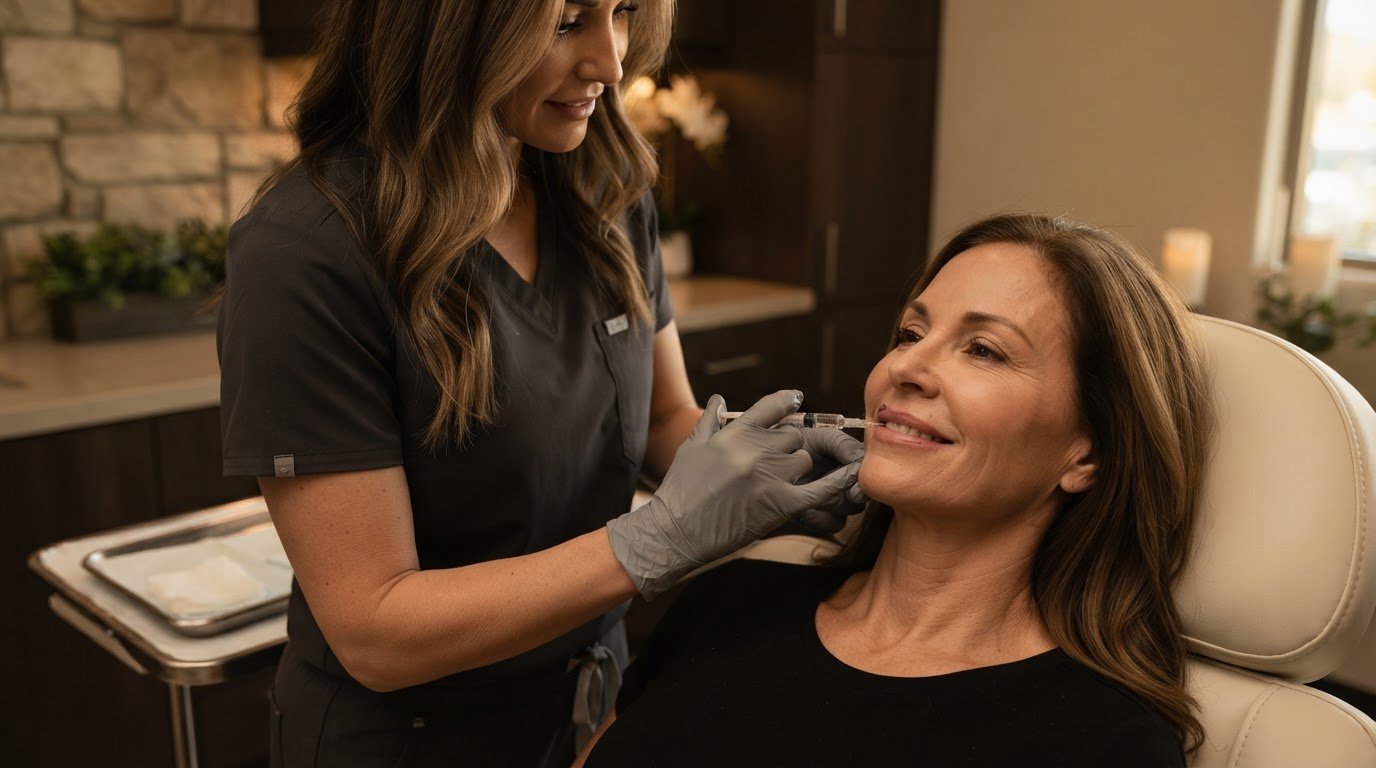
Natural-looking lip injections are about proportion, not simply adding volume. A potential candidate is someone seeking a subtle change to lip shape or fullness and whose goals can be discussed with a qualified medical professional. According to the U.S. Food and Drug Administration, lip fillers aren’t approved for anyone under 21 years old.
It’s reasonable to want a result that still feels like you, not a dramatic change. The right approach starts with a conversation about your preferred look and an assessment of whether lip filler suits your goals.
This article explains who may be a candidate, how treatment works, and how results can look and last. You’ll also learn what to expect during treatment and recovery, helping you decide whether lip filler aligns with the change you have in mind.
Key Takeaways
- Natural-looking results start with clear goals focused on proportion and subtlety, not simply adding volume.
- Age matters: the U.S. Food and Drug Administration has not approved lip fillers for anyone under 21.
- Learn how hyaluronic acid fillers add fullness and what to expect from the treatment process.
- Allow time for swelling to settle before judging your results or planning treatment around an important event.
- Understand why results vary and which factors influence how long they last.
How do lip fillers work?
Hyaluronic acid fillers add support and contour to the lips. The treatment plan depends on the product selected and where it is placed.
How Hyaluronic Acid Fillers Work
Hyaluronic acid is found naturally in the body. In gel form, it attracts and holds water, adding volume where a trained injector places it. For lip injections, the injector considers your lip shape, facial balance, and desired change. Both product choice and placement influence the final contour.
Treatment typically begins with a discussion of your goals and an assessment of your facial features. The injector may apply numbing medication before placing filler with a fine needle. The gel adds fullness at targeted points rather than changing the lips uniformly. Careful adjustments can help preserve natural proportions.
If a change is needed, hyaluronic acid filler can be dissolved by injecting an enzyme into the lips. This option applies to hyaluronic acid products, not every type of injectable filler.
Filler Brands and Formulations
Juvederm and Restylane are FDA-approved hyaluronic acid gel dermal fillers. Each brand includes formulations designed for different treatment areas and aesthetic goals. The injector selects a formulation based on your lip anatomy and the desired balance of definition, softness, and volume. A brand name alone doesn’t describe the treatment plan.
Ask which filler formulation is planned and how its characteristics relate to your goals. This makes the discussion more specific than simply requesting a brand. The plan should also reflect whether you want subtle definition, added fullness, or both.
A lip flip and filler create different effects. A lip flip uses a neurotoxin to relax muscles around the upper lip. Filler adds volume directly, while surgical lip augmentation changes the lips through an operation.
When considering an injector, look for a healthcare professional with specific training in filler injections and facial anatomy. The assessment should consider your features, goals, and the planned product placement. A clear discussion of the formulation and anticipated changes helps you understand the plan before treatment.
Keep treatment goals distinct: lip filler addresses lip shape and volume, while physician-supervised weight-loss injections address a separate wellness goal.
The practice describes lip filler as being gently injected with a very fine needle after topical or injectable numbing medication is used.
Who is a Candidate for Lip Fillers?
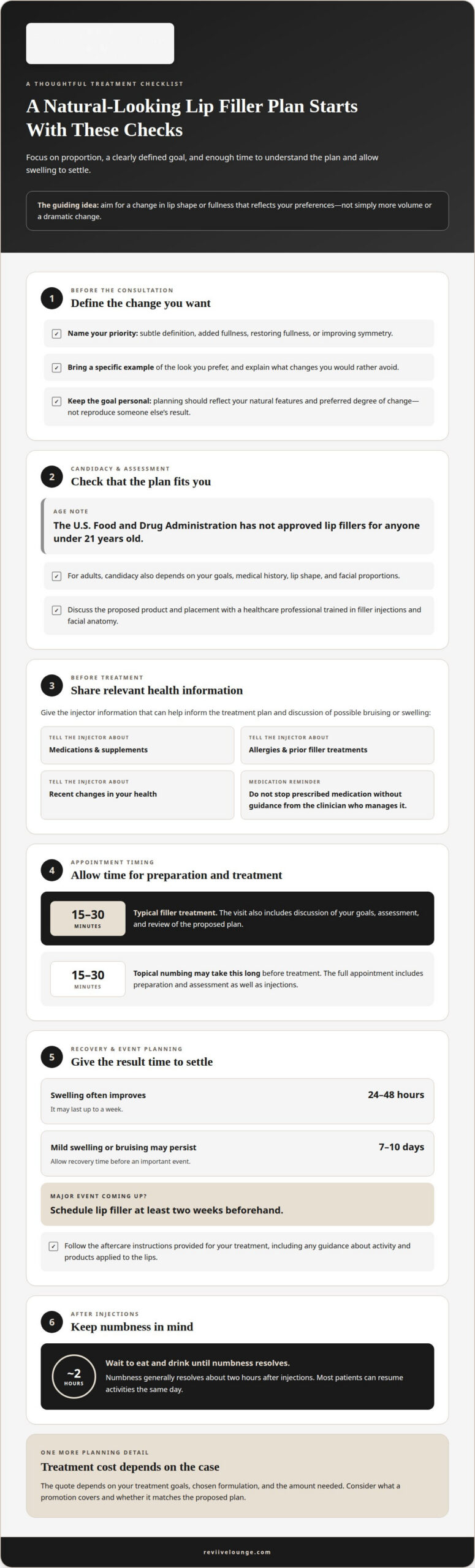
A suitable candidate usually wants a defined change, such as restoring lip fullness or improving symmetry, rather than a complete change in facial appearance. The U.S. Food and Drug Administration has not approved lip fillers for anyone under 21 years old. For adults, candidacy also depends on goals, medical history, and an assessment of lip shape and facial proportions.
Bring a specific example of your preferred look, such as gentle definition or more visible fullness. This helps the injector distinguish between a request for volume and one focused on shape. Lip augmentation is a personal choice. Treatment planning should reflect your natural features and preferred degree of change, rather than applying one standard look.
A typical filler treatment takes 15 to 30 minutes. A topical anesthetic may need 15 to 30 minutes to numb the lips before treatment, so the full appointment includes preparation and assessment as well as injections. During the visit, the injector reviews your goals, examines your lips, explains the proposed plan, and discusses comfort measures before proceeding.
Preparation starts with sharing relevant health information. Tell the injector about medications, supplements, allergies, prior filler treatments, and recent changes in your health. Don’t stop prescribed medication without guidance from the clinician who manages it. These details help inform the treatment plan and discussion of potential bruising or swelling.
- Plan for swelling: it often improves within 24 to 48 hours, but may last up to a week.
- Mild swelling or bruising may persist for 7 to 10 days, so allow recovery time before an important event.
- Follow the aftercare instructions provided for your treatment, including any guidance about activity and products applied to the lips.
Price depends on the case and is given after a quote request; factors include the treatment goals, chosen formulation, and amount needed. If a promotion is presented, consider what treatment it covers and whether its scope matches the plan, rather than comparing a discount alone. Clear details make it easier to understand what the proposed treatment includes.
Use the consultation to discuss a smooth, natural-looking outcome and the changes you’d prefer to avoid. A personalized aesthetic treatment plan can connect those preferences with an appropriate approach and recovery expectations.
Schedule lip filler at least two weeks before a major event. Avoid eating and drinking until numbness resolves, generally about two hours after injections. Most patients can resume activities the same day.
Before-and-after treatment results
Before-and-after comparisons are most useful when they show the specific change you discussed. For example, compare lip-border definition, upper-to-lower lip balance, and overall facial proportion. A photograph captures one angle and expression, so review more than one view. Your goal should describe the change you want, not simply reproduce another patient’s result.
After dermal fillers, the lips have added volume, but the appearance continues to settle. Results from dermal filler lip treatment are final within 2 weeks. That interval gives you a more meaningful point for judging contour than the immediate post-treatment view. A planned follow-up around two weeks after treatment can support a discussion of how the result aligns with the agreed goal.
Use the settling period to consider the result in everyday settings. Look at your lip outline while speaking, smiling, and resting, rather than relying on a single posed photograph. For natural-looking augmentation, the aim is a shape that fits your features. A subtle change in definition, for example, differs from a request for more noticeable fullness.
Longevity varies with the filler and how quickly your body metabolizes hyaluronic acid. Results can last from a few months to about a year. This range is not a schedule for every patient; it shows why the product name alone cannot predict an individual result. If considering Restylane, discuss the selected formulation and your desired appearance.
When reviewing before-and-after images, focus on consistent details: the same facial angle, a relaxed expression, and comparable lighting. Then look for the feature that matters to you, such as a more defined cupid’s bow or better balance between the lips. These examples can help clarify what “natural” means for your face, rather than treating a larger change as the default.
Results also depend on the treatment plan. The injector considers your starting lip shape, facial proportions, and desired degree of change. Someone seeking definition may have a different plan from someone seeking fullness. Discussing these distinctions before treatment helps align product choice and placement with your goals.
Plan important photographs or events around the settling period, not just the appointment date. Results can take up to two weeks to fully settle, so allow that time before judging the final appearance. At follow-up, describe what you notice in specific terms, such as border definition or overall balance. This helps guide discussion of the result and any future treatment planning.
How long do lip injections last?
Hyaluronic acid filler is temporary, and its duration depends on the formulation and how quickly your body metabolizes it. Reported timelines differ: dermal fillers for lip enhancement can last 4 to 12 months, while lip filler procedures are also described as lasting 12 to 18 months, depending on age and metabolism. These ranges reflect variation, not a fixed expiration date for every treatment.
The consultation helps set expectations before treatment. Discuss your preferred look, previous filler treatments, and how long you hope to maintain the result. The injector considers these details when selecting a formulation and planning placement. A fuller appearance may call for a different approach than subtle definition, so discuss duration alongside the desired shape.
On treatment day, topical numbing medication typically takes 15 to 30 minutes to numb the lips. The injector then places filler with a fine needle, shaping the amount and placement around your goals. Dermal filler lip treatments take 15 to 30 minutes. A topical numbing product is used to improve comfort, though the sensation can differ between patients.
The procedure’s duration isn’t the same as the time needed for anesthesia or recovery. After treatment, swelling or bruising may occur for a few days; mild symptoms can last 7 to 10 days. Pain at injection sites should resolve after 12 to 24 hours. Plan your schedule around these possible effects, particularly if photographs or an event are approaching.
Follow the aftercare instructions provided for your treatment. Patients should avoid strenuous activity, including exercise, for 24 to 48 hours after treatment. Avoid manipulating or massaging the area for 48 hours unless the provider instructs otherwise. These steps support a considered recovery rather than an immediate judgment of the final contour.
Chin treatments may come up when discussing lower-face balance, but they address a different area and goal. Lip filler adds volume or definition to the lips; chin treatment is a separate decision, not a required companion. If your concern is specifically chin shape, explain that during consultation so the discussion stays focused on your priorities.
Surgical lip augmentation is another distinct option, involving surgery rather than temporary hyaluronic acid filler. A consultation can clarify whether your priority is a change in lip contour, a fuller appearance, or a surgical approach. With filler, the selected product, treatment plan, and personal metabolism all influence how long results remain visible.
Reasons people choose lip injections
People choose lip injections for different aesthetic goals, and naming your goal helps shape a thoughtful treatment plan. You may want more visible volume or a clearer lip border without a dramatic change. These are distinct requests, so an appointment should translate your preferences into specific features, such as definition, balance, or fullness.
Some patients want to address asymmetry. For example, one side of the upper lip may appear less defined when the face is relaxed. A clinician can assess that concern alongside your overall facial appearance, rather than treating one feature in isolation. The useful question is what change would feel balanced with your other features, not whether a particular look is popular.
Others seek a refreshed appearance. A gradual change in lip fullness can affect how lipstick sits or how defined the vermilion border looks. Hyaluronic acid dermal fillers, including Juvederm and Restylane, are used for lip enhancement. The formulation and placement depend on the intended result; a brand name alone doesn’t define the aesthetic plan.
A temporary option may also suit someone who prefers a nonsurgical approach to lip augmentation. Results from hyaluronic acid filler vary and can last from a few months to about a year. That range can frame expectations, but it can’t tell you exactly how long an individual result will last. The product, treatment area, and how quickly your body absorbs the filler all matter.
Convenience is another consideration. Dermal filler lip treatments take 15 to 30 minutes, although preparation and numbing add time to the visit. Patients may choose this approach because it offers targeted changes without lip implant surgery. Still, “quick” describes the injection portion, not the full decision, recovery, or settling process.
Before treatment, identify one or two priorities. For example, you might ask for subtle definition while preserving your natural lip shape. Be clear about what you want and what you’d prefer to avoid. “More balanced” is a useful starting point, but describing the upper lip, lower lip, or border makes your goal more precise.
Personal preference should guide the decision, not pressure to match a trend or another person’s photographs. A considered consultation connects your desired change with facial proportions, product choice, and realistic expectations. If you’re exploring a tailored aesthetic plan, schedule a consultation to discuss whether lip filler fits your goals.
Reviive Lounge Aesthetics: Botox & Neurotoxin Injections
Reviive Lounge Aesthetics offers dermal fillers, including lip filler, for people considering a tailored change in lip shape or volume. A consultation gives you space to describe your preferred result, discuss your concerns, and understand how filler may fit your goals. This physician-led practice can help you consider a measured approach that respects your natural features.
Turn to Reviive Lounge Aesthetics when you’re ready to discuss lip filler with a medical aesthetics team or would like guidance before deciding whether treatment suits you. The conversation can focus on your priorities and a personalized treatment plan, without pressure to proceed.
Contact Reviive Lounge Aesthetics to discuss your aesthetic goals.
Choose a next step that feels right for you
A natural-looking result begins with a clear sense of what you want to preserve. Before deciding on lip injections, consider which features feel most like you and what change might support your confidence without shifting that balance. You don’t need a perfect description; a few words about your preferences can start a useful conversation.
A consultation can turn that intention into a personalized discussion. Share the result you’re considering, the changes you’d prefer to avoid, and any questions that would help you feel informed. Take the time you need to decide whether treatment fits your goals. The aim is a thoughtful choice, not a rushed commitment.
Reviive Lounge Aesthetics offers dermal fillers, Botox and neurotoxin injections, and medical weight loss programs. For a conversation centered on your aesthetic goals and available treatment options, contact Reviive Lounge Aesthetics. Your next step can be a chance to explore your preferences with care and move forward at your own pace.
Frequently Asked Questions
Do lip fillers hurt?
Discomfort varies, and topical numbing medication is commonly used to improve comfort during treatment. You may still feel pressure or brief sensations as the injector places filler. Mention any concerns about needles or sensitivity during consultation so you can discuss the treatment approach and comfort measures beforehand. Temporary soreness at injection sites may occur after treatment.
How long until you can see the results?
You may notice added fullness soon after treatment, but early swelling can affect how the result looks. For comparison, take a baseline photo before your appointment and another after your lips have settled. Results can take up to two weeks to fully settle, so avoid judging subtle differences from the immediate post-treatment view. The injector can assess the result at follow-up.
How much do lip fillers typically cost?
The cost depends on the treatment plan, including the filler selected, the amount used, and the goals discussed during consultation. For this service, pricing is provided after a quote request rather than through a general estimate. Ask for a clear explanation of what the proposed treatment includes before deciding. A lower amount or a particular brand alone doesn’t determine the value of a plan.
Are lip fillers safe?
No injectable treatment is risk-free. Swelling and bruising can occur, and suitability depends on factors such as your health history, treatment goals, and the product selected. A medical consultation helps identify relevant considerations and explain potential side effects before treatment. The U.S. Food and Drug Administration has not approved lip fillers for anyone under 21 years old.
What is the Recovery like from Non-Surgical Lip Fillers?
Recovery can include temporary swelling, tenderness, or bruising around the lips. These effects may change how the result looks at first, so plan social events with time for the area to settle. Follow the aftercare instructions provided for your treatment, and contact the treating practice if you have concerns about recovery. Individual experiences can differ.
Will lip fillers ruin your lips?
Hyaluronic acid filler doesn’t mean a lasting change: results are temporary, and an enzyme can dissolve this type of filler. That doesn’t remove the need for careful planning. Discuss your preferred degree of change and any previous filler treatment before proceeding. If you have concerns about the result, speak with the treating medical professional rather than trying to massage or alter the area yourself.
What are lip injections and how do lip fillers work?
Lip injections place dermal filler into selected areas to adjust lip volume or definition. With lip injections, the injector plans placement around your anatomy and aesthetic goals, rather than treating every part of the lips identically. Hyaluronic acid gel attracts water and adds fullness where it’s placed. In consultation, describe the specific change you want, such as more definition or a softer contour.
What types of lip fillers are FDA-approved in the United States?
Juvederm and Restylane are FDA-approved hyaluronic acid gel dermal fillers used for lip enhancement. Each brand has different formulations, so the brand name alone doesn’t show which product suits a particular goal. Discuss the selected formulation along with your desired shape and volume. Ask the injector to identify the planned filler and explain its intended use.