


The right GLP-1 care starts with a medical assessment, not simply a medication name. If you’re looking for a GLP-1 doctor near me in Fontana, physician-supervised weight-loss treatment is available in the area, with options guided by clinical needs and individual health. The next step is understanding how a provider evaluates whether treatment is appropriate.
It’s reasonable to want clarity before scheduling, especially about insurance, lab work, and fees. This guide explains how to assess a provider’s qualifications, what lab work can contribute to an evaluation, and how insurance coverage and prior authorization may affect treatment. You’ll also learn what to ask about follow-up, medication oversight, and the factors that shape a care plan’s fees, so you can make your decision with a clearer picture of what the process involves.
Key Takeaways
- Look for a provider who evaluates your medical history and health needs before recommending GLP-1 treatment.
- Centers for Medicare & Medicaid Services defines obesity as a BMI of at least 30 kg/m²; eligibility also depends on individual clinical factors.
- Ask how insurance coverage and prior authorization may affect access to weight-loss medication.
- Clarify which lab work is part of the evaluation and what factors determine the overall fees.
- Consider how travel distance fits with ongoing care, then explore physician-supervised medical weight-loss support at Reviive Lounge Aesthetics.
Is weight loss treatment available near me in Fontana, CA?
Yes. Fontana-area patients can seek physician-supervised weight-management care, including an evaluation for GLP-1 medications. If you’re looking for a GLP-1 doctor near me in Fontana, focus on a provider who assesses your health history, current medications, weight-related concerns, and goals before discussing treatment. That assessment helps shape a plan around clinical needs rather than a medication name alone.
Semaglutide and tirzepatide are prescription options, but the available information here doesn’t establish a direct comparison of their weight-loss results, costs, or local availability. Wegovy, a semaglutide injection, has facilitated around 15% body-weight loss within 68 weeks. Tirzepatide is a prescription medication used to support appetite regulation and metabolic health. Cost depends on coverage and the prescribed treatment, while pharmacy access depends on the prescription and local availability.
Eligibility depends on clinical assessment, not one number alone. The Centers for Medicare & Medicaid Services defines obesity as a BMI of at least 30 kg/m². A provider also considers weight-related health concerns and whether a medication fits the patient’s medical history. The minimum age can depend on the medication and program, so discuss age requirements during the initial assessment rather than assuming one rule applies to every option.
Expect the first consultation to cover your medical history, current medications, previous weight-management efforts, and personal goals. The provider can explain possible options, monitoring, and follow-up. A personalized plan may also include discussion of nutrition and activity alongside medication decisions. Bring a current medication list and relevant health information so the clinician can consider your circumstances and explain the proposed next steps.
Weekly injections are one treatment format: Wegovy injection treatment is described as weekly. A clinician should explain how the selected medication is used and what follow-up involves. Common Wegovy side effects listed by Cleveland Clinic include nausea, diarrhea, vomiting, constipation, abdominal pain, bloating, and gas. Ask about serious risks specific to the medication and which symptoms need prompt attention, since safety guidance should match the prescribed treatment.
Nearby pharmacies may dispense a prescribed medication, with access shaped by the prescription, insurance coverage, and pharmacy availability. Telehealth may provide a remote consultation when a provider serves the patient and can assess the treatment request. Either way, ask how follow-up and medication oversight work. For someone seeking a GLP-1 doctor near me in Fontana, the choice between a clinic visit and remote care should also account for ongoing appointments.
Insurance acceptance
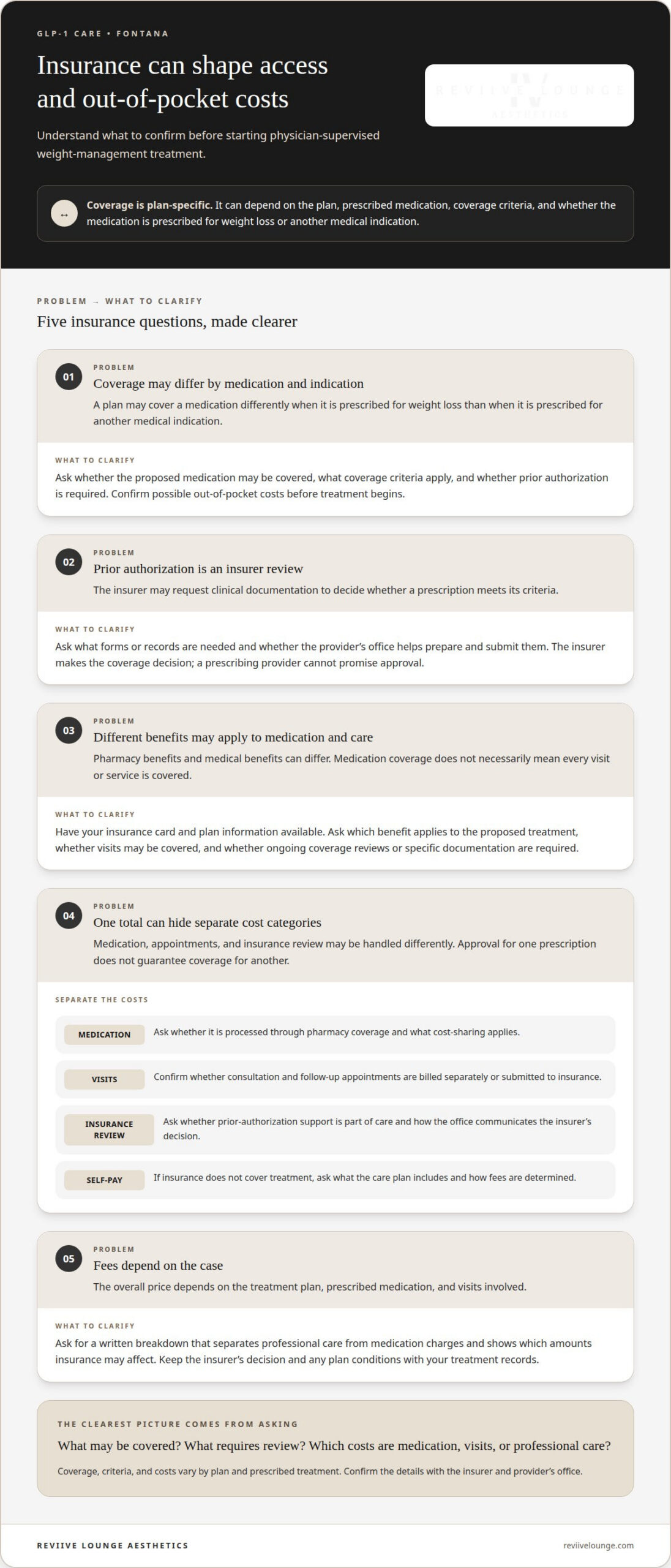
Insurance coverage for weight-management treatment depends on your plan, the prescribed medication, and coverage criteria. A plan may cover a medication differently when it’s prescribed for weight loss than when it’s prescribed for another medical indication. This can affect coverage, prior authorization requirements, and your out-of-pocket costs. Confirming these details early can clarify the financial steps before treatment begins.
Prior authorization is a review insurers may require before covering a medication. The insurer may request clinical documentation to assess whether the prescription meets its criteria. A provider’s office can help identify required forms, prepare relevant records, and submit the request. The insurer makes the coverage decision, so a prescribing provider can’t promise approval. If more information is requested, the office can coordinate a response with you.
Have your insurance card and plan information available when discussing coverage. The provider’s team can use those details to identify the insurer and plan, then clarify whether the medication or visits may be covered. Pharmacy benefits and medical benefits can differ, so ask which applies to the proposed treatment. Also ask whether the plan requires specific documentation or ongoing coverage reviews.
Separate the potential costs into clear categories before starting:
- Medication: Ask whether the prescription is processed through pharmacy coverage and what cost-sharing applies.
- Visits: Confirm whether consultation and follow-up appointments are billed separately or submitted to insurance.
- Insurance review: Ask whether prior authorization support is part of care and how the office communicates a decision.
- Self-pay: If insurance doesn’t cover treatment, ask what the care plan includes and how fees are determined.
These distinctions matter for chronic weight management. Coverage for a medication doesn’t necessarily mean every visit or service is covered, and approval for one prescription doesn’t guarantee coverage for another. Keep the insurer’s decision and any plan conditions with your treatment records. If coverage changes, these documents can help clarify what the insurer reviewed.
For care fees, the price depends on the case and is given after a quote request. Factors include the treatment plan, prescribed medication, and the visits involved. Ask for a written breakdown that separates professional care from medication charges and shows which amounts insurance may affect. If you’re exploring a self-pay route, learn about physician-supervised weight-management care and the next steps for discussing a plan.
Provider qualifications
GLP-1 treatment calls for a medical assessment, prescription oversight, and a plan for follow-up. In Fontana, relevant specialties can include internal medicine and endocrinology. An internal medicine physician focuses on adult care, while a family medicine doctor treats patients of all ages. An endocrinologist specializes in hormone-related conditions, including diabetes and metabolism.
Experience is one useful part of the picture. Dr. Pardis Poorzand is an internal medicine physician with over ten years of experience. Fontana has specialists in endocrinology, diabetes, and metabolism affiliated with 50 hospitals nearby. Those numbers show the range of local medical settings, but specialty fit matters more than a directory count. A provider should connect medical weight goals with your health history and current concerns.
During a consultation, the provider typically reviews your medical history and any previous test results. An endocrinologist may order and interpret laboratory tests, hormone tests, or imaging when clinically relevant. The discussion can also cover medications, previous treatment, nutrition, and health goals. You should leave understanding the proposed approach, its purpose, and how progress will be reviewed.
Use these points to assess a provider’s qualifications and approach to care:
- Relevant specialty: Identify whether the clinician practices internal medicine, endocrinology, or another field connected to your needs.
- Medication oversight: Understand who assesses treatment suitability, prescribes medication, and monitors follow-up.
- Individualized planning: Look for discussion of health history, nutrition, and medical weight goals, rather than a medication-only conversation.
- Clear communication: Expect explanations of the treatment rationale, possible monitoring, and how questions are handled between visits.
Location affects how easily in-person care fits into your routine. Compare the clinic’s location with your usual travel routes and the likely schedule of follow-up visits. An endocrinology specialist may be useful when hormone, diabetes, or metabolism concerns are central. For broader adult health considerations, internal medicine may offer a relevant perspective. The specialty should match the clinical questions being addressed.
Virtual provider matching can connect patients with a clinician for an initial discussion. A useful virtual consultation still covers medical history, previous test results, current medications, and weight-management goals. The provider can explain whether the plan includes an in-person evaluation, testing, or follow-up. A remote format changes how the visit happens, not the need for individualized medical judgment.
Choose a care setting where the clinician’s specialty and experience align with your needs and the consultation clearly explains next steps. This gives you a practical basis for comparing location, visit format, and continuity of care.
Lab work requirements and fees
Ask the physician to explain which laboratory work is recommended and how it relates to your medical history. The evaluation may consider previous test results, current medications, and health concerns connected with weight or metabolism. An endocrinologist may order and interpret laboratory tests, hormone tests, and imaging exams. The specific plan depends on the clinical questions being assessed.
Before testing, ask whether recent results can inform the evaluation. Share where and when the tests were done, along with any available records. The physician can determine whether the results address the current clinical need or whether additional testing could help guide treatment. This helps tailor the plan and clarify which information the provider is using.
Discuss fees before laboratory work or treatment begins. Ask whether the consultation, tests, follow-up visits, and medication are billed separately. A treatment plan may involve several services, and insurance coverage for one part doesn’t establish coverage for the rest. In California, clarify what each charge represents and whether the insurer processes it through medical or pharmacy coverage.
Use these questions to make the discussion specific:
- Purpose: What clinical question will each recommended test help answer?
- Existing results: Can prior laboratory or imaging results be considered in this evaluation?
- Billing: Is the test billed separately from the consultation or follow-up visit?
- Coverage: Will the office submit the test to insurance, and what plan information is needed?
- Next steps: Who reviews the results, and how will they inform the proposed treatment plan?
Ask whether the provider accepts your insurance for the consultation, laboratory work, and follow-up visits. Each may have different coverage rules. If the medication requires prior authorization, ask whether the office helps prepare supporting documentation. Keep any response from the insurer with your records to clarify what was reviewed and which conditions apply.
Fees for physician-supervised weight management depend on the individual plan and are provided after a quote request. The care plan, medication prescription, and services involved shape the fee. Request an itemized explanation separating professional visits, laboratory charges, and medication costs. If insurance affects the amount you owe, ask how that adjustment appears in the estimate.
A clear plan connects each test to a clinical purpose and each fee to a service. Before proceeding, note the proposed lab work, insurance process, and expected charges. These notes give you a practical reference for discussing results and next steps with the physician.
Finding specialists by distance
For Fontana patients, travel time is one practical factor when choosing a GLP-1 specialist. A nearby clinic may make appointments easier to fit around work, family, and exercise. But distance alone doesn’t show whether a provider’s specialty matches your health history. Consider the route alongside the clinician’s experience and the care you may need over time.
A listed drive from Rancho Cucamonga to Fontana is 15 minutes. Patients in Chino Hills, Ontario, and nearby communities can also consider how a Fontana visit fits their usual routes. Travel conditions and starting points affect actual trip time, so treat a drive estimate as a planning reference. Think about the return journey, parking, and how follow-up appointments fit your schedule.
Patients with diabetes, hormone-related concerns, or complex medical histories may value a provider whose specialty fits those needs. Endocrinology focuses on hormones, diabetes, and metabolism, while internal medicine offers an adult-care perspective. The right fit depends on the clinical questions being addressed, not simply which office is closest. During an appointment, notice whether the provider considers your history and goals together.
Compare nearby options using practical criteria:
- Route: Consider the drive from your home or workplace, including the return trip after an appointment.
- Specialty: Match the provider’s background to concerns such as diabetes or hormone health.
- Visit format: Ask whether consultations and follow-up can be virtual, in person, or a combination.
- Continuity: Understand how the provider reviews progress and handles questions between appointments.
Virtual visits can reduce travel for an initial conversation or follow-up. They should still include a review of relevant medical history, medications, and treatment goals. The provider may determine that an in-person assessment or additional testing is needed. Ask how records are shared and how care continues if some visits take place remotely.
Distance can affect how consistently you attend appointments. If you’re in Fontana, consider the route to a Chino clinic, as well as options for visits and follow-up. Patients in Chino, Ontario, Rancho Cucamonga, Chino Hills, Eastvale, Pomona, La Verne, Upland, Norco, and Corona may also weigh their travel routes and visit formats. Consider the full pattern of care, not just the first visit, and ask how scheduling and follow-up fit your routine.
Choose a location and visit format that support ongoing communication with your clinician. If you’re ready to discuss a personalized plan, explore weight-management care options.
Reviive Lounge Aesthetics
Reviive Lounge Aesthetics offers physician-supervised medical weight-loss programs with GLP-1 medications for people considering structured support. The care can provide a professional setting to discuss treatment, health goals, and questions about medication oversight. A consultation is a useful next step when you want to understand how supervised weight management may fit your needs.
Bring your questions about insurance, lab work, follow-up, and fees to guide the conversation. The team can discuss the medical weight-loss program alongside your goals and relevant health information. Reviive Lounge Aesthetics also offers Botox and neurotoxin injections, dermal fillers, and microneedling with PRP, though those services are separate from GLP-1 care.
For a calm, informed next step, contact Reviive Lounge Aesthetics to discuss your weight-management questions.
Take the Next Step at Your Pace
Choosing a GLP-1 doctor near me in Fontana is also a chance to define what supportive care means to you. Consider what helps you feel informed, respected, and comfortable discussing personal health goals. A good next step is one that leaves room for thoughtful questions and a clear understanding of the care being considered.
You don’t need to settle every decision before starting a conversation. Bring the questions that matter most to you and use the discussion to find out whether the approach aligns with your priorities. Reviive Lounge Aesthetics provides physician-supervised medical weight-management programs and can be part of that conversation.
Move forward when you feel ready to explore your options. Start a conversation with Reviive Lounge Aesthetics and take the next step with confidence.
Frequently Asked Questions
What types of weight loss or metabolic health treatments are offered?
Reviive Lounge Aesthetics offers physician-supervised Medical Weight Loss Programs with GLP-1 medications. Its wellness services also include IV Hydration Therapy, while Botox and dermal fillers are aesthetic treatments rather than weight-management care. During an individualized consultation, you can discuss your goals and health history to understand which medical weight-management approach may be relevant. The program includes clinical support, nutritional guidance, and medical monitoring.
How can I choose a Fontana, California doctor or clinic that prescribes GLP-1 medications for weight loss?
Look for physician-led care that includes an individual assessment and ongoing medical supervision. Reviive Lounge Aesthetics is located in Chino and serves patients from Fontana and other Inland Empire communities. In your consultation, discuss your health history, treatment goals, follow-up, and medication oversight. A thoughtful conversation should explain the proposed care plan without pressuring you to begin treatment.
Which GLP-1 medications are available for weight loss, and who qualifies?
Semaglutide and tirzepatide are GLP-1-related prescription medications discussed for weight management. Eligibility depends on the medication and an individual medical assessment, so a single BMI figure doesn’t establish suitability for every prescription. The general candidate thresholds cited for peptide therapy include BMI of 30 or higher, or BMI of 27 or higher with related health issues. A clinician considers medical history and treatment needs before making a recommendation.
What are the prices for GLP-1 treatment at Fontana-area clinics, including medication and consultation fees?
Fees vary with the care plan and services involved, so one price won’t apply to every patient. Request a quote for physician-supervised weight management, including prescribed medication, clinical support, nutritional guidance, and monitoring. Ask for a breakdown that separates program services from medication and consultation costs. Insurance processing may also affect what you ultimately pay.
Do Fontana doctors accept insurance or offer GLP-1 treatment through Medicare or Medi-Cal?
Coverage depends on the provider, your specific plan, and the medication being considered. Don’t assume Medicare or Medi-Cal coverage based on a clinic’s location or its weight-management services. Ask your insurer whether the prescribed medication and related visits are covered and whether prior authorization is required. Keep medication benefits separate from appointment benefits, since a plan may handle them differently.
What should I look for when choosing a board-certified obesity medicine doctor or endocrinologist near Fontana?
Ask which specialty the clinician practices, whether they hold board certification in obesity medicine or endocrinology, and how their experience relates to your health needs. Endocrinology focuses on hormone, diabetes, and metabolism concerns. Also consider how the provider reviews medical history, explains treatment choices, and plans follow-up. Clear answers help you understand the clinician’s role without assuming every provider has the same credentials.
How can I check a Fontana clinic’s credentials and avoid compounded GLP-1 scams?
Ask who evaluates patients, who prescribes medication, and what qualifications the treating clinician holds. If a medication is described as compounded, ask what that means for the specific prescription and who prepares it. Pause if answers about the prescriber or medication source are unclear, you’re pressured to pay before an assessment, or weight loss is guaranteed. A credible discussion should make the care plan understandable.