


GLP-1 medication may be an option in physician-supervised medical weight loss, but it isn’t right for everyone. A medical weight loss consultation in Chino Hills can help clarify whether semaglutide or another approach may suit your health needs and goals.
It’s reasonable to want clear information before considering medication, especially when both potential benefits and risks matter. A consultation lets you discuss your health history, learn how treatment is evaluated, and understand what ongoing support may involve, without assuming medication is the only option.
This article explains who may be considered for GLP-1 treatment, what risks and side effects to discuss, and what to expect during an evaluation. You’ll also learn how physician-supervised care can bring medication, nutrition, activity, and lifestyle factors into one individualized plan, so you can make a more informed decision about your next step.
Key Takeaways
- Learn which health and weight-related factors may shape whether GLP-1 medication is appropriate, including BMI and related health conditions.
- Understand how a physician-supervised plan can consider medication alongside nutrition, physical activity, and lifestyle habits.
- See why GLP-1 dosing generally starts low and increases gradually, and what common side effects may be discussed.
- Find out what an evaluation may involve, such as health screenings, body composition analysis, nutritional counseling, and fitness assessments.
- Explore how medical weight-loss support may fit into your goals and what to discuss before deciding on a personalized next step.
Clinic credentials and staff qualifications
Start by asking who evaluates you, who prescribes medication, and who monitors your progress. In a physician-supervised program, medical judgment guides decisions about your health history, treatment, and follow-up. Ask how the clinician reviews current medications and responds if your needs or progress change. These details show how oversight continues beyond the first appointment.
Credentials matter when they inform your care. Ask about the clinician’s role in your evaluation and how the care team will review your progress over time. Discuss the follow-up schedule and whether appointments will be adjusted to your needs. A useful comparison is whether the clinic explains how it will monitor progress and adapt the plan, rather than focusing only on pounds lost.
To prepare for a medical weight loss consultation in Chino Hills, arrange an appointment through the clinic’s local information page. Bring a list of current medications and supplements, relevant health records, and notes about previous weight-management approaches. Include your goals and any questions about treatment, side effects, or follow-up. The Chino Hills medical weight-loss information can help you find the local program details.
Clinic location and contact information affect practical access to appointments. Use the Chino Hills page to review local details before planning your visit; keep the clinic’s contact information with your appointment notes. If comparing Southern California options, distinguish a local clinic page from a general service page. A separate Corona weight-loss page can help readers compare information for another city without confusing it with Chino Hills.
Ask for a clear explanation of what the program cost covers. The price depends on the case and is given after a quote request; medication, monitoring, and the planned support can affect the total. Insurance coverage depends on the plan and the specific services or medication involved. Before deciding, separate the consultation, prescriptions, follow-up appointments, and any additional care in your notes.
Compare clinics by their care process, not by a headline result or promised number of pounds. Note whether the clinic discusses medical history, current medications, monitoring, and follow-up before outlining a plan. Consider appointment access and the location you would visit, too. These practical details help you understand what physician-supervised care involves before deciding whether to proceed.
Who May Be a Candidate for GLP-1 Medical Weight Loss Service in Chino Hills, CA?
A consultation can help connect your weight goals with a medically supervised plan. An evaluation may include health screenings, body composition analysis, nutritional counseling, and fitness assessments. These steps help organize relevant details before discussing treatment options, including GLP-1 medication.
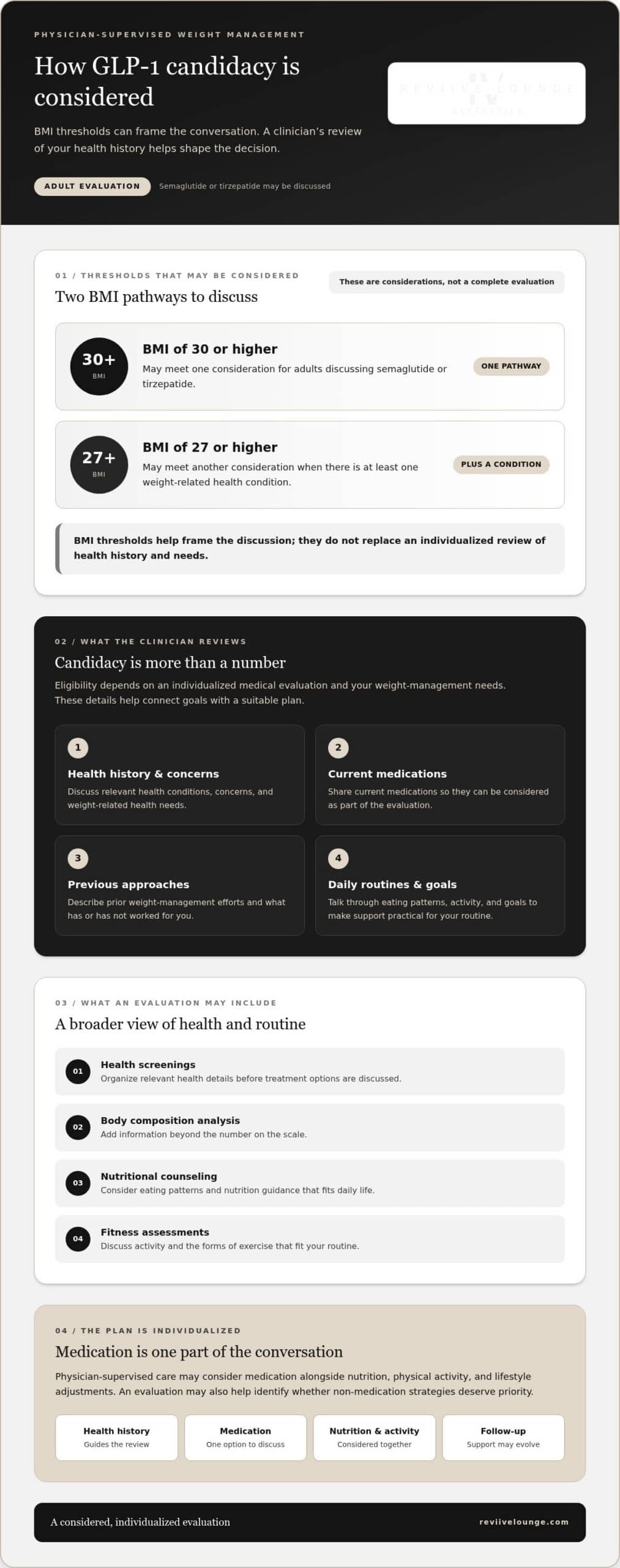
For adults, the BMI thresholds commonly considered for semaglutide or tirzepatide are specific. A BMI of 30 or higher may meet one consideration. A BMI of 27 or higher, together with at least one weight-related health condition, may meet another. These thresholds help frame the conversation, but they don’t replace a review of your health history.
A personalized plan should account for more than the number on a scale. Share your current medications, previous weight-management efforts, eating patterns, activity routine, and health concerns. For example, someone whose work makes meal planning difficult may need different nutrition guidance from someone who can exercise regularly but struggles with appetite. These details help shape practical goals and ongoing support.
Metabolic health and daily routines also matter when planning care. Discuss sleep, energy, activity, and any weight-related health concerns with the clinician. Bring specific examples, such as when hunger affects your schedule or what forms of exercise fit your routine. This makes the discussion more useful than a general goal to lose weight.
Reviive Lounge Aesthetics provides medical weight-management programs from its Chino practice, where you can discuss your goals and follow-up in person. Ask how progress will be monitored and how the plan may change as your needs evolve. Medical virtual visits can also support remote conversations. The appropriate format depends on your evaluation and the follow-up involved.
Before discussing medication, use the consultation to understand the overall plan. Ask how nutrition, activity, medication, and lifestyle adjustments may fit together. Physician-supervised weight-management care can address these areas rather than treating medication as the entire program. A clear plan should also explain what ongoing appointments cover and what changes you may track between visits.
Use your consultation to raise questions about expected support, monitoring, and how treatment fits your health history. An evaluation may also help identify whether non-medication strategies deserve priority. For an overview of personalized medical weight-loss care, consider how a supervised program could support your goals and daily routine.
Who Is Eligible for a Physician-Supervised Weight Loss Program?
Eligibility depends on an individualized medical evaluation and your weight-management needs. A clinician considers whether supervised care, including medication, fits your health history and circumstances.
Eligibility for Physician-Supervised Care
Physician-supervised care connects treatment decisions with your medical background and weight-management goals. Eligibility involves more than wanting to lose weight: the evaluation considers health conditions, current medications, previous approaches, and the support needed for an ongoing plan.
Before your initial appointment, prepare a concise account of your health history and any approaches you’ve tried. Note what felt manageable and where you encountered difficulties. This gives the clinician practical context for discussing nutrition, activity, lifestyle adjustments, and whether medication may be considered as part of supervised care.
Medical Eligibility and BMI Thresholds
For adults, physicians typically consider semaglutide or tirzepatide at a BMI of 30 or higher. Adults with a BMI of 27 or higher and at least one weight-related health condition may also be candidates. These thresholds offer a starting point for assessment, not a complete picture of an individual’s health.
Bring information about conditions that may relate to weight, such as a diagnosis already documented in your medical history. The clinician weighs that context alongside BMI and treatment goals. For instance, an adult at a BMI of 28 with a weight-related condition meets a different threshold consideration than an adult below that BMI range.
A suitable plan also needs to fit everyday life. Discuss how meals, activity, work routines, and appointments could affect your ability to follow the plan. These practical details help shape supervised care that connects treatment discussions with daily habits.
Medical Evaluation
The evaluation helps establish an initial picture before treatment decisions are made. It may include health screenings, body composition analysis, nutritional counseling, and fitness assessments. Each can add context: body composition complements scale weight, while discussing fitness can identify current habits and realistic opportunities for movement.
Share your current medications and relevant medical records, then describe any previous weight-management efforts. These details help the clinician consider how tirzepatide or another option may fit your circumstances. Ask what the plan will monitor, how ongoing appointments will support adjustments, and which lifestyle changes should accompany any medication.
A useful eligibility discussion should clarify the factors being considered and the next steps in your evaluation. It should also distinguish whether medication may be part of the proposed plan or whether nutrition, activity, and lifestyle support are the main focus. That clarity helps you understand the options and participate in supervised care with informed expectations.
Potential risks and who should avoid treatment
GLP-1 treatment requires weighing possible side effects against a patient’s health history and goals. Semaglutide and tirzepatide are weekly injections, so discuss medication use, dosing, and monitoring before starting therapy.
Potential Treatment Risks
Nausea is a common side effect considered during GLP-1 treatment. Dosing usually starts low and increases gradually over several weeks to help reduce this risk. Share how you feel after each dose, and discuss symptoms with the clinician managing your care before any dose adjustment.
Safety discussions should include your current medications and previous treatment experiences. For example, tell the clinician if nausea has affected your eating or daily routine in the past. Follow-up appointments can review side effects and help the clinician assess whether the treatment approach needs adjustment.
Ask what medication is being considered and how it is prepared. Compounded peptides are not regulated by the FDA. When discussing semaglutide or other injections, the active ingredient’s name alone does not explain the product’s source or oversight.
Who Should Avoid Treatment
There isn’t a single avoid-treatment rule in the eligibility facts; the decision depends on individual medical assessment. A patient’s health history, current medications, weight-related conditions, and response during treatment all inform whether GLP-1 therapy is suitable. Bring those details to the evaluation rather than relying on another person’s experience.
Pause before starting if important medical information has not been discussed. Provide an accurate medication list and describe previous treatment experiences. The clinician can then assess whether supervised care is appropriate or whether another weight-management approach better fits your circumstances.
If you’re comparing semaglutide injections with other approaches, distinguish medical weight-management care from aesthetic procedures. Body sculpting and laser treatments address different goals; they do not replace medical evaluation or the nutrition, activity, and lifestyle components of weight-management care. Ask what concern each proposed treatment is intended to address.
Aesthetic treatments also serve a different purpose from GLP-1 medication. Botox and neurotoxin injections, dermal fillers, Sculptra, and HydraFacial treatments address aesthetic concerns, not eligibility for semaglutide. Keeping those goals distinct helps you make informed decisions and avoid treating an appearance-focused procedure as a substitute for supervised medical weight loss.
Before choosing treatment, write down questions about nausea, gradual dose increases, product preparation, and follow-up. Review the answers in light of your health history and current medications. This helps you understand which risks are being considered and whether the proposed therapy aligns with your medical needs.
Free medical weight loss consultations
A consultation is most useful when it clarifies the decision, not simply introduces medication. Use the conversation to understand what the evaluation covers, which weight-management approaches may fit, and what ongoing care could involve. Reviive Lounge Aesthetics offers a free initial consultation; medication, prescriptions, and continued treatment are separate considerations.
Prepare a concise health summary before meeting with a clinician. Include current medications, relevant medical history, previous weight-management treatment, and health conditions connected to weight. For example, explain whether appetite, meal planning, or activity made previous approaches difficult. Specific details help the clinician understand your priorities and focus the discussion.
An evaluation may include health screenings, body composition analysis, nutritional counseling, and fitness assessments. Each offers a different perspective: screening reviews health context, while nutrition and fitness discussions identify practical habits. Ask how the findings inform a personalized plan and how progress will be monitored during ongoing care.
If semaglutide and tirzepatide come up, discuss how treatment works alongside lifestyle support. Both medications are administered by weekly injection, and dosing usually starts low before increasing gradually over several weeks. This approach can help reduce common side effects such as nausea. Ask what symptoms to report and how follow-up appointments address dose adjustments.
Clarify what the consultation does and doesn’t include before making treatment decisions. Distinguish an initial discussion from medication, prescriptions, and later appointments. The overall cost depends on the case and is given after a quote request; medication, monitoring, and the support included in the plan can affect it. Insurance coverage also depends on the plan and the specific care involved.
Use these questions to guide the conversation:
- Which parts of the evaluation inform treatment recommendations?
- How will medical history and current medications shape the plan?
- What does follow-up monitor, and how often are appointments planned?
- How are medication and lifestyle support coordinated?
- Which costs relate to the consultation, medication, and continued care?
These questions help distinguish a thorough medical evaluation from a medication-only conversation. A useful discussion should address both any proposed treatment and the nutrition or activity support around it. It should also explain how the clinician will monitor your response and discuss side effects, rather than focusing only on expected weight loss.
After the consultation, review the proposed next steps against your health goals and daily routine. Note the treatment discussed, monitoring plan, follow-up schedule, and costs to clarify. This record makes it easier to compare your options thoughtfully. Explore medical weight-loss consultation options as a next step in understanding supervised care.
Reviive Lounge Aesthetics: Botox & Neurotoxin Injections
Reviive Lounge Aesthetics offers physician-supervised Medical Weight Loss Programs for people considering structured support. A conversation about your goals and health history can help clarify whether the program fits your needs and what treatment considerations apply. Botox & Neurotoxin Injections, Dermal Fillers, and Microneedling with PRP address aesthetic goals, not weight loss.
To discuss medical weight management, contact Reviive Lounge Aesthetics in Chino to learn about the next step. The conversation can focus on your questions, goals, and treatment options.
Choose a Next Step That Fits Your Goals
Progress starts with a plan you can understand and take part in. Before moving forward, identify what matters most: building sustainable habits, discussing medication, or getting medical guidance on weight management. A medical weight loss consultation in Chino Hills can help turn those priorities into a focused conversation about your options and possible support.
Reviive Lounge Aesthetics offers Medical Weight Loss Programs alongside aesthetic services such as Botox & Neurotoxin Injections and Dermal Fillers. Keeping wellness and aesthetic goals distinct can help you decide which conversation is relevant now, without feeling pressured to pursue multiple treatments.
Your next step can be a simple discussion of your goals, questions, and concerns. The right approach depends on your health and priorities, so use that conversation to make an informed choice. Contact Reviive Lounge Aesthetics to discuss your goals and take the next step at your own pace.
Frequently Asked Questions
Are GLP-1 Medications Like Semaglutide Available at the Chino Hills Location?
Reviive Lounge Aesthetics offers physician-supervised medical weight-loss programs that include GLP-1 medications. Semaglutide is a GLP-1 medication, and whether it fits an individual’s plan depends on clinical evaluation and health history. The practice is located in Chino and serves Chino Hills residents. A consultation can help clarify how medication may fit your goals and what ongoing support could involve.
How Does Tirzepatide Work?
Tirzepatide is used as a medication option in physician-supervised weight management and is administered by weekly injection. Its role is considered alongside other parts of a treatment plan, including nutrition, exercise, and lifestyle adjustments. For example, a patient can discuss how meal routines and activity levels fit the plan, and how follow-up appointments will track treatment and support changes over time.
What Are GLP-1 Medications?
GLP-1 medications are a group of medicines used in medical weight management; semaglutide and tirzepatide are examples. They may be considered as part of physician-supervised care, rather than as a standalone substitute for a personalized plan. During a consultation, discuss your health history, current medications, and goals so the provider can explain how medication fits with nutrition, exercise, and ongoing support.
Who Is Eligible for Tirzepatide?
Adults with a BMI of 30 or higher may be considered for tirzepatide; adults with a BMI of 27 or higher and at least one weight-related health condition may also be candidates. These thresholds guide the evaluation, alongside medical history, current medications, and treatment goals. For example, sharing a relevant diagnosis helps the provider assess how your circumstances fit the criteria.
Why Choose a Weight Loss Clinic?
A weight-management program can bring medical evaluation, medication discussions, and ongoing support into one care plan. This structure can help you understand how treatment relates to nutrition and lifestyle, rather than focusing only on the number on a scale. Follow-up discussions also give you an opportunity to review how the plan fits your schedule and raise questions about your progress.
Which clinics offer medical weight loss consultations in Chino Hills, CA?
Reviive Lounge Aesthetics provides physician-supervised Medical Weight Loss Programs at its Chino practice for residents of Chino Hills and surrounding Inland Empire communities. The service area includes Chino, Norco, Corona, Rancho Cucamonga, Ontario, Eastvale, Pomona, La Verne, Upland, and Fontana. These are communities served by the Chino practice, not separate office locations. A consultation can help you discuss your goals and treatment options.
How much does a medical weight loss consultation cost in Chino Hills?
The initial consultation is free. The cost of a medical weight-management plan depends on the individual plan, with pricing details provided during consultation. Factors may include medication prescriptions, medical monitoring, nutritional guidance, and ongoing clinical support. Ask for a breakdown of what the proposed plan includes so you can distinguish the consultation from medication and continued care.
Do Chino Hills weight loss clinics accept insurance or offer financing?
Flexible financing options are available through Reviive Lounge Aesthetics, with details provided during consultation. Insurance coverage depends on your plan and the specific services or medications involved. Before budgeting, review your policy’s benefits for weight-management care and prescription medication. Consider consultation, medication, and ongoing support separately when reviewing potential coverage and financing.