

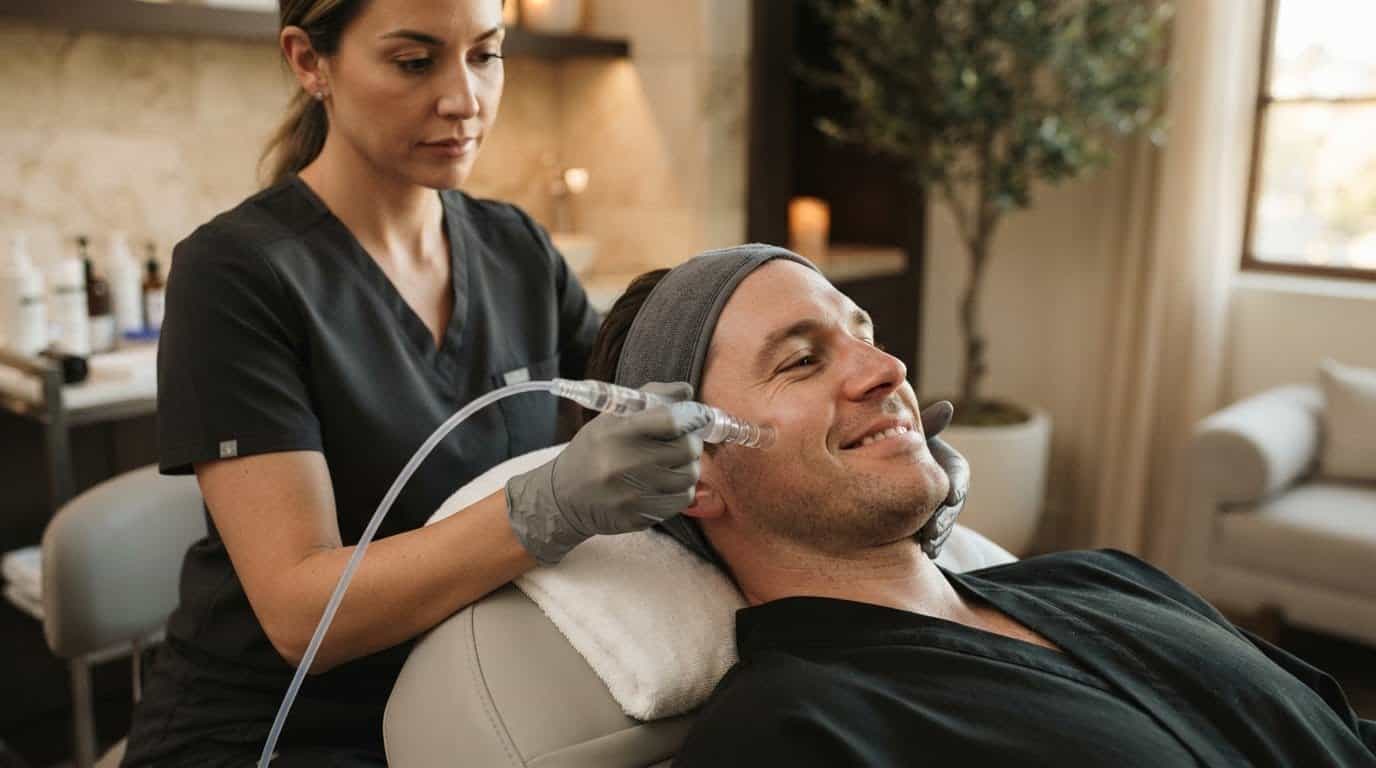
A dull complexion doesn’t always begin with dark spots. Uneven skin tone describes patches that appear darker than the surrounding skin, often linked to excess melanin. Surface buildup can also leave skin looking dull or feeling rough. A HydraFacial for dull and uneven skin tone combines cleansing, exfoliation, extraction, and hydration in one treatment, which may refresh the skin’s appearance and feel.
It makes sense to want a smoother, brighter-looking complexion, but the right approach depends on what’s contributing to the change. Sun exposure, hormonal changes, aging, dryness, and surface debris can all play a part. A facial isn’t suited to every cause or depth of pigmentation.
This guide explains what uneven tone can look like, why dullness and rough texture develop, and how HydraFacial’s cleansing, exfoliation, and hydration steps may help with surface concerns. You’ll also learn how to set realistic expectations and when a different kind of evaluation may be more appropriate.
Key Takeaways
- Learn how surface buildup can contribute to dullness and rough texture, and how cleansing and exfoliation address these concerns.
- Understand what uneven skin tone means and why its underlying cause and depth matter when considering treatment.
- Explore how sun exposure, hormonal changes, and aging can influence visible tone and texture.
- See how hydration and controlled extraction may support smoother-feeling skin, including when dryness or congestion is a concern.
- Recognize when a facial may suit surface-level concerns and when persistent or deeper changes call for a different approach.
Cleansing and exfoliation
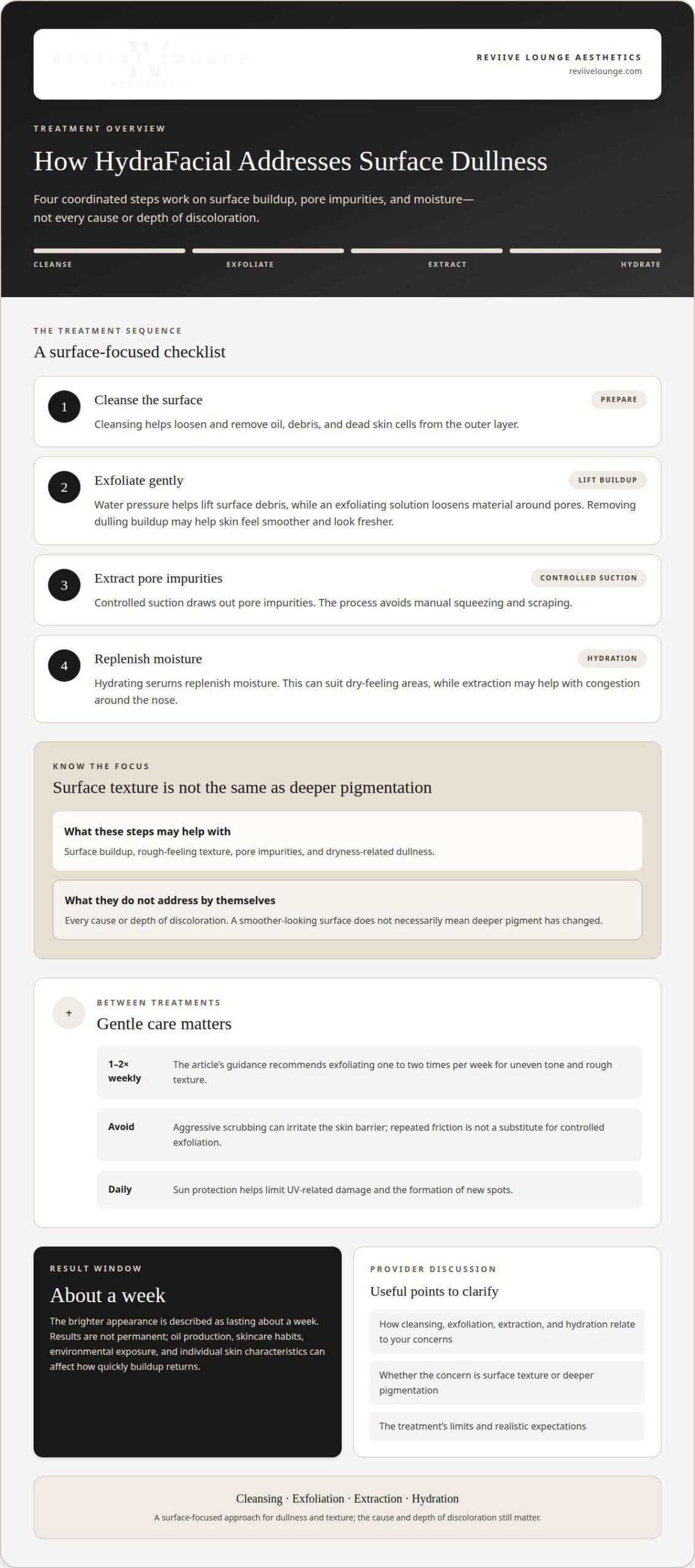
A HydraFacial combines cleansing, exfoliation, extraction, and hydration in one treatment. These steps target surface buildup and pore impurities that can contribute to rough texture and a dull appearance.
Cleansing and Surface Exfoliation
Cleansing and surface exfoliation loosen and remove oil, debris, and dead skin cells from the outer layer. This can help when buildup makes skin feel rough or look less even. Water pressure helps lift surface debris, while an exfoliating solution loosens material around pores, rather than relying on squeezing or scraping.
Exfoliation for a Brighter Appearance
Exfoliation removes dulling surface buildup, while hydration replenishes moisture for a fresher-looking appearance. Together, these steps can make skin feel smoother and help light reflect more evenly. They address superficial texture, not every cause of discoloration, so exfoliation alone may not change deeper pigmentation.
The steps work together: cleansing prepares the surface, exfoliation lifts dead cells and excess sebum, and controlled suction draws out pore impurities. Hydrating serums then replenish moisture. For example, extraction may help with congestion around the nose, while the moisturizing step can suit dry-feeling cheeks. The process avoids manual squeezing and scraping.
Gentle exfoliation matters outside the treatment room, too. The research-backed guidance for managing uneven tone and rough texture recommends exfoliating one to two times per week. Aggressive scrubbing can irritate the skin barrier, so repeated friction is not a substitute for controlled exfoliation. Daily sun protection also helps limit UV-related damage and the formation of new spots.
How much does a HydraFacial cost in the United States? The cost depends on treatment details and any selected enhancements. Pricing is provided after a quote request.
How long do results for brighter, more even skin last? The brighter appearance from a HydraFacial is described as lasting about a week. Results aren’t permanent: oil production, skincare habits, environmental exposure, and individual skin characteristics can affect how quickly buildup returns.
How do you choose a qualified HydraFacial provider near you? Look for a provider who assesses your concerns, explains how cleansing, exfoliation, extraction, and hydration relate to them, and distinguishes surface texture from deeper pigmentation. A clear discussion of the treatment’s limits helps set practical expectations.
After treatment, gentle cleansing, moisturizing, and sun protection support your skin-care routine. Since hydration and exfoliation address different surface concerns, the approach should reflect whether dryness, buildup, or pore congestion is most noticeable.
What is uneven skin tone?
Uneven skin tone describes darker patches that contrast with surrounding skin, often linked to excess melanin production. It can appear across normal, dry, oily, and combination skin types, so the visible pattern alone doesn’t identify its cause.
Surface dullness and deeper pigmentation are different concerns. A HydraFacial addresses surface-level texture through cleansing, exfoliation, extraction, and hydration. It isn’t a treatment for significant pigmentation, deeper acne scars, or structural skin changes. A smoother-looking surface doesn’t necessarily mean pigment deeper in the skin has changed.
Customization may focus on dullness or superficial discoloration. Brightening options can include vitamin C and other brightening agents alongside cleansing and hydration. These choices target the appearance of surface concerns, not every type or depth of pigmentation. Relevant factors include the appearance and location of the discoloration and whether roughness or dryness is also present.
Sun exposure, hormonal changes, and aging are common contributors to uneven tone. The cause and depth help determine whether a surface-focused facial fits the concern. A darker patch that persists or becomes more pronounced deserves attention to its underlying cause, rather than the assumption that exfoliation alone will address it.
How does HydraFacial compare with chemical peels, microdermabrasion, and laser treatments for uneven tone? HydraFacial combines cleansing, exfoliation, extraction, and hydration, making it suited to surface-level texture concerns. Peels, microdermabrasion, and lasers use different approaches, so they aren’t interchangeable. The relevant choice depends on the type and depth of pigmentation.
How many HydraFacial treatments are needed to see results for dull, uneven skin? Some people notice a tone change after one session. For hyperpigmentation, an initial series of three to six sessions, scheduled every four weeks, is one suggested approach, but treatment frequency is individualized and no set number guarantees a particular result.
Can HydraFacial worsen melasma or cause post-inflammatory hyperpigmentation? HydraFacial is intended for surface-level concerns, not deeper pigmentation such as significant melasma. Skin responses vary, so the cause and depth of discoloration matter when selecting a treatment.
For persistent pigmentation, a surface facial may not address the main concern. A treatment plan can instead consider options such as a chemical peel, with the approach guided by the skin concern and its depth. For a clearer understanding of which skin-care approach fits your concern, explore personalized aesthetic care.
Causes of congestion, dullness, and uneven texture
Complexion changes can come from different processes, including pigment shifts, pore congestion, and surface buildup. Distinguishing these patterns helps clarify which concerns a treatment may address.
Causes of Uneven Tone and Hyperpigmentation
Uneven tone develops when darker patches contrast with nearby skin, often because melanin production increases in those areas. Sun exposure, hormonal changes, and aging are common contributors, and several factors can affect the same complexion.
The appearance and distribution of discoloration offer useful context. A defined darker patch differs from an overall dull look, while scattered marks after blemishes may have another pattern. Picking pimples can contribute to acne scarring and uneven tone, so avoiding the habit helps limit one potential source of visible marks.
Depth matters, too. Surface-level discoloration and deeper pigmentation aren’t the same concern, even when both look like dark spots. A treatment focused on surface texture may refresh the skin’s appearance without addressing deeper pigment. Identifying the pattern first helps set realistic expectations and avoids treating every color change as simple buildup.
Causes of Dullness and Uneven Texture
Dullness and rough texture can develop when dead skin cells, excess sebum, and debris accumulate on the surface. This buildup can make skin feel less smooth and look less even, while congested pores may add visible bumps or blackheads.
Dryness can create another texture pattern. Flaky areas may feel rough even without noticeable pore congestion, while oil and debris can collect in pores elsewhere on the face. These concerns can overlap, but the distinction matters: dry patches suggest a moisture concern, while visible pore impurities may indicate congestion.
Repeated aggressive scrubbing can irritate the skin barrier rather than improve texture. That irritation may make the surface feel uncomfortable and less balanced, especially when roughness prompts more friction. Gentle care is a more considered approach than trying to remove buildup by force.
Environmental exposure and individual skin characteristics can also influence how congestion returns. Oil production, skincare habits, and exposure to the surrounding environment affect whether pores become congested again after cleansing. For example, skin that produces more oil may develop visible pore buildup differently from dry skin. These factors help explain why texture can change over time rather than follow one fixed pattern.
Looking at color, feel, and pore visibility together gives a clearer picture than focusing on one symptom. A dull appearance with rough flakes suggests a different surface concern from dark patches with smooth texture. This distinction helps guide the next discussion: which changes may respond to surface-focused care, and which may call for another approach.
Can a HydraFacial help smooth dry, flaky, or dehydrated skin texture?
A HydraFacial may improve the appearance and feel of mild texture related to dryness, congestion, or surface debris. Its hydration step replenishes moisture after cleansing and exfoliation, which can help skin feel smoother and look more refreshed.
For dry or flaky areas, removing loose surface buildup is only part of the process. Hydrating serums containing moisturizers, antioxidants, peptides, and hyaluronic acid replenish moisture during the session. This combination may soften the appearance of flakiness and dullness, while results depend partly on the skin’s condition before treatment.
Oily, acne-prone skin may also benefit from controlled extraction. Suction helps remove oil, debris, and other material from congested pores, including blackheads. This may improve the appearance of surface congestion, but it doesn’t permanently prevent pores from becoming congested again. Oil production, skincare habits, environmental exposure, and individual skin characteristics all influence what happens afterward.
Acne and uneven tone can overlap. Picking pimples can contribute to acne scarring and visible discoloration, so avoid squeezing blemishes. A HydraFacial focuses on cleansing, exfoliation, extraction, and hydration; it isn’t a treatment for deeper acne scars or significant pigmentation. Persistent, inflamed, or painful congestion may warrant a dermatologic evaluation.
What are the side effects and risks of HydraFacial for pigmentation-prone or sensitive skin? Mild, temporary redness or sensitivity can occur after treatment, and downtime is generally minimal. Skin responses vary, so sensitivity and the cause of pigmentation are relevant when considering exfoliation and extraction.
HydraFacial is described as suitable for most skin types, but that doesn’t mean every setting or step suits every concern. For example, dry, flaky cheeks and oily, congested areas may need different emphasis within the same treatment. The surface focus matters, too: it may refresh texture without resolving deeper pigment changes.
Hydration after exfoliation can help address tight, dehydrated-feeling skin, while extraction targets pore debris. These steps support different goals, so the visible concern guides the approach. If dryness, congestion, and uneven texture occur together, a series of treatments and a consistent skincare routine may be useful. The schedule is individualized, not fixed.
After a session, gentle cleansing, moisturizing, and sun protection support skin care. Daily SPF helps limit UV-related skin damage and new spots, while avoiding harsh scrubbing reduces unnecessary irritation. Together, these habits help maintain a smoother-looking surface and manage factors that can contribute to dullness.
HydraFacial for dull, tired-looking skin
A tired-looking complexion can reflect surface buildup, dryness, or congestion rather than deeper pigmentation. HydraFacial combines cleansing, exfoliation, extraction, hydration, and antioxidant protection, focusing on refreshing the skin’s surface and improving how it looks and feels.
Dead skin cells and excess sebum can dull the complexion by leaving an uneven layer across the surface. Cleansing and exfoliation lift that buildup, while controlled extraction addresses pore impurities. For example, congestion around the nose can affect the skin’s overall appearance even when dark spots aren’t the main concern.
Hydration adds a different benefit. Moisturizing serums replenish the skin after cleansing and exfoliation, helping dry or dehydrated areas feel smoother and look more refreshed. The treatment also includes antioxidant protection. Brightening customization may use vitamin C and other brightening agents for surface dullness and discoloration.
Some people notice a brighter-looking tone after one session. That describes an appearance, not a permanent correction of pigmentation. HydraFacial is best suited to surface-level texture concerns; it doesn’t treat deeper acne scars, significant pigmentation, or structural skin changes. Distinguishing dullness from deeper discoloration helps set an appropriate treatment goal.
Results are temporary and are described as lasting about one week. Oil production, skincare habits, environmental exposure, and individual skin characteristics influence how quickly congestion or dullness can return. The treatment doesn’t permanently prevent pores from becoming congested again, so regular skin care remains relevant between sessions.
For ongoing hydration and a refreshed appearance, monthly treatments are recommended to help maintain long-term skin health and hydration. Treatment frequency is individualized, rather than based on a fixed number of sessions that guarantees a particular result. Mild temporary redness or sensitivity can occur, and downtime is generally minimal.
After a session, gentle cleansing, moisturizing, and sun protection support your skin-care routine. Daily SPF helps protect against UV-related skin damage and new spots, which can undermine a brighter-looking complexion. Avoid aggressive scrubbing, since repeated friction can irritate the skin barrier rather than improve its appearance.
If your main concern is a dull, tired-looking complexion, consider a HydraFacial treatment for refreshed-looking skin. A treatment discussion can focus on whether surface buildup, dryness, or congestion best explains the change you’re noticing.
Reviive Lounge Aesthetics: Skin Care
Reviive Lounge Aesthetics offers HydraFacial and can help you consider skin-care options when dullness, uneven tone, or rough texture remains a concern. The right next step depends on whether the change appears related to surface buildup, dryness, or pigmentation that may need a different approach.
For ongoing care, skin-care products and Skinbetter are options to discuss in relation to your complexion and current routine. A thoughtful plan keeps your immediate goals in view while distinguishing surface concerns from changes that may call for another approach.
Choose a Next Step That Fits Your Skin Goals
Choose a next step that reflects the change you want to address, whether that’s a fresher-looking complexion or support for a broader aesthetic goal. A HydraFacial for dull and uneven skin tone may suit surface concerns, while deeper or persistent pigmentation may call for a different discussion about care.
Reviive Lounge Aesthetics also offers Botox & Neurotoxin Injections, Dermal Fillers, and Medical Weight Loss Programs for people with goals beyond skin texture and tone. You can discuss which concern matters most and explore options that align with it, without assuming one treatment addresses everything.
For a personalized conversation about your skin-care goals, contact Reviive Lounge Aesthetics. A thoughtful next step can help you move forward with greater clarity and confidence.
Frequently Asked Questions
Can HydraFacial unclog pores?
Yes, its extraction step uses controlled suction to remove oil, debris, and blackheads from congested pores. This addresses material present during the treatment, not the factors that cause pores to become congested again. Oil production, skincare habits, environmental exposure, and individual skin characteristics influence recurrence. For example, visible blackheads may improve in appearance after extraction, while ongoing congestion can require consistent skincare. Persistent, inflamed, or painful congestion warrants dermatologic evaluation.
Can HydraFacial treat pigmentation?
HydraFacial may improve the appearance of surface-level dullness and discoloration, but it isn’t a treatment for significant or deeper pigmentation. Brightening customization can include vitamin C and other brightening agents. The cause and depth of pigment affect whether a surface-focused facial is suitable. For instance, superficial unevenness differs from persistent dark patches, which may need assessment beyond a facial to identify an appropriate approach.
How soon can you notice smoother-looking skin after a HydraFacial?
Some people notice smoother-feeling skin shortly after their session, and skin may continue to look firmer and healthier over the next few days. The visible change depends partly on skin condition before treatment. Dry, flaky texture and pore congestion are surface concerns the treatment addresses differently. A smoother feel doesn’t mean deeper scars or significant pigmentation have changed, so assess the result against the concern you wanted to address.
What about different skin tones?
Uneven tone can occur across normal, dry, oily, and combination skin types, and HydraFacial is described as suitable for most skin types. Skin tone alone doesn’t explain why patches look darker. The cause and depth of pigmentation matter when considering treatment. Surface dullness and a persistent dark patch are distinct concerns, even if they appear on the same complexion. Suitability and visible results can vary.
What can I expect after a HydraFacial?
Expect skin to feel refreshed, with mild temporary redness or sensitivity possible afterward. Downtime is generally minimal, though individual responses vary. Aftercare can include gentle cleansing, moisturizing, and sun protection. For example, choose a gentle cleanse rather than harsh scrubbing, then apply moisturizer and daily SPF. Those steps support the skin after treatment and help limit UV-related damage that can contribute to new spots.
How does HydraFacial improve dull skin and uneven skin tone?
HydraFacial targets surface dullness through cleansing, exfoliation, extraction, and hydration. Removing dead cells and excess sebum can leave the surface looking fresher, while moisturizing serums replenish moisture. These steps may help with superficial unevenness, but they don’t correct every cause of discoloration. A HydraFacial for dull and uneven skin tone is most relevant when surface buildup or texture contributes to the concern.
What HydraFacial steps or boosters target hyperpigmentation and discoloration?
For surface dullness and discoloration, treatment customization may include vitamin C and other brightening agents. Cleansing and exfoliation address surface buildup, while hydration supports moisture. These steps focus on the skin’s surface; they don’t remove deeper pigmentation or guarantee that spots will fade. The type and depth of discoloration guide whether this approach fits. A brightening option is not a treatment for significant pigmentation.
Who should avoid HydraFacial, including people with melasma, active acne, or skin conditions?
There isn’t a blanket exclusion based only on skin type, but HydraFacial doesn’t address deeper or significant pigmentation, including concerns such as melasma. Persistent, inflamed, or painful congestion calls for dermatologic evaluation. Don’t pick or squeeze active blemishes, since this can contribute to scarring and uneven tone. Skin sensitivity and the nature of an existing skin condition matter when considering exfoliation and extraction, so suitability depends on the concern being treated.