

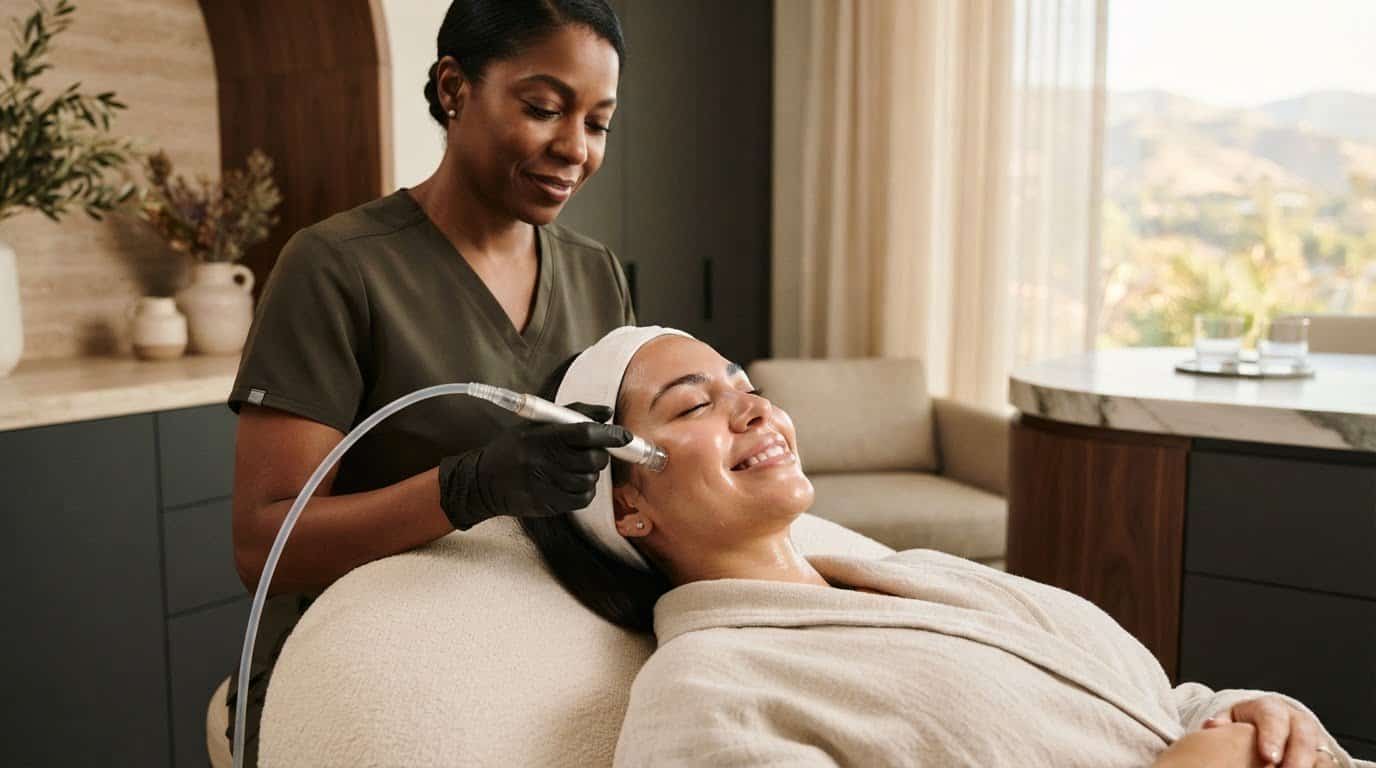
Dull, uneven skin tone can be linked to surface buildup, dryness, or discoloration, and each may call for a different approach. A HydraFacial for dull and uneven skin tone combines cleansing, exfoliation, extraction, and hydration to refresh the skin’s appearance. Some people notice a brighter-looking complexion after one session, while changes in pigmentation may take longer and depend on its cause and depth.
If your complexion looks tired or patches of discoloration are difficult to assess, it helps to distinguish surface dullness from persistent pigment. Uneven tone can have different causes and depths, so a treatment that refreshes the surface may affect dullness differently from deeper or hormone-related pigmentation.
This article explains what uneven skin tone can look like, how HydraFacial steps may brighten the skin’s appearance, and what can influence results and timing. You’ll also learn when this treatment may suit surface-level concerns and when a broader approach may be more relevant.
Key Takeaways
- Dullness can be linked to surface buildup or dehydration, while uneven tone may reflect several different causes.
- HydraFacial combines cleansing, exfoliation, extraction, and hydration to support a fresher-looking complexion.
- Results depend partly on whether discoloration is superficial or deeper, such as hormone-related pigmentation.
- Some people notice a glow after one session, while tone improvements may build over multiple treatments.
- Learn which skin concerns may respond to HydraFacial and when another approach may better address the underlying cause.
What is uneven skin tone?
Uneven skin tone describes visible differences in color across the face, such as brown spots, lingering acne marks, or patchy areas. Dullness is different: dead skin cells, dryness, or surface buildup can make the complexion look flat, even without distinct pigmentation. These concerns can appear together, but they don’t always share the same cause.
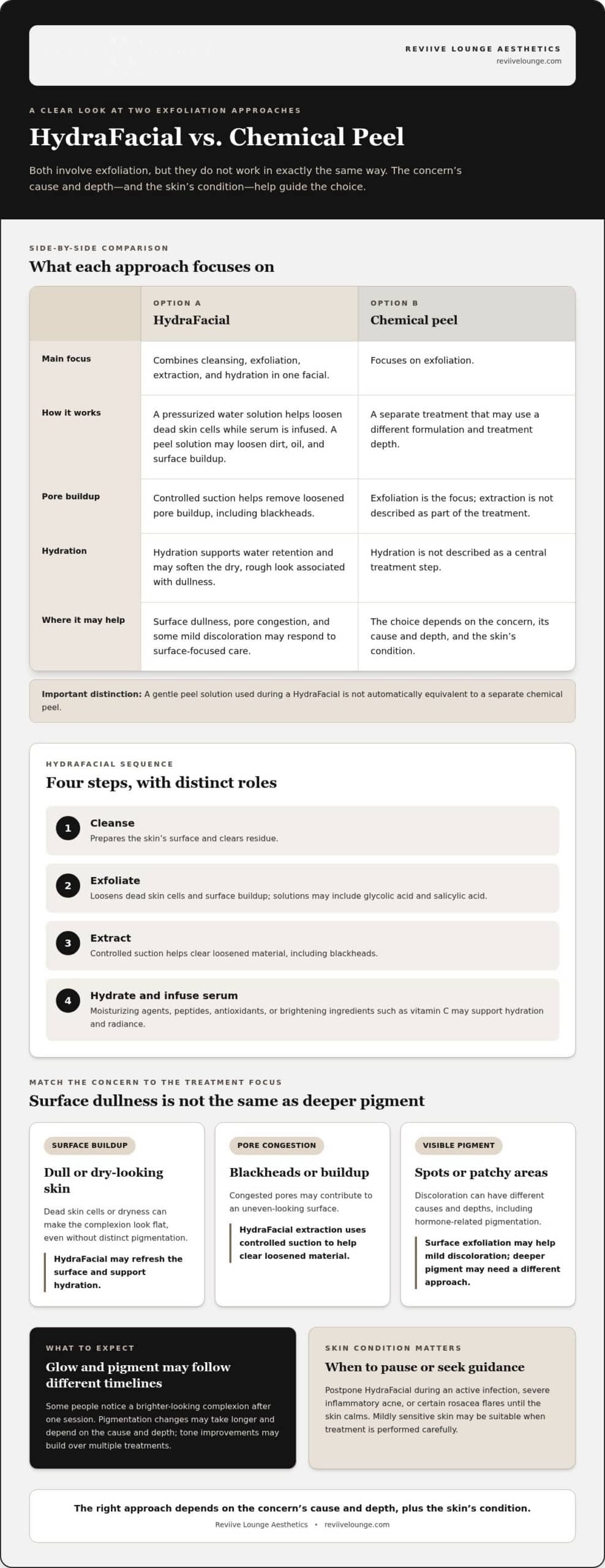
A HydraFacial combines cleansing, exfoliation, extraction, and hydration in one facial. During cleansing and exfoliation, a pressurized water solution helps loosen dead skin cells while serum is infused. A peel solution may also loosen dirt, oil, and surface buildup. Clearing some of that layer can help skin reflect light more evenly and appear brighter.
Extraction uses controlled suction to help remove blackheads and other pore buildup. Unlike manual squeezing, this method avoids applying direct pressure to each congested pore. The steps work together: cleansing prepares the surface, exfoliation loosens debris, and extraction clears loosened material. Hydration then supports water retention, which can soften the dry, rough look associated with dullness.
HydraFacial exfoliation may use glycolic acid and salicylic acid solutions to loosen surface buildup. The approach can be adjusted to skin needs. A gentle peel solution used during a HydraFacial is not automatically equivalent to a separate chemical peel, which may use a different formulation and treatment depth.
HydraFacial vs. chemical peel: Neither is the right choice for everyone. HydraFacial pairs exfoliation with extraction and hydration, while a chemical peel focuses on exfoliation. The concern’s cause and depth, along with the skin’s condition, help guide the choice.
- Surface dullness: Removing dead skin cells and supporting hydration may help improve the appearance of a dry, lackluster complexion.
- Pore congestion: Controlled suction helps clear loosened buildup, including blackheads.
- Visible pigmentation: Surface exfoliation may help with mild discoloration, but deeper pigment has different treatment needs.
Average United States cost: HydraFacial pricing varies by location, treatment scope, and selected add-ons. At Reviive Lounge Aesthetics in Chino, pricing is discussed during a consultation.
Who should avoid treatment or consult a dermatologist first? Postpone HydraFacial during an active infection, severe inflammatory acne, or certain rosacea flares until the skin calms. Mildly sensitive skin may be suitable when treatment is performed carefully.
These distinctions keep the treatment’s role clear: an effect on surface appearance does not mean every kind of uneven tone has the same cause or response. Dullness can occur when dead skin cells build up on the skin’s surface or the skin lacks moisture. HydraFacial may refresh dull-looking skin by removing surface buildup and supporting hydration, helping the skin reflect light more evenly.
This is a description of addressing the surface and moisture-related appearance, rather than a claim that all color differences are addressed in the same way. The page describes HydraFacial extraction as avoiding manual pressure that may irritate sensitive skin. That distinction concerns how loosened pore material is removed; it does not redefine dullness or mean that extraction itself restores moisture. Keeping these steps separate can help clarify which part of the treatment relates to buildup, hydration, or pore clearing when considering visible skin concerns. For more on how gentle exfoliation and hydration may address dryness, see HydraFacial for dry skin.
HydraFacial steps for brighter-looking skin
A brighter-looking complexion depends on how each HydraFacial step addresses the skin’s surface. The process combines exfoliation, cleansing and extraction, followed by an infusion of brightening and antioxidant serums. A provider can tailor these steps to concerns such as dehydration, uneven texture, or maintaining clarity. This combination supports radiance by addressing surface buildup and delivering skincare ingredients in one treatment.
Exfoliation loosens dead skin cells on the outer layer, while cleansing clears residue. Extraction then helps remove pore buildup, and serum infusion follows. Brightening ingredients, including vitamin C, can support the appearance of dark spots over time. Antioxidants may also help reduce oxidative stress in the skin. These steps focus on the surface, so deeper discoloration may need a different approach.
- Exfoliation: Helps smooth the surface and prepare it for the next treatment steps.
- Cleansing and extraction: Clear surface residue and loosened pore buildup.
- Serum infusion: Delivers moisturizing agents, peptides, and antioxidants to support hydration and skin radiance.
- Customization: Adjusts treatment focus for skin type and concerns, such as hydration support or texture refinement.
Vitamin C is one example of a brightening agent used in serums; antioxidants and peptides may also be included. Hydrating ingredients support moisture, which can make dullness less noticeable. HydraFacial can help prepare skin to absorb skincare products more effectively, but that doesn’t mean every serum suits every skin type. A considered combination matters, especially if your routine already includes potent products or your skin is easily irritated.
At home, daily sunscreen helps prevent UV-related spots and control the color intensity of existing spots. A brightening serum can complement that protection, while consistent moisturizing supports hydration. Keep the routine aligned with your skin concerns rather than layering multiple new products at once. For example, someone focused on dark spots may prioritize sunscreen and a vitamin C product, while someone with dryness may emphasize moisture.
Before and after a HydraFacial: Arrive ready to discuss your skin concerns and current routine so the treatment can be tailored to your needs. Afterward, use sunscreen daily to help limit UV-related spots and darkening of existing ones.
HydraFacial exfoliates the outer part of the skin and infuses it with antioxidants and brightening agents, such as Vitamin C, to help fade dark spots over time. The emphasis is on the skin’s surface: exfoliation addresses the outer part, while the infused ingredients support a brighter-looking appearance. This is a gradual process, not a guarantee that every mark will disappear. Keeping that distinction in mind can help set realistic expectations, especially when dark spots are the main concern.
HydraFacial treatment steps may be customized according to individual skin needs, including hydration support, texture refinement, or maintaining clarity. A conversation about skin priorities can help guide which of those needs receives the most attention. For example, a person focused on dryness may prioritize hydration support, while someone concerned with uneven texture may choose refinement. The treatment focus can also be adjusted to help maintain clarity. This tailored approach keeps the steps aligned with individual concerns rather than assuming every complexion needs the same emphasis.
Variation in results by pigmentation depth and cause
The cause of discoloration helps explain what a HydraFacial session may address. Sun exposure can contribute to uneven tone and dark spots, and repeated ultraviolet exposure can make existing spots more pronounced. Post-inflammatory hyperpigmentation is different: acne or another irritation can leave a dark mark after the original concern heals. These surface marks may respond differently from pigment sitting deeper in the skin.
Melasma often appears as larger, persistent patches linked to hormonal changes. Its pigment can sit deeper, so surface exfoliation alone cannot erase it. A HydraFacial may improve the look of superficial pigmentation, including some sun-related discoloration and post-acne marks. It cannot resolve deep-rooted or hormone-related pigmentation on its own. Antioxidants and exfoliation can support a smoother-looking surface, but they don’t change the underlying cause of every dark patch.
HydraFacial can address surface concerns such as dullness, uneven texture, clogged pores, and mild discoloration. Someone with lingering acne marks may notice a refreshed-looking surface after treatment, while deeper melasma calls for a broader strategy. Sun spots may look less prominent when surface dullness improves, but that is not the same as removing the pigment. Skin type and the depth and cause of pigmentation all influence visible results.
Dullness doesn’t always come from pigment. Pollution, sun exposure, and dryness can contribute to a tired-looking complexion. Stress, lack of rest, and hormonal changes can also make skin appear less refreshed. For example, dehydrated skin may look flat even without brown spots, while sun-related pigmentation creates visible areas of darker color. A session that supports hydration and surface clarity addresses a different concern than treatment focused on persistent pigment.
Look at the pattern as well as the color. Small marks remaining after acne suggest post-inflammatory pigmentation; broader, persistent patches can be consistent with melasma. Sun-related spots often occur on exposed areas. These examples help distinguish surface discoloration from deeper patterns, but appearance alone doesn’t establish a diagnosis. A skin assessment considers the location, history, and condition of the skin before selecting a treatment approach.
What skin concerns can HydraFacial treat, including hyperpigmentation and sun spots? It may help improve superficial concerns such as dullness, mild uneven tone, post-acne marks, and sun-related discoloration. Deeper or hormone-related pigmentation usually needs a broader approach than HydraFacial alone.
Expected timing of visible results
Some people notice a brighter glow and smoother texture after one HydraFacial session. That early change often reflects refreshed surface texture and hydration, not complete correction of pigmentation. Smoother, hydrated skin can reflect light differently, making the complexion appear more even. A HydraFacial for dull and uneven skin tone may offer a visible refresh before dark spots noticeably change.
Improvements in uneven tone generally build over multiple sessions rather than appearing overnight. A series spaced a few weeks apart often supports more visible changes. The cause and depth of pigmentation influence progress: surface dullness can respond differently from deeper or persistent discoloration. Sun exposure also affects the appearance of spots, so ongoing exposure can make tone harder to maintain.
For hyperpigmentation, an initial course may include three to six sessions, scheduled every four weeks. Maintenance treatments may follow once every one to two months. These intervals offer a treatment framework, not a fixed outcome timeline. The skin’s response and the pigmentation being addressed shape how the course develops. People considering HydraFacial for dull and uneven skin tone should distinguish a temporary glow from gradual changes in discoloration.
How many HydraFacial treatments are needed to improve skin tone? Some people notice a change after one session, while an initial series of three to six sessions every four weeks may be used for hyperpigmentation. Maintenance may follow once every one to two months.
HydraFacial typically requires no recovery time and causes minimal interruption to daily routines. After a session, return to ordinary activities while maintaining daily sunscreen. UV exposure can contribute to new spots and intensify existing discoloration, so sun protection supports a more even-looking complexion between treatments.
Assess progress by tracking radiance, texture, and specific spots separately. Smoother texture, for example, may become noticeable before a sun spot looks lighter. Comparing the same facial areas in similar lighting can help distinguish gradual changes from differences in hydration or illumination. A simple skincare routine record can also help identify patterns between appointments.
What are the risks and side effects of HydraFacial? Postpone treatment during an active infection, severe inflammatory acne, or certain rosacea flares until the skin calms. Mildly sensitive skin may be suitable when treatment is performed carefully.
Give changes time to develop according to your treatment plan. A refreshed complexion and gradual improvement in surface concerns are different outcomes. Deep or hormone-related pigmentation has a different pattern, and a brighter appearance does not mean its underlying cause has changed. Consistent sunscreen and skincare help support the skin between treatments.
Appearance of dull and uneven skin tone
Uneven tone can appear as scattered brown spots, broad patches, or marks left after acne. Dullness looks different: the surface may seem flat, rough, or less luminous without distinct dark areas. Notice whether your concern is color, texture, or both. That distinction helps clarify whether surface cleansing and hydration align with your main goal.
Compare the same facial areas in consistent lighting. A window, bathroom mirror, and phone camera can show color differently, so changing light may make spots appear stronger or weaker. Look at the cheeks, forehead, and jawline separately. A cluster of marks on the cheeks, for example, differs from an overall lack of radiance.
Texture adds another clue. Dead skin cells and dryness can make the surface look uneven even when pigmentation is minimal. A rough patch may catch light differently from smoother skin, creating a dull appearance. If discoloration remains visible after moisturizing, note its shape and location. A flat, brown mark and a flaky, dry area call for different considerations.
Skin type also affects how concerns present. Dry skin may look tight or lackluster, while oily skin can show visible pore buildup alongside uneven texture. Combination skin may have dryness in one area and congestion in another. These differences matter during a facial assessment because cleansing, exfoliation, and hydration can be tailored to the skin’s condition. If dryness is your main concern, learn more about HydraFacial benefits and results for dry skin.
Consider the timeline, too. A spot that remains after acne heals may suggest post-inflammatory pigmentation. Broader, persistent patches can have a different cause, while dullness associated with dryness may change as the surface is hydrated. Sun exposure can also contribute to dark spots. Note when the concern began and what changed; those details can help describe whether it is new or persistent.
A treatment focused on surface clarity may help with dullness and mild unevenness, but it does not address every type of pigmentation. Deep or hormone-related discoloration may call for a broader strategy. Describe what you see precisely: where the color differs, whether texture has changed, and whether the area is new or persistent. Appearance alone does not diagnose the cause.
Not every visible concern calls for an invasive approach. A careful skin assessment can connect the appearance you notice with an appropriate next step, rather than treating all discoloration alike. To discuss your skin goals and possible options, schedule a conversation about your skin concerns.
Reviive Lounge Aesthetics: Botox & Neurotoxin Injections
Reviive Lounge Aesthetics offers Botox & Neurotoxin Injections for people focused on expression lines, a different concern from uneven pigmentation. These injections are not a treatment for dark spots or dullness, so they may not fit your goal if skin tone is your priority.
If you’re exploring skin-focused options, Reviive Lounge Aesthetics offers HydraFacial treatments and microneedling with PRP. A consultation can help clarify which option relates to your concerns and whether it fits your goals, without assuming every treatment addresses every skin concern.
Schedule a consultation at Reviive Lounge Aesthetics in Chino to discuss your skin goals and treatment options.
Choose a Next Step That Fits Your Skin Goals
Before choosing a treatment, decide what you most want to change: overall radiance, a specific mark, or texture. That priority gives your consultation a clearer direction and helps keep the plan focused on your goals. A HydraFacial for dull and uneven skin tone may be one consideration, while persistent discoloration deserves discussion in the context of its cause and appearance.
Reviive Lounge Aesthetics offers aesthetic and wellness services for different goals, including Botox & Neurotoxin Injections, Dermal Fillers, and Medical Weight-Loss Programs. These address concerns beyond uneven tone, so the right conversation starts with what matters to you and which service relates to that goal.
Contact Reviive Lounge Aesthetics to discuss your priorities and explore a suitable next step. A thoughtful, individualized approach can help you move forward with greater clarity and confidence.
Frequently Asked Questions
How does HydraFacial help dull, uneven skin tone?
HydraFacial can refresh the complexion by clearing surface buildup and supporting hydration. That may make dullness and mild discoloration look less noticeable, especially when rough texture makes the skin reflect light unevenly. A post-acne mark, for example, may remain visible even as the surrounding skin looks brighter. The treatment supports surface appearance, but deeper pigmentation can have a different cause and response.
How long do HydraFacial results for dull skin last?
The visible glow can change as new surface buildup accumulates and the skin loses hydration. Sun exposure can also darken existing spots or contribute to new discoloration, affecting how even the complexion appears. Your skincare routine and the original cause of dullness influence how long the refreshed look remains noticeable. Daily sunscreen and consistent skincare help maintain a brighter appearance between treatments.
What happens during a HydraFacial treatment, step by step?
A HydraFacial follows a sequence that cleanses the skin, refines its surface, clears pore buildup, and finishes with hydration and serums:
- The skin is cleansed to remove surface residue.
- Exfoliation loosens dead skin cells and buildup.
- Controlled suction extracts loosened pore debris.
- Serums are infused to support hydration and radiance.
The treatment focus can be tailored to concerns such as dryness, texture, or clarity.