

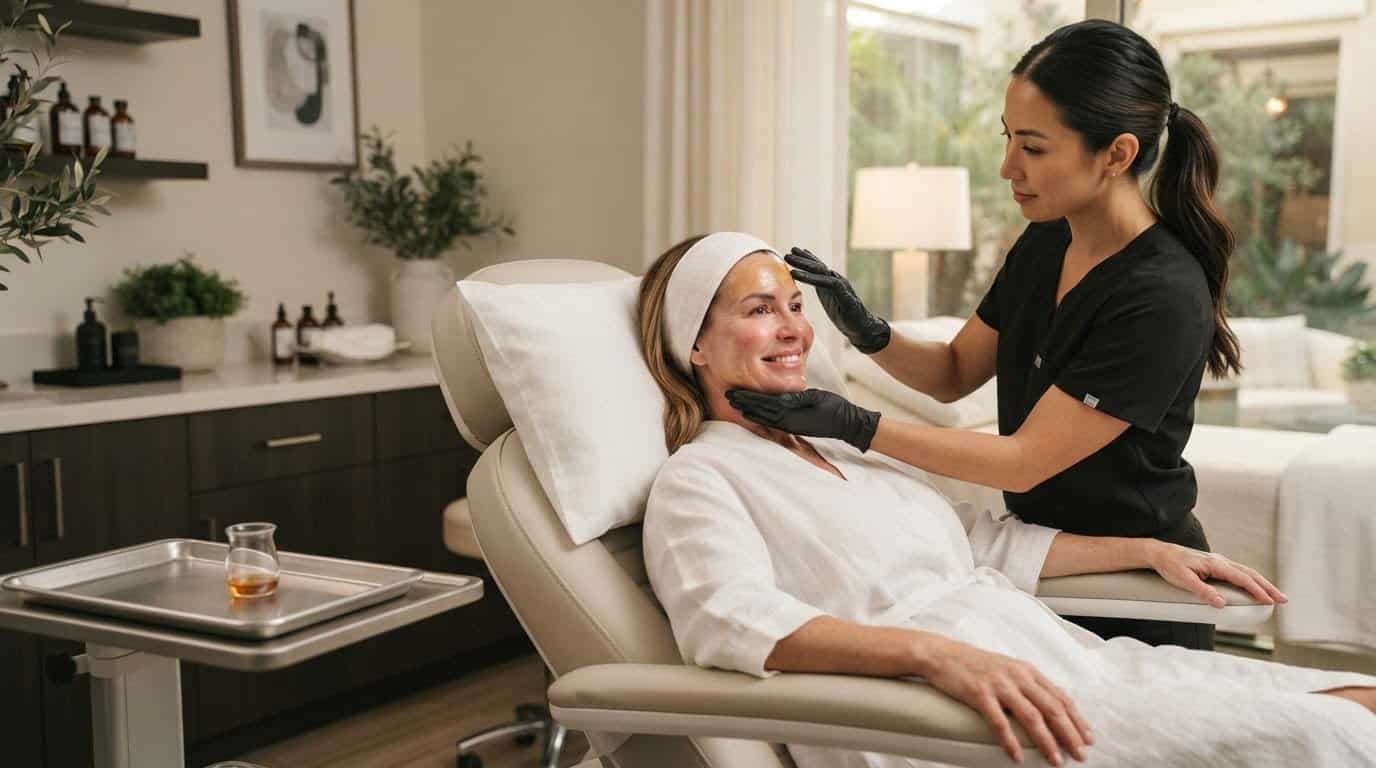
PRP results develop gradually rather than overnight. With a PRP facial for anti-aging in Fontana, visible changes may emerge over several weeks, with fuller effects taking weeks to months. Timing varies, so it helps to understand what the treatment may address and how it could fit into a personalized plan.
If you’re hoping to soften the look of fine lines or improve uneven texture, you may be curious about pairing PRP with microneedling. This approach combines microneedling with platelet-rich plasma to support collagen production and smoother-looking skin. The sections ahead cover possible timing, concerns PRP may address, treatment planning, and recovery, so you can consider the process with clear expectations.
Key Takeaways
- Expect changes to develop gradually over several weeks, with fuller effects appearing over a few weeks to months.
- Learn how combining PRP with microneedling may support collagen production and smoother-looking skin.
- A treatment plan may begin with a series of 3-4 sessions, followed by 1-2 maintenance treatments every year.
- Plan for possible mild redness, swelling, or bruising, which typically subsides within a few days.
- Understand which aftercare steps, including pausing strenuous workouts for a day or two, can support recovery.
What Kind of Treatments are Combined with Plasma Facial Rejuvenation?
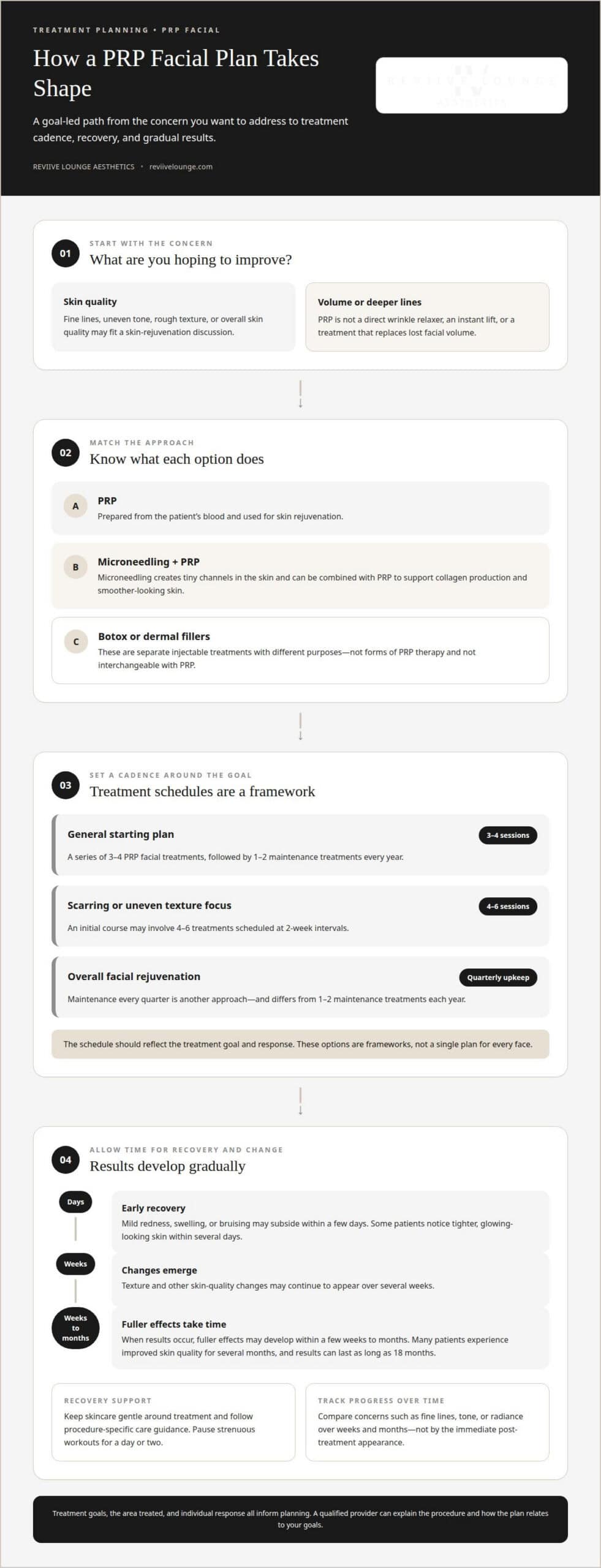
PRP may be paired with microneedling in a plan focused on facial rejuvenation and skin texture. The combination is intended to support collagen production, while a consistent skincare routine can support care between appointments. Botox and dermal fillers are separate treatments, not forms of PRP therapy. Each option addresses different goals, so the right choice depends on whether you’re focused on overall skin quality, expression lines, or facial volume.
For a simple comparison, PRP is prepared from a patient’s blood, while microneedling creates tiny channels in the skin and can be combined with PRP. Botox and dermal fillers are injectables with different purposes, so they aren’t interchangeable with PRP. A treatment discussion can help clarify whether one approach or a combination suits concerns such as fine lines, texture, or volume.
Frequency depends on the treatment goal. A general starting plan is a series of 3-4 PRP facial treatments, followed by 1-2 maintenance treatments every year. For scarring, uneven texture, or specific problem areas, an initial course may involve 4-6 treatments scheduled at 2-week intervals. These schedules offer a framework, rather than a single plan for every face.
For overall facial rejuvenation, maintenance every quarter is another approach. That cadence differs from 1-2 maintenance treatments every year, so the plan should reflect the goal and response to treatment. A series may be considered when texture or scarring is the focus; periodic upkeep may suit someone prioritizing broader skin-quality support. The treatment interval is one part of the plan, alongside the area treated and the approach used.
Skincare can support a treatment plan, but it doesn’t replace a PRP session. Keep your routine gentle around treatment and follow the care guidance for your specific procedure. Someone combining PRP with microneedling, for example, may need a different schedule for resuming active skincare than someone receiving PRP alone. Coordinate the timing of treatments and skincare rather than layering several procedures at once.
In California, look for a provider with appropriate medical credentials and training in the specific PRP procedure, including blood handling and facial treatment techniques. A careful provider should explain the steps, discuss the intended treatment areas, and review how the plan relates to your goals before proceeding. These are practical signs of informed care, alongside understanding the provider’s qualifications.
Benefits for wrinkles, lax skin, and uneven tone
A PRP facial for anti-aging in Fontana may support gradual improvements in skin quality, including the appearance of fine wrinkles, uneven tone, and texture. Results develop over time, so assess changes over weeks and months rather than immediately after treatment.
Texture and Tone Improvements
PRP facial injections may improve overall skin quality, including the look and feel of uneven texture. Some patients notice tighter, glowing, healthier-looking skin within several days, while texture changes may continue to emerge over several weeks. These early signs don’t establish the full result; observe skin tone and surface appearance over time.
For example, someone concerned about rough texture may notice how evenly makeup sits, while someone focused on tone may track visible discoloration. Consistent skincare supports the skin between treatments. A professional assessment can also distinguish texture concerns from volume changes, which call for a different aesthetic approach.
Rejuvenation Effects and Result Duration
When results occur, PRP facial effects appear gradually over several weeks, with fuller effects developing within a few weeks to months. Many patients experience improved skin quality for several months after treatment, and results can last as long as 18 months. The changes develop over time rather than appearing as an immediate shift in facial volume.
Assess progress by revisiting the concerns that prompted treatment, such as fine lines or overall radiance. Photos taken before treatment and compared later under similar lighting can make subtle changes easier to notice. PRP supports skin rejuvenation, but it isn’t a substitute for treatments designed specifically to address deeper lines or lost volume.
Collagen Decline and Skin Aging
Collagen helps support the skin’s structure. As collagen declines with age, skin may look less firm, and wrinkles or laxity can become more noticeable. PRP is used for skin rejuvenation, and microneedling combined with PRP may support collagen production. These approaches focus on skin quality rather than replacing facial volume.
That distinction matters when choosing a treatment. Someone primarily concerned with texture may consider a skin-focused plan, while pronounced volume loss may call for a different discussion. Explore aesthetic treatment options as part of a plan matched to the concern being addressed.
Healing and visible results follow different timelines. Mild redness or swelling after treatment may settle within a few days, while skin-quality changes take longer to develop. Don’t judge the effect by the immediate post-treatment appearance; gradual changes may emerge over several weeks.
PRP may be worth discussing when your goal is a refreshed appearance and improved skin quality. It isn’t a direct wrinkle relaxer or a filler, and it doesn’t produce an instant lift. A PRP facial for anti-aging in Fontana may suit goals centered on gradual skin-quality improvement rather than an immediate change in facial volume.
How Often Should You Get Platelet Rich Plasma Facials?
Session timing is only one part of a PRP plan. Understanding the steps, from blood collection to facial application, helps explain why treatment schedules may involve intervals rather than a single appointment.
A PRP facial begins with a small blood draw, usually about 2 to 4 tablespoons from the patient’s arm. The sample is processed to separate platelets from other blood components, creating platelet-rich plasma for the facial. The treatment uses the patient’s own blood, and the separated portion is applied or injected into the planned treatment areas.
- Collect: A sample is drawn from the patient’s arm and kept associated with that patient throughout the process.
- Separate: A centrifuge separates the platelet-rich portion from other blood components.
- Apply: The platelet-rich plasma is returned to the treatment area, by application or PRP injections, depending on the procedure.
Each step has a distinct purpose. Collection provides the blood sample; separation concentrates the platelet-rich portion; application places it where treatment is intended. Because the material is processed and returned during the same procedure, patient identification and careful handling matter throughout. Before treatment, you can discuss how the sample moves from collection to application.
Frequency depends on the treatment goal and how the skin responds. Patients who see results often have 3 or more treatments, with multiple sessions spaced a few weeks apart. The interval allows the treatment plan to progress over time, rather than treating repeated appointments as a single event. The number and spacing of sessions can differ for general facial rejuvenation versus focused concerns such as uneven texture or scarring.
Blood collection and facial treatment can also involve short-term effects. Mild redness, swelling, or bruising may occur after a PRP facial. A small bruise can appear around the blood-draw site, while facial redness or swelling may appear where treatment was performed. These effects are separate from later changes in collagen production, which develop gradually.
Blood handling is another consideration because the sample is collected, separated, and then applied to the face. Keeping the steps associated with the correct patient and handling the sample carefully helps prevent mix-ups during processing. This sequence also explains why PRP is prepared for the individual receiving treatment. Ask for a clear explanation of collection, separation, and application before the procedure begins.
When planning sessions, consider the concern being treated, the number of sessions in the plan, and the interval between them together. A series of PRP treatments differs from a single appointment, and maintenance may be discussed after the initial course. The schedule should also account for how your skin looks between visits, including whether redness or bruising has settled before the next session.
Managing swelling after facial PRP injections
A PRP facial, sometimes called a vampire facial, uses platelet-rich plasma prepared from the patient’s blood. The treatment may support skin rejuvenation and collagen production, addressing signs of aging such as uneven texture and fine lines.
Appointment and Recovery
An appointment typically takes 30 to 60 minutes, depending on the treatment areas. After the blood sample is processed, the platelet-rich portion is applied or injected into targeted areas. Mild redness, swelling, or bruising typically subsides within a few days, while superficial discomfort and redness can resolve by the following day.
Preparation and Aftercare
Plan aftercare around the first few days: avoid harsh skincare products, exfoliants, and retinoids during this period. After PRP facial injections, avoid strenuous workouts for a day or two. Follow the specific aftercare guidance provided for your treatment to help manage temporary irritation while the skin settles.
Swelling may appear around treated areas, especially when PRP is delivered through injections. The treatment area and technique influence where redness or bruising is visible. If you prefer not to have temporary changes coincide with an important event, consider that when scheduling.
Targeted injections place PRP in selected areas rather than treating the whole face uniformly. A plan focused on fine lines, for example, may involve different areas than one addressing broader skin texture concerns. Clarify the intended treatment areas before the procedure so you understand where temporary swelling or bruising could appear.
Use the first few days as a recovery window. Keep your routine gentle by avoiding exfoliants, retinoids, and harsh skincare products. Resume strenuous workouts after a day or two rather than immediately after injections. Follow the treatment-specific aftercare instructions while temporary redness or swelling settles.
Short-term responses and longer-term skin changes happen on different timelines. Redness, swelling, or bruising may ease within a few days, while changes in skin quality develop gradually over several weeks. Don’t judge the effect by the skin’s initial appearance; early swelling is part of the immediate response, not the final result.
Before treatment, be ready to discuss your target areas and current skincare routine. That conversation helps align the application with your concerns and makes aftercare more specific. If you use retinoids, for instance, ask how to follow the guidance to avoid them for the first few days afterward. If you’re planning a workout, schedule it around the recommended pause.
Contact the treating professional about symptoms that concern you, especially if they differ from the expected mild redness, swelling, or bruising. The usual recovery pattern is measured in days, but the areas treated and the technique used affect the immediate appearance. Following the provided aftercare instructions helps keep recovery organized and predictable.
Combining PRP with microneedling
Microneedling and PRP can be paired to support collagen production and promote tighter, smoother-looking skin. The combination brings together a skin-stimulation technique and platelet-rich plasma, with treatment areas selected around the person’s texture and rejuvenation goals.
Each part has a distinct role. Microneedling creates tiny channels in the skin, while PRP is prepared from the patient’s blood and applied as part of treatment. The platelet-rich concentration is intended to support the skin’s natural repair response. The combination isn’t invasive surgery, but it is still a procedure involving the skin.
The treatment plan starts with the concern being addressed. Someone focused on uneven texture, for example, may need a different area emphasis than someone seeking broader facial rejuvenation. Discussing your goals first helps shape where microneedling is performed and how PRP is incorporated, rather than treating the entire face identically.
PRP is separated from the blood sample using a centrifuge before application. This step produces the platelet-rich portion used in treatment. The preparation and application approach can vary with the process and planned treatment areas. A clear explanation helps you understand how the two techniques fit together.
Microneedling’s controlled skin stimulation and PRP’s role in supporting collagen production make the pairing relevant to skin-quality concerns. The intended effects are gradual, not an instant change in facial volume. This distinction matters when comparing texture goals with concerns better addressed by treatments designed for facial volume.
Recovery planning also matters. Microneedling and PRP may leave the treated skin temporarily red or swollen, so avoid scheduling strenuous activity for a day or two afterward. For the first few days, avoid harsh skincare products, exfoliants, and retinoids. Following these steps gives the skin time to settle.
A combined treatment doesn’t mean every concern needs both techniques. The area, skin texture, and desired outcome guide whether the combination makes sense. A focused plan may target selected areas, while broader facial rejuvenation may call for a different approach. Discuss the intended effects before the procedure begins.
Look at the plan as a sequence: identify the main concern, select the treatment area, prepare PRP, then combine it with microneedling. This explains the rationale without promising a specific result. Gradual changes in smoothness and firmness are different from immediate effects, and the expected timeline should be part of the discussion.
For a personalized discussion of microneedling and PRP, explore a tailored skin treatment plan that reflects your goals and areas of concern.
Reviive Lounge Aesthetics: Vampire Facial
Reviive Lounge Aesthetics offers a Vampire Facial for people exploring PRP as part of an anti-aging skincare plan. A physician-led discussion can help connect your goals, such as improving skin texture, with an appropriate treatment approach and realistic expectations for gradual results.
If your main concern is expression lines or facial volume rather than skin quality, Botox & Neurotoxin Injections or Dermal Fillers may be relevant alternatives. The right option depends on the concern you want to address and the kind of change you’re seeking. A personalized conversation can clarify the differences without treating every aging concern the same way.
Contact Reviive Lounge Aesthetics to discuss whether a Vampire Facial fits your skin goals.
Choose a Next Step That Fits Your Goals
Use your next conversation to clarify what you want to change and what a natural-looking outcome means to you. A PRP facial for anti-aging in Fontana may suit goals centered on skin quality, while concerns beyond texture may call for a different discussion. Reviive Lounge Aesthetics also offers Botox & Neurotoxin Injections, Dermal Fillers, and Medical Weight Loss Programs as part of its broader aesthetic and wellness services.
Bring your priorities into the conversation, whether you’re focused on facial rejuvenation or weighing different approaches. A suitable plan should reflect your concerns, preferences, and comfort with gradual change. A consultation can help you understand which options align with those priorities, without committing to a particular treatment before you’re ready.
Contact Reviive Lounge Aesthetics to discuss your goals and explore a considered next step. Your treatment journey can begin with a clear, informed conversation.
Frequently Asked Questions
How long does it take to see results?
Visible changes may emerge over several weeks, while fuller effects can take weeks to months. An early glow isn’t the same as later changes in skin quality, so assess progress over time rather than immediately. For example, compare how your skin looks in consistent lighting across different weeks. The pace and degree of change vary, and PRP isn’t designed to create an instant change in facial volume.
What is a PRP Vampire Facial?
A PRP Vampire Facial is a non-surgical skin rejuvenation procedure that uses platelet-rich plasma prepared from the patient’s blood. The plasma is applied to the face or used with microneedling, depending on the treatment approach. Someone considering it for uneven texture, for example, can discuss which areas and technique match their goals. The term describes a PRP facial, not a separate kind of injectable filler.
How many PRP injections do you need?
There isn’t one session count for every concern. A common starting series is 3-4 treatments, while scarring or uneven texture may call for 4-6 treatments to start, scheduled at 2-week intervals. Overall facial rejuvenation maintenance may be planned every quarter, or 1-2 treatments every year. These schedules describe different approaches, so the concern being addressed helps determine which frequency is relevant.
How does PRP work?
PRP treatment uses a sample of your blood, processed to separate its platelet-rich portion for facial application or injections. The treatment aims to support skin rejuvenation and collagen production; it doesn’t work like a filler that adds facial volume. Someone focused on skin texture may consider PRP, while someone primarily concerned with lost volume may want to discuss a different treatment category.
How much does it cost?
The cost depends on the treatment plan and the areas being addressed, including whether PRP is paired with microneedling. Session count and treatment approach also affect the overall plan. For services offered by Reviive Lounge Aesthetics, pricing is provided after a quote request rather than through an industry-wide estimate. This helps keep the discussion tied to the specific treatment being considered, not a price range that may not reflect your plan.
Is PRP safe?
PRP involves a blood draw, a centrifuge, and needles or facial application, so it’s a medical aesthetic procedure rather than a risk-free skincare step. Possible short-term effects include mild redness, swelling, or bruising, which typically subside within a few days. Careful handling of the sample and a discussion of your health history are important parts of treatment planning. A qualified medical professional can assess whether the procedure fits your circumstances.
What exactly is PRP?
PRP stands for platelet-rich plasma, the portion of a patient’s blood separated for use in treatment. It’s distinct from a manufactured filler or a topical skincare product. In a facial procedure, the prepared plasma is applied or delivered to selected facial areas. This distinction can help you compare options: PRP is used for skin rejuvenation, while fillers address facial volume through a different approach.
What results can you expect from a PRP facial, and how long do they last?
Potential results include healthier-looking skin and gradual improvements in overall skin quality, texture, or fine lines. PRP results can last several months, and skin rejuvenation results may last as long as 18 months. Those figures describe possible durations, not a guaranteed timeline. If you’re weighing treatment in Fontana, consider whether gradual skin-quality changes align with your priorities and the kind of outcome you want.