

Stopping a GLP-1 doesn’t necessarily end the progress you’ve made, but appetite may return, weight may increase, and blood sugar can rise, especially for people managing type 2 diabetes. Life after stopping GLP-1 medication can look different for each person, so planning the transition matters.
If you’re considering stopping or have already stopped, it’s understandable to wonder whether changes in weight or glucose are expected. This article explains why people stop treatment, what may happen afterward, and how ongoing medical guidance, nutrition, and physical activity can support your health.
You’ll also learn why a medication’s effects may fade, what to discuss with your healthcare team, and which everyday habits can help you adapt. The aim is to give you a clear, practical picture of what may come next, without suggesting one approach is right for everyone.
Key Takeaways
- Understand why hunger and weight can change after treatment ends, and why the timing varies from person to person.
- Set realistic maintenance goals by viewing obesity care as an ongoing process rather than a short course of medication.
- If you use a GLP-1 to manage type 2 diabetes, plan medication changes with your healthcare team and monitor how your blood sugar responds.
- Build sustainable routines around nourishing meals and regular movement to support weight maintenance and overall health.
- Explore common reasons people stop treatment and the care options that may help make the transition more manageable.
1. Why Do People Regain Weight After Stopping a GLP-1?
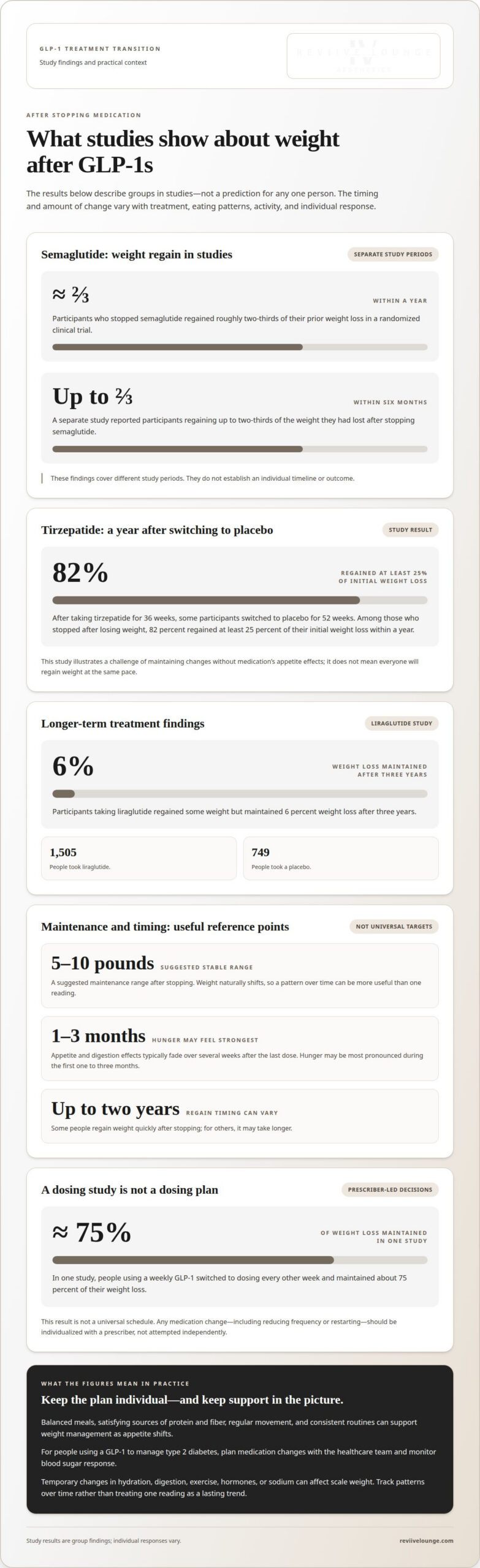
Weight regain can follow GLP-1 treatment because appetite and fullness change as medication effects fade. In a randomized clinical trial, participants who stopped semaglutide regained roughly two-thirds of their prior weight loss within a year. That result describes a group, not a prediction for every person. Individual changes depend on treatment, eating patterns, physical activity, and how the body responds after medication stops.
Biology plays a central role. After weight loss, the body may produce fewer hormones that support fullness and more hormones that stimulate hunger. GLP-1 medications also affect appetite and digestion, so those effects can lessen after the final dose. The time a GLP-1 remains in the body varies by medication; appetite and digestion effects typically fade over several weeks after the last dose.
Semaglutide study findings show why follow-up matters. In one study, participants who stopped semaglutide regained up to two-thirds of the weight they had lost within six months. Another randomized trial found that roughly two-thirds regained weight within a year. These findings cover different study periods and do not predict an individual’s timeline. They do show that weight management may need continued attention after treatment ends.
Tirzepatide research offers another example. Participants took the medication for 36 weeks, then some switched to placebo for 52 weeks. Among those who stopped after losing weight, 82 percent regained at least 25 percent of their initial weight loss within a year. The study result does not mean everyone will regain weight at the same pace, but it illustrates the challenge of maintaining changes without medication’s appetite effects.
The timing also varies. Some people regain weight quickly after stopping a GLP-1, while others may take two years. Hunger may feel most pronounced during the first one to three months, making meal structure and support especially relevant. Changes in sodium, hydration, exercise, hormones, and digestion can also move scale weight temporarily, so one weigh-in may not reflect a lasting trend.
Lifestyle factors can shape the experience, but they do not eliminate biological changes. Regular physical activity, balanced meals, and consistent routines can support weight management as appetite shifts. Planning satisfying meals and building movement into your week, for example, may help you respond thoughtfully to increased hunger. Tracking patterns over time can also help distinguish a temporary fluctuation from sustained regain, without treating every change on the scale as failure.
2. GLP-1s: A long-term medication?
For some people, GLP-1 treatment is part of long-term weight management, not a short course. MUSC experts describe these medications as intended for indefinite use when managing obesity as a chronic condition. That does not mean every person needs the same treatment duration. The decision depends on health goals, response, tolerability, and what happens when medication changes.
Long-term expectations can be grounded in study results rather than an assumption of permanent weight loss. In a liraglutide study, 1,505 people took the medication and 749 took a placebo. After three years, participants taking liraglutide had regained some weight but maintained 6 percent weight loss. This illustrates that partial regain and continued benefit can occur together.
A practical maintenance goal is a stable range, not an unchanged scale number. One suggested range after stopping GLP-1 medication is within 5-10 pounds. Weight naturally shifts with hydration, digestion, and other factors, so a pattern over time can be more useful than one reading. If weight moves beyond the range or keeps trending upward, that can prompt a review of the plan.
Insurance coverage for continued or restarted GLP-1 treatment in the United States depends on the plan and the reason for treatment. Coverage is not uniform; plan rules, medication, and eligibility criteria can affect whether treatment is covered. Discussing the intended use and coverage criteria with the prescribing team and insurer can clarify the options before a treatment change.
Daily routines matter during medication treatment and after it ends. Build meals around satisfying sources of protein and fiber, and choose physical activity that you can maintain in everyday life. Someone who enjoys walking might schedule regular walks, while another person may prefer structured exercise. Sustainable habits can support weight management without making any one routine essential for everyone.
Exercise can also support muscle maintenance during weight loss. Resistance activities, such as strength exercises, can help maintain or build lean muscle. A manageable plan might pair these activities with enjoyable movement and consistent meals. Adjusting your routine as appetite, energy, or treatment changes can make it more practical over time.
Medication schedules are another topic for a prescriber-led discussion. In one study, people using a GLP-1 weekly switched to dosing every other week and maintained about 75 percent of their weight loss. That finding is not a universal dosing plan. Medication changes, including a reduced schedule or restart, should be individualized rather than attempted independently.
Bariatric surgery is another weight-loss treatment option, though it is a distinct medical intervention rather than a simple substitute for medication. Bariatric surgery patients typically lose 35-50 percent of their total body weight. The right path depends on a person’s health, treatment history, goals, and willingness to follow the care required afterward.
If you’re weighing continued treatment against lifestyle-focused maintenance, physician-supervised medical weight management can provide a structured setting to discuss goals and next steps.
3. Is it normal for blood sugar to rise after stopping a GLP-1 medication?
Blood glucose can rise after stopping a GLP-1, particularly for people taking it to manage type 2 diabetes. These medications help regulate blood sugar, so stopping them can remove part of that support. The change depends on the person’s health and overall diabetes treatment plan, making follow-up important when treatment changes.
Appetite and digestive effects typically fade over several weeks after the last dose. As they lessen, hunger may return and meal patterns may shift. Possible changes after stopping include increased appetite and a return of digestive patterns affected by the medication. Experiences vary, so discuss new or concerning changes with a healthcare professional.
For people with type 2 diabetes, monitor blood glucose as directed during a medication transition and share the readings with the treating clinician. A rising pattern can inform decisions about the overall diabetes plan. Don’t stop taking a GLP-1 or change another medication independently, since the combined treatment plan helps determine how blood sugar is managed.
Weight and glucose do not always move in the same direction. In one study, adults treated for type 2 diabetes lost an additional average of 1.3% of their body weight one year after discontinuation. That finding shows why weight alone cannot indicate whether blood sugar remains controlled. A glucose reading and ongoing clinical review offer different, complementary information.
Cholesterol and blood pressure also deserve attention during follow-up, rather than assumptions based on weight change alone. They are separate health measures, and a change in one does not establish what has happened to the others. A practical step is to review these markers alongside blood glucose and weight during routine care, especially when appetite, activity, or treatment changes.
Metabolism and lean muscle are also relevant during the transition. Weight loss can involve changes in body composition, while reduced appetite may make nourishing meals harder to maintain. Protein supports fullness and helps maintain muscle during weight loss. Resistance exercise can also help maintain or build lean muscle, offering a more complete approach than focusing on the scale alone.
Keep a concise record of symptoms, medication changes, glucose readings, and questions for follow-up. For example, note whether increased hunger coincides with a change in meal timing or whether glucose readings shift after stopping treatment. This information can help a healthcare professional assess the pattern and discuss next steps. Because obesity and type 2 diabetes are chronic conditions, ongoing care can address weight, blood sugar, cholesterol, and blood pressure together.
4. Physical activity and nutrition strategies
Build repeatable routines before appetite or activity patterns shift. The Centers for Disease Control and Prevention recommends that adults get at least 150 minutes of moderate-intensity physical activity per week. Walking, cycling, or dancing can contribute, so choose movement that fits your schedule and physical abilities. Consistency makes activity easier to sustain than relying on occasional intense workouts.
Planning for life after stopping GLP-1 medication includes knowing what support you’ll need if treatment resumes. There’s no single restart interval for everyone. The medication, time since the last dose, previous dose, reason for stopping, and side effects all matter. A prescriber can consider these details, along with blood sugar readings for someone with diabetes. Don’t restart using a previous dose or change the schedule independently.
Nutrition habits can help manage hunger as medication effects change. For a first meal, one suggested approach is at least 25 grams of protein and 15 grams of fiber. Eggs with beans and vegetables, or yogurt with oats and berries, are examples that combine filling nutrients. A meal built from familiar foods may be easier to repeat than a restrictive plan.
Meal composition can also support steady routines in life after stopping GLP-1 medication. One suggested first-meal target is less than 45 grams of carbohydrates and no more than 10 grams of added sugar. These figures offer a framework, not a requirement for every person. Someone managing diabetes may need meal choices tailored to glucose patterns and their broader nutrition plan.
Strength training can add a useful element to physical activity. Resistance exercises, such as lifting weights or using resistance bands, can help maintain or build lean muscle. Start with movements suited to your current ability, then make the routine manageable enough to repeat. A short strength session paired with a walk is one practical example.
Monitoring can help you see what happens as your habits change. Record activity, meals, hunger, weight trends, and glucose readings when relevant. Review the pattern with a healthcare professional, especially if appetite increases or diabetes readings shift. Consistent notes can help identify which adjustments support your goals, rather than prompting a reaction to one difficult day.
If you plan to stop treatment, discuss tapering with the prescribing clinician instead of changing the dose on your own. Dose-adjustment options depend on the medication and treatment context. Review a plan for nutrition, physical activity, and follow-up, and clarify which changes call for another discussion. This connects medication decisions with habits that support ongoing weight management.
5. Reasons for stopping GLP-1 medications
Patients stop GLP-1 treatment for different reasons, and the reason shapes what follow-up should address. Side effects may make continuing difficult, while a change in treatment goals may prompt someone to reconsider. Others may find that ongoing medication doesn’t fit their circumstances. Naming the specific concern, such as persistent discomfort or uncertainty about long-term treatment, gives the healthcare discussion a practical starting point.
Side effects deserve a careful review rather than an automatic decision to stop. A clinician can discuss how symptoms relate to the medication, whether adjusting the treatment plan is appropriate, and what could happen to appetite or blood sugar afterward. For example, someone using a GLP-1 for type 2 diabetes needs a plan for glucose management as well as weight. Don’t change the dose independently.
Reaching a weight goal can also raise questions about whether treatment should continue. However, progress on the scale doesn’t by itself establish that obesity, a chronic condition, is resolved. MUSC experts describe GLP-1 medications as intended for indefinite use to manage obesity. A review of health goals, treatment response, and tolerability can help frame a decision without assuming that stopping is the only next step.
What happens after discontinuation varies. Within 12 months of stopping an initial GLP-1 injectable, 27% of patients switched to a different medication, while 20% restarted their original medication. Less than 1% transitioned to metabolic and bariatric surgery, and 14% continued obesity treatment through lifestyle-modification visits with health professionals. These figures describe different paths after stopping, not the reasons each patient made that choice.
Before stopping, write down your main concern and what you hope to achieve by making a change. For example, distinguish side effects from concerns about long-term use, then discuss dose options and follow-up. A healthcare professional can consider the medication, treatment history, weight goals, and diabetes needs together. This can help you plan for changes in hunger, eating habits, or glucose readings rather than treating stopping as a stand-alone event.
Stopping does not mean that future care must follow one fixed route. A clinician may discuss continued treatment, a different medication, restarting, or structured lifestyle support, based on the individual situation. The useful next step is a clear transition plan, including how weight and blood sugar will be followed. Discuss your medical weight-management options as you consider what ongoing support fits your goals.
Reviive Lounge Aesthetics
Reviive Lounge Aesthetics offers physician-supervised medical weight-loss programs for people considering a GLP-1 transition or seeking guidance about next steps. A conversation can help you review your treatment history, weight-management goals, and questions about ongoing care. This support can help you approach the transition with a clearer plan, while medication decisions remain part of individualized medical care.
Bring up changes in appetite, weight, or treatment tolerance so they can be considered alongside your goals. If you’re exploring whether medical weight-loss support fits your situation, contact Reviive Lounge Aesthetics to start a conversation.
Choose a Next Step That Fits Your Ongoing Goals
Planning life after stopping GLP-1 medication can be an opportunity to clarify what ongoing care should look like for you. Instead of measuring progress by a single outcome, consider the broader picture: your health priorities, comfort with treatment, and the kind of support you want to sustain. Those priorities can change, so your plan should leave room for thoughtful reassessment.
Before your next discussion, consider what you most want help with. You may want to talk through changes in weight, appetite, or treatment goals, or understand which care options align with your priorities. Clear questions can make the conversation more focused and help you take an informed next step.
For support with your weight-management goals, reach out to Reviive Lounge Aesthetics to discuss your next step. A considered plan can help you move forward with greater clarity and confidence.
Frequently Asked Questions
What about ‘food noise’?
“Food noise” is a common phrase for persistent thoughts or preoccupation about food. As GLP-1 effects on appetite fade, those thoughts can become more noticeable for some people. Try noting when they arise, such as before meals or during stress, and whether a planned, satisfying meal helps. Sharing these patterns with a healthcare professional can help distinguish increased hunger from changes in routine or emotional cues.
Why Do People Regain Weight After Stopping a GLP-1?
Weight regain can happen as a medication’s effects on appetite and fullness diminish. It isn’t simply a matter of willpower: weight loss itself can alter hunger and fullness signals. Look for patterns, such as more frequent snacking or reduced activity, and adjust routines accordingly. If your weight trends upward over time, discuss the pattern and possible care options with a healthcare professional.
Can you stop a GLP-1 medication suddenly?
Don’t stop a GLP-1 suddenly without discussing a transition plan with the prescribing healthcare professional. Gradual dose reduction is typically recommended over abrupt discontinuation, and dose options depend on the specific medication and treatment context. Before changing treatment, consider why you want to stop, any side effects, and whether you use it for type 2 diabetes. These details help shape a safer follow-up plan.
GLP-1s: A long-term medication?
GLP-1 treatment can be long term for people who need medication to manage obesity, a chronic condition. That doesn’t mean everyone follows the same schedule or stays on treatment indefinitely. Goals, response, tolerability, and health needs all inform ongoing decisions. If you’re unsure whether continued treatment fits, discuss what has changed since starting and what you want treatment to support next.
How Long Should You Stay on a GLP-1?
There isn’t one treatment duration that applies to everyone. For patients who need medication to manage obesity, long-term treatment is often recommended. A useful review considers weight-management goals, benefits, side effects, and any conditions such as type 2 diabetes. Bring these topics to the prescribing clinician before changing doses or stopping, so the plan reflects your current needs rather than a fixed timeline.
How long does it take for a GLP-1 medication to leave your system?
The timeline depends on which GLP-1 medication you take. Appetite and digestion effects typically fade over several weeks after the last dose, but that does not establish the exact time the medication has fully left your system. If you’re planning a procedure, changing treatment, or managing another condition, tell the relevant healthcare professional which medication you used and when you took your last dose.
If Hunger is Heightened, Does it Ever Return to Pre GLP-1 Levels?
Hunger can change over time after stopping, but it doesn’t follow one predictable course for everyone. Increased hunger is often most pronounced during the first one to three months after stopping. Track meal timing, fullness, and cravings to identify patterns, then use that information to refine eating routines. If hunger makes your daily plan difficult to sustain, discuss options with a healthcare professional.
Is it normal for blood sugar to rise after stopping a GLP-1 medication?
Blood sugar can rise after stopping a GLP-1 used to manage type 2 diabetes because the medication helps regulate glucose. Follow the monitoring plan provided by your healthcare professional, and share readings that show a changing pattern. Don’t adjust other diabetes medications on your own. A treatment review can consider glucose readings, eating patterns, and other medicines when deciding how to support ongoing blood sugar management.