

What if the secret to a truly glass-like complexion isn’t found in your bathroom cabinet, but in the precise, biological remodeling of your skin’s deeper layers? You’ve likely spent years experimenting with high-end serums, only to find that persistent rough patches and visible pores remain stubbornly in place. It’s a common frustration to see ineffective at-home results when you’re seeking a significant change. Professional chemical peels for skin texture provide the clinical intervention necessary to break this cycle and achieve a level of smoothness that topical creams simply cannot reach.
This guide explores how medically guided resurfacing systematically refines your skin grain and addresses imperfections at their source. We’ll examine the science behind cellular turnover and the specific advantages of advanced formulations like the VI Peel. By prioritizing an education-first approach, we empower you to understand how professional treatments restore a refreshed complexion. You’ll discover the importance of a bespoke treatment plan designed by a physician-led team to ensure your results are both subtle and long-lasting. Every step of this process is designed to support your journey toward renewed self-assurance and skin health.
Key Takeaways
- Learn how professional chemical peels for skin texture utilize controlled resurfacing to stimulate cellular regeneration and replace rough patches with a smoother surface.
- Understand the specific roles of AHAs, BHAs, and TCAs in targeting different layers of the skin to achieve your unique aesthetic goals.
- Compare the benefits of light and medium-depth treatments to determine which level of clinical intervention best aligns with your desired outcome.
- Discover the essential pre-treatment protocols and post-care steps that protect your skin and maximize the longevity of your results.
- Explore why physician-led oversight and specialized solutions like the VI Peel provide a safer and more effective path to refined skin grain.
Understanding Skin Texture and the Role of Chemical Resurfacing
Skin texture refers to the physical feel and visual smoothness of your skin’s surface. When your skin is healthy and well-hydrated, it reflects light evenly to produce a natural, vibrant radiance. Over time, environmental stressors like UV exposure and pollution combine with the natural aging process to disrupt this harmony. These factors cause dead skin cells to linger on the surface, creating rough patches and an uneven grain that topical moisturizers cannot fix. While many people turn to at-home scrubs, these often provide only superficial results. Professional chemical peels for skin texture offer a more sophisticated solution by systematically addressing the underlying biological causes of roughness.
To understand the process, one might ask, What is a chemical peel? At its core, it is a medically guided application of specific acids designed to accelerate desquamation. This is the biological process where your skin sheds dead cells. By dissolving the bonds that hold these dull cells in place, a peel forces the skin to reveal the fresh, hydrated layers beneath. This clinical approach goes beyond surface-level exfoliation. It initiates a deeper remodeling of the skin’s architecture that at-home products simply cannot replicate.
Common Texture Concerns Addressed by Peels
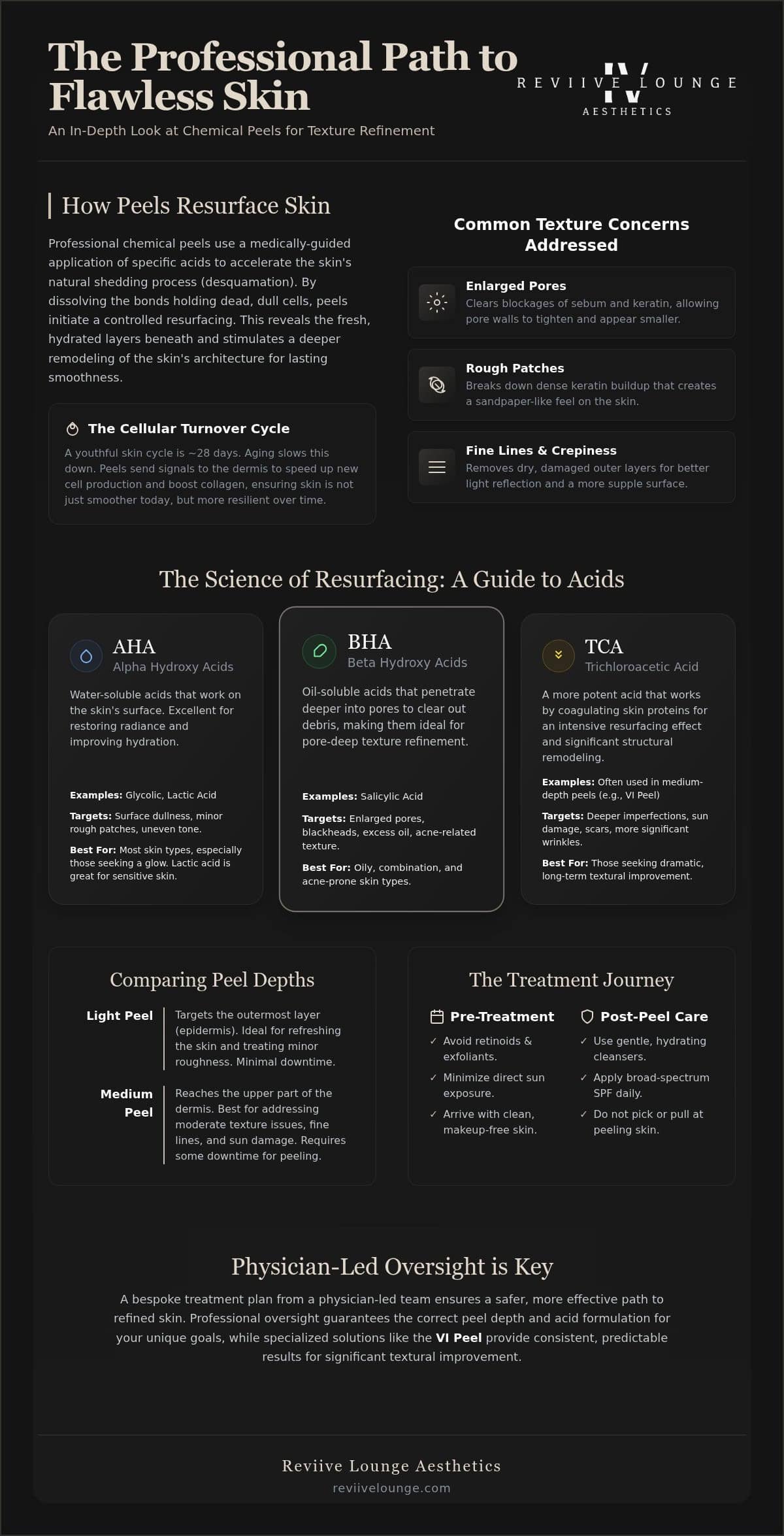
Professional resurfacing targets several specific imperfections that contribute to a grainy or dull appearance. Enlarged pores often result from a buildup of sebum and keratin within the follicle. Peels effectively clear these blockages, which allows the pore walls to snap back and appear significantly smaller. For those experiencing rough patches, the treatment breaks down the dense keratin buildup that creates a sandpaper-like feel. Additionally, peels are highly effective at softening the appearance of fine lines and crepe-like skin. By removing the dry, damaged outer layers, the treatment allows for better light reflection and a noticeably more supple surface.
The Cellular Turnover Cycle
A healthy, youthful skin cycle typically lasts about 28 days. As we age, this process slows down significantly. This slowdown allows imperfections to accumulate and persist. Professional-grade acids intervene by sending a signal to the deeper layers of the dermis to speed up the production of new cells. This surge in cellular activity, prompted by chemical peels for skin texture, doesn’t just improve the surface. It also triggers collagen stimulation. Increased collagen levels provide the structural support necessary for long-term improvement. This dual action ensures that your skin doesn’t just look smoother today; it remains more resilient and refined over time.
The Science of Resurfacing: AHAs, BHAs, and TCAs
Professional chemical peels for skin texture function as a precisely controlled injury to the skin that prompts immediate regeneration and the growth of healthy new tissue. It’s a clinical process that allows for the removal of damaged surface layers to reveal a more uniform complexion beneath. By leveraging specific chemical agents, practitioners can target unique concerns ranging from surface dullness to deep structural irregularities.
Alpha Hydroxy Acids (AHAs), such as Glycolic and Lactic acids, primarily target the outermost layer of the epidermis to restore surface radiance. Glycolic acid possesses a small molecular size that allows it to penetrate efficiently, while Lactic acid offers a gentler alternative by helping the skin retain moisture as it exfoliates. These acids are ideal for resolving minor rough patches and enhancing the skin’s natural glow.
Beta Hydroxy Acids (BHAs), specifically Salicylic acid, provide a unique advantage for individuals with oily or acne-prone skin. Because BHAs are oil-soluble, they can penetrate deep into the follicles to clear debris and refine pore-deep texture. The overall impact of chemical peels for skin texture depends on the specific agent used. For instance, Trichloroacetic Acid (TCA) represents the gold standard for significant structural remodeling. According to clinical studies on chemical peels, TCA works to coagulate skin proteins, leading to an intensive resurfacing effect that addresses deeper imperfections.
Choosing the Right Acid for Your Skin Type
Achieve a refined texture by selecting an acid that aligns with your skin’s specific sensitivities and goals. Sensitive skin types often find success with Lactic acid, which provides a smoother surface without causing excessive irritation. Those battling persistent congestion typically benefit from Salicylic acid’s ability to regulate sebum and clear the skin grain. For comprehensive results, many modern treatments utilize blended formulas that combine multiple acids to address both texture and tone simultaneously. If you’re looking for a broader clinical strategy, our guide to improving skin tone and texture outlines how to transition from trial-and-error skincare to an evidence-based approach that delivers lasting clarity.
Medical-Grade vs. Over-the-Counter Acids
Ensure meaningful change by using medical-grade peels formulated with a lower pH and higher acid concentration. These professional solutions provide more “free acid” to penetrate the skin effectively, while at-home products aren’t usually powerful enough to reach deeper layers. Higher concentrations require physician-led oversight to maintain safety and deliver predictable results. You can determine the most effective clinical strength for your needs by booking a personalized skin assessment with a trusted expert.
Comparing Peel Depths: Light, Medium, and Deep Resurfacing
Balance your aesthetic goals with your available recovery time by selecting the appropriate depth for chemical peels for skin texture. Depth determines how far the chemical agent penetrates the skin’s layers, from the superficial epidermis to the deeper papillary dermis. A physician-led consultation ensures you choose a level that effectively addresses your concerns without unnecessary interruption to your daily life. While depth is a clinical measurement, it directly translates to the visual results you’ll see in the mirror.
Superficial peels focus on the outermost layer of the skin to resolve minor dullness and maintain a healthy glow. These are often preferred by those with busy schedules who want to avoid significant downtime. Medium-depth peels go a step further by reaching the papillary dermis to correct more significant texture irregularities and moderate sun damage. Deep peels are intensive medical procedures that often require sedation and are generally performed in surgical settings rather than aesthetic med spas. By focusing on light and medium depths, we prioritize your safety while providing a predictable path to a refined complexion.
The Benefits of a Light “Lunchtime” Peel
Maintain a healthy glow and subtle texture refinement by opting for a light superficial peel. You’ll likely experience a slight redness similar to a mild sunburn for 1-3 days following the procedure, but “social downtime” is virtually non-existent. These treatments offer the best results when performed in a series. Schedule sessions every 4-6 weeks to achieve cumulative benefits, as each application builds upon the last to gradually polish the skin grain and keep pores clear. It’s an excellent choice for ongoing maintenance and preventing the buildup of dead skin cells.
Medium-Depth Peels for Transformative Results
Correct deeper irregularities and moderate sun damage with a medium-depth resurfacing treatment. Your provider may observe “frosting” during the application, which is a white appearance on the skin caused by protein coagulation. This clinical signal informs the expert that the acid has reached the intended depth for maximum efficacy. Plan for a 5-7 day peeling phase when preparing for a chemical peel of this intensity. Manage this recovery period with professional-grade post-care products to protect the new skin and ensure a smooth, refreshed outcome. This deeper level of chemical peels for skin texture provides the structural intervention needed for more persistent issues that light peels cannot resolve.
The Treatment Journey: Preparation and Post-Peel Care
Begin your transformation with a comprehensive pre-treatment consultation. This initial step allows our physician-led team to evaluate your skin’s unique characteristics and ensure you’re an ideal candidate for chemical peels for skin texture. We focus on identifying your specific concerns and setting realistic expectations for your resurfacing journey. This education-first approach ensures you feel confident and informed before any treatment begins.
Prepare your skin for optimal results by adjusting your current home care routine. You’ll need to discontinue the use of retinoids, Alpha Hydroxy Acids (AHAs), and Beta Hydroxy Acids (BHAs) at least five to seven days before your appointment. This pause prevents over-sensitization and allows the professional acid solution to work predictably on your skin’s surface. We’ll provide a bespoke preparation plan during your visit to ensure your skin is in the best possible condition for resurfacing.
Experience a streamlined procedure that prioritizes your comfort and safety. We start with a thorough clinical cleansing to remove all surface oils and debris. Your provider then applies the specific acid blend with precise technique, monitoring your skin’s reaction at every stage. Once the application is complete, we provide specific instructions to guide you through the initial hours of the recovery phase. Every step is designed to maximize the efficacy of chemical peels for skin texture while maintaining a high standard of professional care.
Sun Safety in the Inland Empire
Protect your investment by being hyper-vigilant about UV exposure. Chino and the surrounding Inland Empire experience high UV indices year-round, which can compromise newly resurfaced skin and lead to unwanted hyperpigmentation. We recommend using a physical mineral sunscreen containing zinc oxide or titanium dioxide to create a safe, reflective barrier against the sun. For those seeking alternative ways to address surface irregularities, you might also consider microneedling with PRP Inland Empire as a complementary treatment for structural skin renewal.
Managing the Peeling Process
Follow the “golden rule” of post-procedure care: never pick, pull, or scrub at peeling skin. Forcing the skin to shed before it’s ready can lead to permanent scarring or uneven pigmentation. Support your skin barrier by applying recommended medical-grade moisturizers that provide deep hydration without causing irritation. Most clients can resume their regular active skincare routine once the peeling process is entirely finished and the skin feels resilient. If you’re ready to start your journey toward a smoother, more refined complexion, book your clinical consultation today to receive a personalized treatment plan.
Personalized Texture Solutions at Reviive Lounge
Reviive Lounge Aesthetics serves as a premier destination for those seeking professional chemical peels for skin texture in the Inland Empire. We specialize in the VI Peel, which is a versatile medical-grade solution designed to address both surface irregularities and uneven tone simultaneously. This specific formulation provides a powerful resurfacing effect while remaining suitable for a wide range of skin types and ethnicities. If you’re also dealing with dark spots or sun damage alongside texture concerns, our VI Peel for hyperpigmentation clinical guide explains how this same treatment targets the root cause of discoloration. Our physician-led oversight ensures that every application of chemical peels for skin texture is administered with the highest level of safety and clinical precision. This professional supervision allows us to utilize more potent concentrations that deliver predictable and transformative results that at-home products simply cannot match.
Enhance your aesthetic journey by integrating multiple treatments for a comprehensive facial rejuvenation. While peels refine the skin’s surface, combining them with Botox injections in Chino can address dynamic wrinkles for a smoother and more youthful overall appearance. We also offer medical grade facials Chino residents trust for measurable, clinically guided results to maintain your results and support skin health between more intensive procedures. This multi-modality approach ensures that every layer of your skin receives the specific care it needs to look its best. By addressing both the structural and surface layers of the skin, we provide a more balanced and natural-looking outcome.
The Reviive Lounge Aesthetics Approach to Skin Health
We prioritize an education-first philosophy to help you understand every option available for your skin health. Your journey begins with a thorough consultation where we discuss the science behind each procedure and what you can expect during the recovery phase. We develop bespoke treatment plans that evolve as your skin goals change and your complexion improves. This creates a supportive partnership where your personal potential remains the central focus. Our Chino lounge provides a sophisticated environment where medical expertise meets the calming atmosphere of a wellness retreat, ensuring you feel comfortable and valued during every visit.
Next Steps for Your Skin Transformation
Schedule a personalized evaluation in Chino to determine the most effective path forward for your unique complexion. When you arrive for your first aesthetic consultation, please bring a list of your current skincare products and any relevant medical history. Bringing these items allows our team to:
- Identify potential product interactions that could affect your peel’s efficacy.
- Assess your skin’s tolerance based on your past aesthetic experiences.
- Select the specific acid concentration that aligns with your current routine.
We’re here to act as your trusted expert guide through every phase of your skin’s renewal. Schedule a consultation at Reviive Lounge Aesthetics in Chino to discuss your goals and treatment options.
Begin Your Journey Toward Refined Skin
Achieving a smooth, vibrant complexion requires more than surface-level care. It demands a clinical understanding of how chemical peels for skin texture systematically remodel the skin’s architecture. By selecting the appropriate acid depth and following a medically guided preparation plan, you can effectively address persistent rough patches and enlarged pores. This systematic approach ensures your results are both visible and sustainable while supporting your skin’s long-term health and resilience.
Reviive Lounge operates as a physician-led medical practice dedicated to providing expertise in VI Peels and advanced medical resurfacing. We take pride in serving residents throughout Chino, Eastvale, and the Inland Empire with personalized care that prioritizes your safety and aesthetic goals. You don’t have to settle for ineffective at-home results when professional, evidence-based solutions are available. For a comprehensive overview of how clinical treatments can address both pigment and surface irregularities together, explore our physician-led roadmap to improving skin tone and texture for lasting radiant results. Our team acts as your trusted partner, offering education-first consultations to ensure every treatment aligns with your unique needs.
Book Your Personalized Skin Texture Consultation at Reviive Lounge and take the first step toward a refreshed, confident version of yourself. Your path to professional skin renewal starts here.
Frequently Asked Questions
How many chemical peels are needed to see an improvement in skin texture?
Most clients observe a refreshed glow after just one session, but a series of three to six treatments is typically recommended for significant texture refinement. The exact number depends on your specific skin goals and the depth of the peel used. During your consultation in Chino, we’ll create a personalized plan that outlines the ideal frequency for your skin type. Consistency allows for deeper remodeling and more significant long-term improvements.
Is a chemical peel appropriate for sensitive skin types or rosacea?
Certain formulations like gentle Lactic acid peels are specifically designed for sensitive skin. These treatments focus on hydrating the surface while providing a mild exfoliation that doesn’t trigger excessive inflammation. However, individuals with active rosacea flare-ups require a specialized evaluation to ensure the acid won’t exacerbate redness. We prioritize a careful assessment of your skin’s barrier health before recommending any resurfacing procedure to ensure your safety and comfort.
Can chemical peels help with pitted acne scars or deep texture issues?
Professional chemical peels for skin texture can soften the edges of shallow pitted scars, though deep atrophic scarring often requires a multi-modality approach. Medium-depth treatments like the VI Peel work to stimulate collagen production, which helps plump the skin from within over time. For more severe structural irregularities, we may suggest combining peels with microneedling with PRP. A clinical evaluation is essential to determine if a peel alone can achieve your desired level of smoothing.
How long does the peeling process typically last after a professional treatment?
Visible peeling usually begins around day three and concludes by day seven after a medium-depth treatment. Superficial peels may only cause minor flaking for two to three days, or sometimes no visible peeling at all. The duration depends entirely on the acid concentration and your skin’s natural rate of cellular turnover. It’s important to let the skin shed naturally without picking to avoid irritation. We’ll provide specific post-care instructions to manage this phase effectively.
What is the difference between a medical-grade peel and a spa facial?
Medical-grade peels use higher concentrations of active acids with a lower pH to reach deeper layers of the skin. While a traditional spa facial focuses on relaxation and surface hydration, a clinical peel initiates a biological remodeling process. These treatments require physician-led oversight to ensure safety and efficacy. By using professional-strength ingredients, we can address more complex texture concerns that standard over-the-counter products or basic facials cannot resolve. If you’re weighing your options, our guide to medical grade facials in Chino can help you identify which physician-led treatment best aligns with your skin goals.
Can I get a chemical peel during the summer in Chino?
You can receive a peel during the summer months, but it requires strict adherence to UV protection protocols. Residents in Chino and the Inland Empire must be particularly cautious due to high sun exposure levels. We recommend staying indoors as much as possible for the first week and wearing a broad-spectrum mineral sunscreen daily. If your lifestyle involves significant outdoor activity, we might suggest scheduling deeper peels during the cooler autumn months to minimize risks.
Are chemical peels safe for all skin tones (Fitzpatrick scales)?
Modern formulations like the VI Peel are specifically engineered to be safe and effective for all Fitzpatrick skin types. In the past, deeper peels carried a higher risk of post-inflammatory hyperpigmentation for darker skin tones. However, our physician-led team uses advanced, buffered solutions that provide excellent results without compromising safety. A personalized consultation allows us to choose the right acid blend that respects your skin’s unique pigment profile while achieving your texture goals. To learn more about how this formulation specifically targets uneven pigmentation, explore our detailed guide on VI Peel for hyperpigmentation in Chino.
Will a chemical peel make my skin thinner or more sensitive over time?
Professional chemical peels for skin texture actually help thicken the skin by stimulating the production of new collagen and elastin in the dermis. While your skin will be temporarily more sensitive to the sun during the immediate recovery phase, the long-term result is a more resilient and structurally sound skin barrier. Regular, appropriately spaced treatments encourage healthy cellular turnover. This process keeps the skin looking youthful and refined rather than making it fragile or thin.