

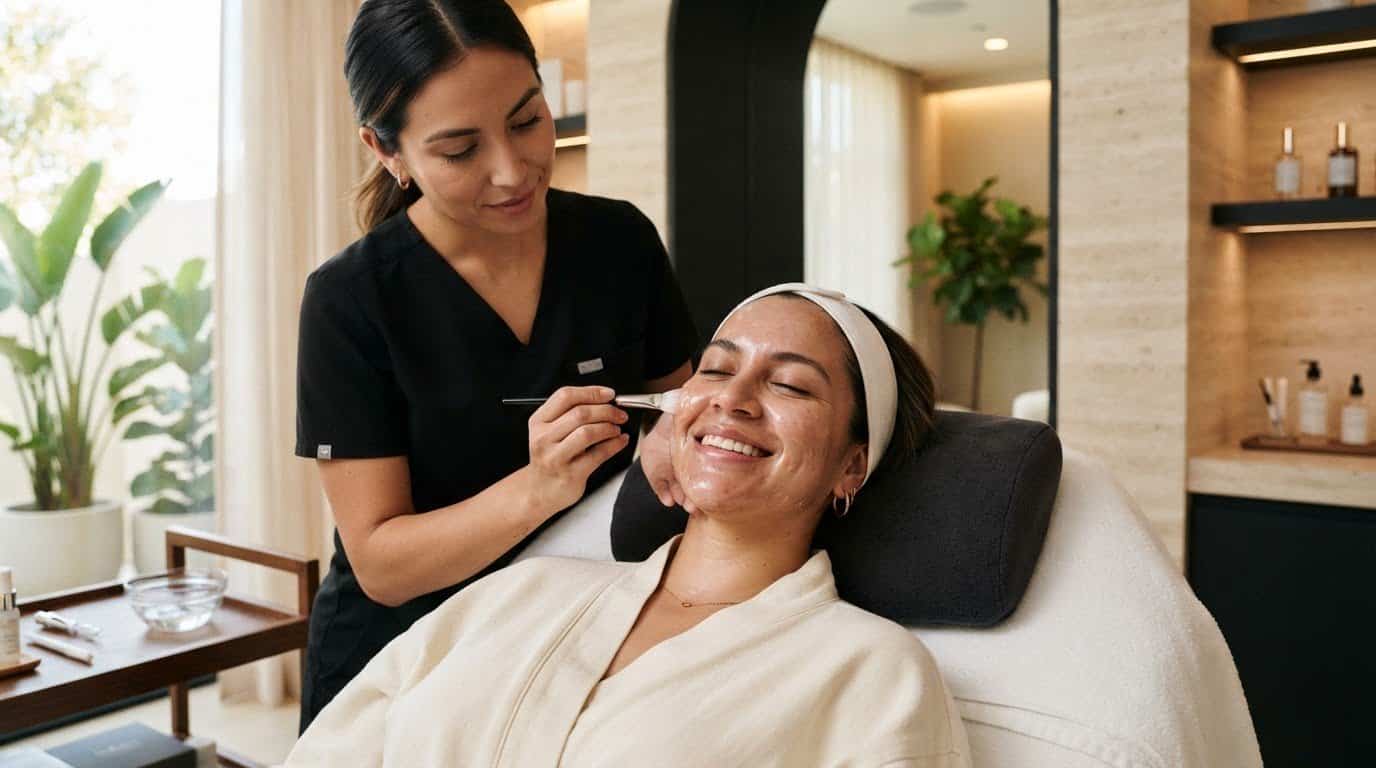
The strongest peel isn’t automatically the right peel for acne scars. Choosing a chemical peel for acne scars in Fontana means matching the peel’s depth and strength to your scar texture and skin tone, while considering the recovery you can accommodate. Superficial peels typically cause redness and light flaking for 2-4 days.
For Fontana residents considering care at Reviive Lounge, appointments take place at our Chino location. This guide explains questions to discuss before selecting a treatment.
Choosing a chemical peel for acne scars Fontana patients are concerned about starts with understanding your skin and treatment options. Consider how a peel may address discoloration or surface texture, and discuss irritation and recovery before deciding.
Here, you’ll learn what to expect before treatment, how peel types are considered for different skin tones, and how to care for your skin as it heals. You’ll also get a practical overview of recovery and the factors that shape a personalized approach to acne scarring.
Key Takeaways
- Identify whether your acne scars are shallow, uneven, or narrow and deep; scar type helps guide which peel approach may be appropriate.
- Skin tone matters when selecting peel strength, since a tailored approach can help account for differences in how skin responds.
- Compare peel ingredients by their purpose and expected recovery, rather than assuming one option suits every scar.
- Support healing by keeping peeling skin moisturized, leaving flakes alone, and protecting your skin from the sun.
- Plan for recovery as part of treatment: your aftercare routine and timing can influence how comfortably your skin heals.
What Do I Need To Know Before My Chemical Peel?
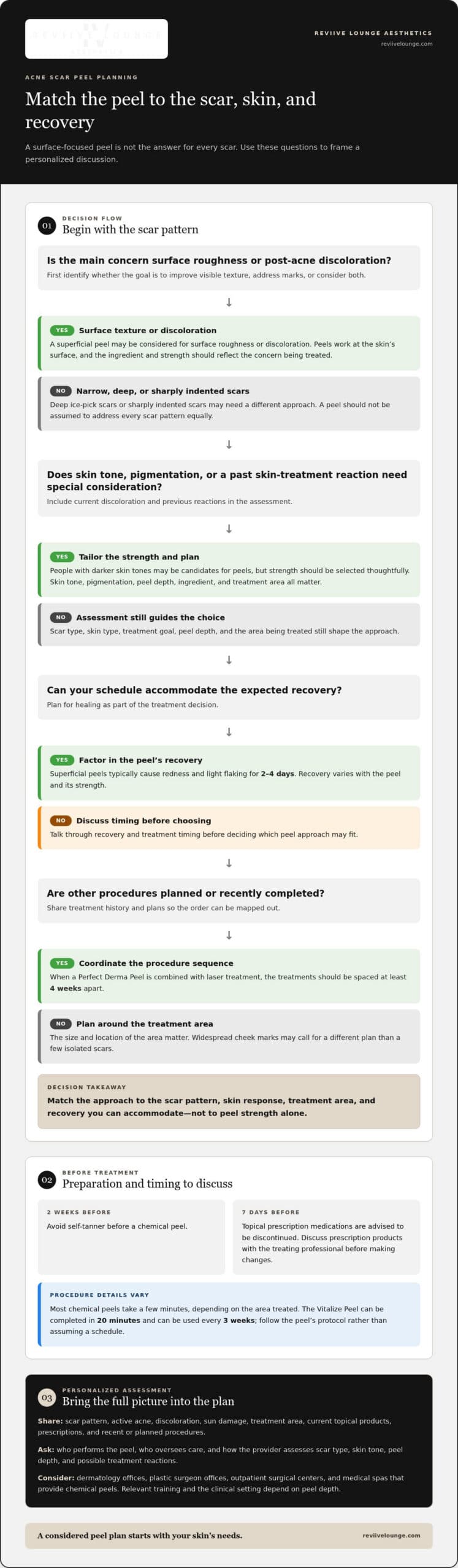
Before treatment, consider your scar pattern, skin tone, and healing needs. A thoughtful plan also accounts for the treatment area, preparation, and any other procedures you’re considering.
Acne Scar Types and Peel Suitability
Look closely at scar shape and depth before choosing a peel. Shallow textural irregularities and uneven pigmentation may respond differently from narrow, deep ice-pick scars or broader depressions. A peel works at the skin’s surface, so the treatment plan should distinguish surface discoloration from changes in skin texture. Active acne, hyperpigmentation, and sun damage also matter because each concern can influence the sequence and strength of treatment.
A superficial peel may be considered for surface roughness or discoloration, while deep, sharply indented scars may need a different approach. No single peel addresses every skin concern equally. First identify your main goal: improve visible texture, address post-acne marks, or consider both. This helps clarify whether a peel may fit your concern.
Treatment Areas and Procedure Combinations
Peels may be applied to selected areas, such as the face, based on the concern being treated. The size and location of the area shape the treatment plan. Acne marks across the cheeks may call for a different approach from a few isolated scars. Mention visible discoloration and sun damage, too, since they may affect which areas are treated.
Combining procedures requires deliberate timing. For example, when a Perfect Derma Peel is combined with laser treatment, the treatments should be spaced at least 4 weeks apart. This interval helps avoid crowding procedures into the same healing period. Tell the provider about treatments already completed or planned, then map out the order before scheduling the peel.
Peel Procedure and Sensations
A peel appointment begins with preparing the treatment area and applying the selected solution. Most chemical peels take a few minutes, depending on the area treated. The Vitalize Peel can be completed in 20 minutes. The SDA Med Spa page says that AHA causes only slight stinging and TCA has anesthetic properties. Sensation varies with the peel and its strength, so describe discomfort during treatment.
Preparation matters, too. People are advised to avoid self-tanner for 2 weeks before a chemical peel and discontinue topical prescription medications 7 days before treatment. Discuss prescription products with the treating professional before making changes. The Vitalize Peel can be used every three weeks, giving the skin time between sessions. Treatment frequency should follow the peel’s protocol rather than an assumed schedule.
Provider Credentials and Fontana Options
For California, look for a provider with relevant training in chemical peels, skin assessment, and management of treatment reactions. Ask who performs the procedure and who oversees care, especially when considering a stronger peel. Dermatology offices, plastic surgeon offices, and outpatient surgical centers are settings where chemical peels are performed. The right credentials and clinical setting depend on the peel’s depth.
For acne scar peels in Fontana, dermatology offices and medical spas are options to explore when they provide chemical peel treatment. Focus on whether the practice assesses scar type, skin tone, and prior procedures before selecting a peel. Share your current topical products, including prescriptions, and your recent treatment history. Those details help shape a plan around your scars, treatment area, and healing priorities.
What are chemical / skin peels?
A chemical peel applies a selected solution to the skin to support surface renewal and address concerns such as pigmentation or uneven texture. The ingredient, strength, and depth influence which concerns it targets and how your skin responds.
Peel Ingredients and Skin Renewal
Peel solutions use different ingredients, so choose based on the concern, not the name alone. Glycolic, salicylic, lactic, and trichloroacetic acids are used in different peel approaches. Selection depends on your treatment goal, skin type, and desired depth. A professional assessment helps determine which option may fit.
For example, acne marks may involve both lingering pigmentation and uneven texture. A peel plan should distinguish those concerns from active breakouts, then select an ingredient and strength accordingly. The American Academy of Dermatology places chemical peels among the five most commonly performed non-invasive procedures in dermatology in the past decade. That context reflects their established role, not a single formula for every skin concern.
The right approach depends on what the peel is intended to address. A surface-focused plan may target tone or mild roughness, while a deeper peel involves different treatment and recovery considerations. Reviive Lounge Aesthetics offers VI Chemical Peels; whether one fits your goals depends on an individualized consultation. Consider whether you’re most concerned about visible marks, texture, or overall skin appearance.
Safety for Darker Skin Tones
People with darker skin tones may be candidates for chemical peels, but strength should be selected thoughtfully. A consultation considers skin tone, current pigmentation, and the concern being treated. This is especially relevant when post-acne marks are a primary concern, since treatment planning should account for both texture and uneven color.
Before treatment, describe past reactions to skin treatments and identify any areas of discoloration. These details help guide the solution and application approach. Skin tone is not the only consideration: peel depth, ingredient, and treatment area also matter. An individualized plan takes your concerns and your skin’s response into account.
If breakouts or oily skin are part of your concern, salicylic acid is one ingredient to discuss. Glycolic or lactic acid may be considered in plans focused on surface texture or pigmentation. The right option depends on an assessment of your skin, not just whether it feels oily. Explain whether active blemishes or lingering marks are your priority so the plan can address them specifically.
Customized peels for different skin types and tones
A personalized peel plan considers skin tone, texture, pigmentation, and recovery needs. Discussing the ingredient and treatment depth can help clarify which approach fits your priorities.
Peel Benefits and Eligible Skin Types
People with different skin types and tones may be candidates for chemical peels. A consultation considers skin tone, the concern being treated, and how your skin responds to determine whether a peel may fit. For acne scarring, distinguish uneven pigmentation from textural irregularities before discussing treatment. This keeps the goal specific, whether you want to address lingering marks, surface roughness, or both.
Peels may improve the appearance of pigmentation and skin texture, but depth and ingredient shape the plan. For example, glycolic acid has been studied for superficial acne scarring and pigmentation. The number of sessions and spacing depend on the peel selected and the skin concern. One described approach uses 3-6 sessions spaced two to four weeks apart, though that schedule is not a universal plan for every skin type.
Peel Types and Treatment Depth
Peels are often grouped as superficial, medium, or deep according to how deeply they affect the skin. Depth influences both the concerns addressed and the downtime to plan around. A medium peel typically has a recovery period of 5-7 days, while a deep peel may involve 10-14+ days of recovery. Medium and deep peels may take several weeks to show full results.
Choose a peel by weighing scar appearance, pigmentation, skin tone, and recovery needs together. A more intensive peel is not automatically a better match for acne marks. Someone focused on superficial discoloration may have different priorities from someone concerned about pronounced texture. Discuss your schedule and healing priorities during your consultation so they inform the treatment plan.
Available Chemical Peel Options
Chemical peel ingredients include glycolic acid, salicylic acid, lactic acid, trichloroacetic acid, Jessner’s solution, and phenol. Each has a distinct role in treatment planning. Salicylic acid may be considered when oily skin or breakouts are part of the concern, while other ingredients may be chosen for texture or pigmentation. The ingredient alone does not determine suitability; skin tone, treatment depth, and your main concern all matter.
VI Chemical Peel is one option; other peel types include glycolic, salicylic, lactic acid, TCA, Jessner’s, and phenol peels. Ask how a proposed option relates to your scar pattern and recovery priorities rather than comparing names alone. Discuss the ingredient, intended depth, healing expectations, and whether you’re focused on active blemishes, uneven tone, or scar texture. This provides a clearer basis for considering potential benefits.
Glycolic, salicylic, lactic acid, TCA, Jessner’s, and phenol peels
Glycolic, salicylic, lactic acid, TCA, Jessner’s, and phenol peels differ in ingredient and treatment depth. For acne marks, the key question is whether your primary concern is surface pigmentation, active breakouts, or indented scarring.
Peel Options for Acne Scars
Glycolic acid may be considered for superficial acne scarring and pigmentation. A cited report described improvement after six serial glycolic acid peels at concentrations of 35-70%. Salicylic acid is another option when breakouts accompany post-acne marks. Lactic acid, Jessner’s solution, TCA, and phenol are additional peel types, each selected according to the treatment goal and depth.
TCA CROSS is a targeted scar-treatment technique, rather than a broad facial peel. Soysal and Akçalı’s 2025 randomized study of TCA CROSS compared two concentrations in 40 patients and reported no significant difference in overall efficacy, with longer crusting in the higher-concentration group. Khunger and colleagues’ 2011 study evaluated TCA CROSS for ice-pick scars in darker skin types. These studies concern specific techniques and populations; they do not establish that every peel is appropriate for every scar or that Reviive offers TCA CROSS.
Potential Improvements in Scars and Pigmentation
A chemical peel works on the skin’s surface, supporting renewal as older skin cells shed. This may soften the appearance of superficial textural irregularities and improve uneven tone. A cited study reported that TCA peels at concentrations of 25-50% improved textural irregularities and skin tone. The study’s reported outcomes help explain why peel choice depends on scar depth.
Peels may also address post-acne pigmentation, which differs from a depressed or raised scar. Some approaches use glycolic acid for superficial scarring or pigmentation, while TCA CROSS is used for narrow ice-pick scars. Distinguishing color changes from structural scarring helps define the treatment goal. Potential benefits depend on matching the technique to the type of mark.
Combining procedures calls for a planned sequence. Microneedling, laser treatments, and subcision address skin through different methods, so adding a peel requires attention to treatment depth and healing. When laser treatments are combined with a Perfect Derma Peel, space laser treatments at least 4 weeks apart. Share prior and planned procedures before setting the schedule.
Peels for Acne and Post-Acne Marks
Which chemical peels may help with acne scars and post-acne marks? Glycolic acid may be considered for superficial scarring and pigmentation, while salicylic acid may be an option when acne is also a concern. TCA CROSS is used for ice-pick scars. The approach depends on whether your concern is active acne, discoloration, or scar texture.
Flat brown marks and shallow roughness present different treatment priorities from narrow, indented scars. Lactic acid and Jessner’s solution are other options to discuss based on ingredient and treatment depth. Phenol is also a peel type, but it is not suitable for every scar pattern. A focused assessment keeps the plan specific to your concern.
Post-peel skincare and sun protection
After a chemical peel, protect freshly treated skin and let peeling happen naturally. Your routine matters during recovery: moisturizing, avoiding picking, and consistent sun protection help reduce irritation and the risk of additional damage.
Keep the skin moisturized as it heals, and don’t pull or pick at flakes. Picking can injure recovering skin and contribute to scarring. If peeling feels uncomfortable, a small amount of 1-2% hydrocortisone cream may help, as directed by your provider. Avoid adding extra products simply because skin feels dry; a gentle moisturizer supports the barrier without disrupting visible peeling.
Sun protection is essential after treatment. Use broad-spectrum sunscreen before and consistently after a peel, and apply SPF 50+ for at least 2 weeks post-peel. Sun exposure can worsen discoloration while skin is recovering, so use protective clothing and limit direct exposure where practical. For example, apply sunscreen before leaving home, then reapply according to its label and your provider’s instructions.
Return to active products gradually, not while peeling skin remains sensitive. Resume a regular skincare regimen after 10 days or as advised by your provider, while continuing to avoid retinoids and other actives. That includes exfoliating products such as glycolic acid unless your post-treatment directions allow them. Keep your routine simple during healing: cleanser, moisturizer, and sunscreen are easier to manage than several active formulas.
Patients should follow the specific aftercare directions for their peel depth and healing response. A light peel may involve three to five days of shedding, so plan around visible flaking rather than scheduling an event during that window. Medium and deep peels have different recovery needs; follow the instructions provided for your treatment rather than borrowing another patient’s routine.
Don’t restart strong products early just to address fine lines or wrinkles. Prioritize healing, even if your usual routine targets those concerns. If redness, discomfort, or peeling changes, follow your care instructions and contact your treating professional for guidance. Avoid scrubs, picking, and unapproved active products while your skin heals, since friction and irritation can increase sensitivity.
Build your post-peel plan around sunscreen, moisturizer, and the recommended pause on active ingredients. For personalized guidance on skin treatment and aftercare, connect with the aesthetics team.
Explore Chemical Peel Options at Reviive Lounge in Chino
Reviive Lounge Aesthetics is located in Chino and welcomes patients from Fontana and nearby Inland Empire communities. Explore our VI chemical peel services in Chino, then ask which options are appropriate for your skin concerns and recovery priorities.
The peel types discussed in this guide are educational examples, not a list of treatments available at Reviive. Confirm the specific service before booking. Contact the Chino team to discuss your next step.
Take the Next Step Toward a Personalized Skin Plan
Choosing a chemical peel for acne scars in Fontana can begin a broader conversation about your skin goals. Before deciding, consider your main concern, the recovery that fits your routine, and any other treatments you’re considering. An individualized assessment can help connect those priorities to a personalized plan at Reviive Lounge Aesthetics in Chino.
Reviive Lounge Aesthetics offers Botox and neurotoxin injections, dermal fillers, and medical weight-loss programs, each for different goals. Focus your next step on the concern that matters to you rather than trying to combine unrelated options. Sharing your goals and treatment history can help make the consultation more useful.
When you’re ready to discuss your options, contact Reviive Lounge Aesthetics. Take the next step at your own pace, with a plan centered on your skin and priorities.
Frequently Asked Questions
How long do chemical peel results last?
How long results last depends on the peel and the concern being treated. For acne marks, visible changes also depend on whether the concern is pigmentation or scar texture. Follow sun-protection guidance after treatment, and remember that new breakouts may leave fresh marks. To assess changes, compare photos taken in consistent lighting after your skin has healed, rather than judging while it is peeling.
Can chemical peels improve indented acne scars or only discoloration?
Chemical peels may improve some superficial textural irregularities and discoloration, while deeply indented scars may need a more targeted approach. TCA CROSS is used for ice-pick scars; other peels may address surface tone or texture. An assessment can distinguish flat post-acne marks from depressions visible in side lighting. This helps set a realistic goal and consider whether another technique may fit.
What chemical peel strengths and ingredients are used for acne scars?
Chemical peel ingredients and strengths vary by procedure. The TCA CROSS studies linked above examined a targeted scar technique, rather than a standard full-face peel. Ask the treating provider to identify the exact procedure, explain why it is being considered, and clarify its risks and recovery. Confirm which treatments Reviive offers before booking.
How can Fontana residents get a chemical peel quote at Reviive in Chino?
Contact Reviive Lounge for the current price of the specific chemical peel offered at its Chino location. Ask which services are included, whether follow-up is included, and whether a series is being proposed. This guide does not establish a price or imply a Reviive location in Fontana.
How many sessions are typically needed, and how far apart?
A series may involve 4 to 8 sessions, with peels generally performed every 2-3 weeks until the desired results are achieved. The schedule depends on peel depth, skin response, and whether the goal is pigmentation or textural scarring. Maintenance peels may be performed once a month. Treat these intervals as planning guidance, not a fixed calendar; allow the healing response and the selected peel protocol to shape each next appointment.
What is the recovery time and aftercare for an acne scar peel?
Recovery varies by depth: superficial peels typically bring 2-4 days of redness and light flaking, while medium peels may need a few days. Deep peels can take 10-14 days to recover, with full recovery taking several weeks. Keep skin moisturized, avoid picking, and use sunscreen consistently. Follow the treatment-specific directions before restarting active products, especially exfoliants or retinoids, which can irritate healing skin.
What are the risks and side effects, especially for darker skin?
Temporary redness, stinging, and flaking can occur, and pigmentation changes are an important consideration, particularly for darker skin tones. Peel strength, depth, and existing pigmentation all inform treatment planning. Share any history of lingering dark marks after irritation and prior peel reactions. A consultation helps determine whether a peel may fit; aftercare and sun protection also matter during healing.
Who should avoid chemical peels, and what medications or skin conditions affect eligibility?
Whether a peel is appropriate depends on your skin’s current condition, medical history, and the products or medications you use. Tell your provider about prescription topicals, recent procedures, active irritation, and any history of unusual healing. Don’t stop prescribed medication on your own; discuss any changes with the prescribing clinician and your treatment provider. This information helps guide whether to proceed, adjust the plan, or consider another approach.