

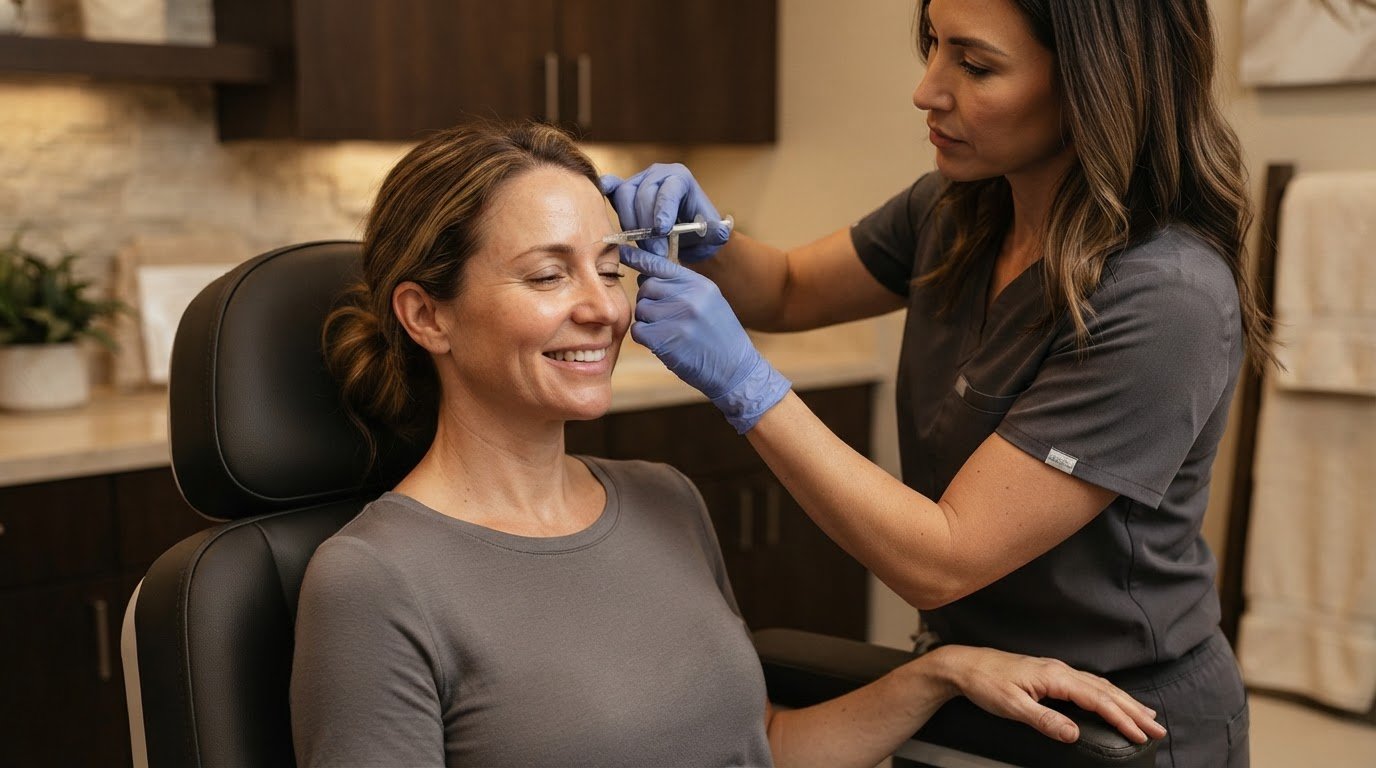
Dysport and BOTOX® both temporarily relax targeted facial muscles, but they aren’t identical: Dysport may begin working faster and can spread slightly more than BOTOX®. If you’re looking for a provider offering Dysport near me, understanding those differences can help you decide what to discuss during a consultation.
It’s understandable to compare familiar treatment options before choosing one. The right fit depends on your goals, the area being treated, and how much facial movement you want to retain. An individualized assessment is more useful than a one-size-fits-all comparison.
Learn how Dysport compares with BOTOX®, when results may appear, how long they may last, possible side effects, and practical aftercare guidance. You’ll also learn what to expect when scheduling a consultation with Reviive Lounge Aesthetics in Chino, California, so you can make an informed decision with professional support.
Key Takeaways
- Compare Dysport and BOTOX® by treatment goals and the area being addressed, not unit counts alone.
- Plan around the fact that results develop over time and their duration can vary.
- Learn which side effects to watch for and what aftercare guidance may help you plan your routine.
- A consultation can help align treatment choices, expectations, and appointment planning with your needs.
- Explore how Reviive Lounge Aesthetics can support your Dysport treatment goals.
What Is the Difference Between BOTOX® and Dysport®?
Dysport and BOTOX® are prescription injections that temporarily soften targeted muscle activity. Dysport is FDA-approved for moderate to severe frown lines between the eyebrows in adults younger than 65 years.
The products share a purpose, but their formulations and dosing units differ. Dysport may begin working faster and spread slightly more than BOTOX®. It typically uses about three times as many units for a comparable result. Unit counts aren’t a direct measure of which treatment is stronger, and one product’s units can’t simply be substituted for another’s. A consultation should consider the intended result, facial movement, and treatment area.
Dysport’s approved cosmetic treatment area is the glabellar region, the vertical lines between the brows. Other areas, such as forehead wrinkles, crow’s feet, neck bands, and lines around the lips, are not the same as Dysport’s FDA-approved cosmetic indication. A provider assesses muscle activity and the areas you’d like to address when planning treatment. For example, forehead lines and crow’s feet involve different muscles, so placement and dosing are tailored to the area.
BOTOX®, Dysport, and Jeuveau are options a patient may discuss when considering neuromodulator injections. Each has its own product information and dosing, so comparing unit totals alone can be misleading. A qualified specialist connects the choice to the goal, such as softening frown lines while preserving some natural movement. They should also explain possible side effects and how the planned treatment area affects the approach.
In the United States, choose a provider who is a licensed medical professional authorized to perform injections. Ask about their experience with facial anatomy, treatment planning, and the specific product being considered. A provider should explain the intended injection sites, expected effects, and relevant risks before proceeding. For someone considering Botox and neurotoxin injections, that conversation can clarify which option aligns with their goals.
During an appointment, the provider reviews the treatment area, discusses goals, and plans injection placement. Dysport is approved for intramuscular injection. Before the visit, prepare to share relevant medical details and tell the provider if you received another botulinum toxin product in the last four months. Discussing previous treatments helps the provider understand your history and plan the appointment.
Per-unit costs aren’t a reliable way to compare Dysport with BOTOX® because their dosing units differ. The total cost varies by product, units, and treatment area, and is explained before treatment proceeds. Focus on the proposed plan and your goals, not just the unit count.
Onset and duration of results
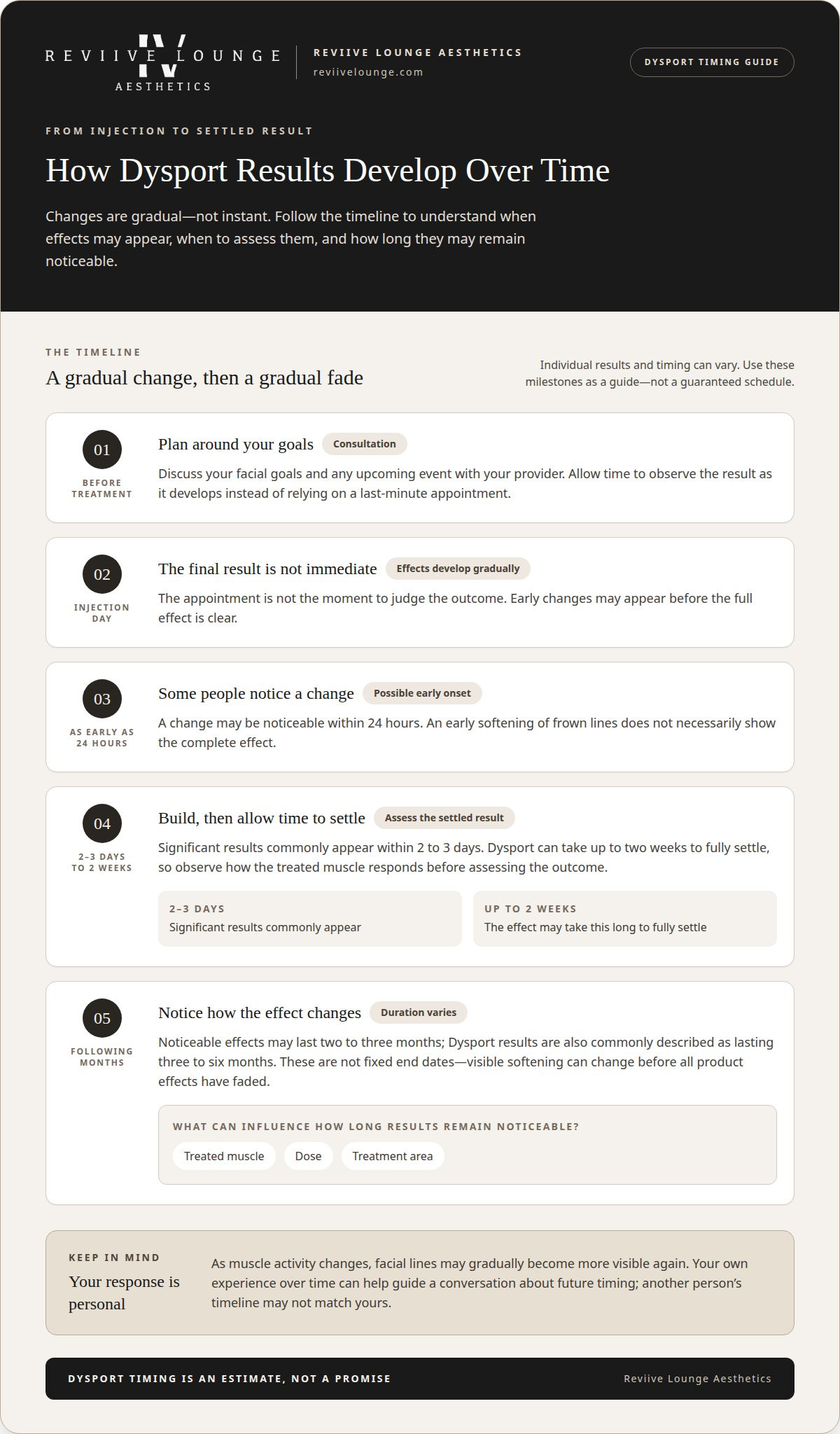
Dysport’s effect develops gradually, so the injection appointment isn’t the moment to judge the final result. Knowing the usual onset and duration helps you plan around facial events and discuss timing with your provider.
Expected Onset of Results
Some people notice a change within 24 hours, while significant results commonly appear within 2 to 3 days. Dysport can take up to two weeks to fully settle, so early changes don’t show the complete effect. Use that settling period to observe how the treated muscle responds before assessing the outcome.
An early change and a settled result are not the same. Frown lines may appear softer before the full effect is clear. If you have an upcoming event, discuss timing during your consultation and allow time to assess the result rather than relying on a last-minute appointment.
A BOTOX® appointment usually takes around 15 minutes, depending on how many wrinkles are treated; Dysport appointments can also be brief. Injection discomfort can be discussed during the visit, along with the treatment plan and expected changes. Ask how to distinguish normal gradual onset from a concern that needs follow-up.
How Long Results Last
Dysport results are commonly described as lasting three to six months, while noticeable effects may last two to three months. These ranges aren’t contradictory measures of a fixed end date: visible softening can change before all product effects have faded. The treated muscle, dose, and area influence how long the result remains noticeable.
As muscle activity changes, facial lines may gradually become more visible again. Notice how your results change over time and discuss your experience at a follow-up or future consultation. Your own response is more useful for planning than someone else’s timeline.
Plan around the full timeline. Dysport may begin showing an effect within a day, build over several days, and continue settling for up to two weeks. Results can last several months. A calendar reminder may help prevent scheduling too close to an important event, while leaving room to assess the settled result first.
To discuss timing for your facial goals, explore Dysport treatment information and prepare questions about onset, duration, and appointment planning.
Potential side effects
Most reported cosmetic side effects involve the injection site. Mild bruising, swelling, redness, and tenderness can occur after Dysport. These effects are generally localized, such as tenderness around a treated frown-line area. Dysport is an injection, not a surgical procedure, and its recovery guidance differs from surgical aftercare. Tell the treating professional about symptoms that concern you, especially if they change or persist.
Rarely, muscle weakness or drooping eyelids may occur. These effects can alter facial movement near the treated area, so describe what changed and when it began. Don’t assume every new symptom is unrelated to treatment. A clear timeline helps the medical professional assess the concern and recommend an appropriate next step.
There is also a warning about possible spread of botulinum toxin effects beyond the injection area. Symptoms consistent with distant spread have been reported from hours to weeks after injection. That timeframe means patients should pay attention beyond the appointment day. If you notice unexpected effects after treatment, contact the treating professional promptly and explain the injection date, product, and symptoms.
Before treatment, discuss allergies, current symptoms, and relevant medical history. Dysport is contraindicated for people with a known hypersensitivity to botulinum toxin products, cow’s milk protein, or any formulation component. It’s also contraindicated when there’s an infection at the proposed injection site. Share these details before an injection so the professional can assess whether treatment is appropriate.
Pregnancy or breastfeeding is another important topic to raise before scheduling. Patients who are pregnant or breastfeeding are advised to postpone BOTOX® or Dysport treatment. Also tell the professional if you’ve received another botulinum toxin product in the last four months. Those details help inform a safety discussion before a treatment plan proceeds.
Patients can discuss suspected adverse effects with the treating professional and ask about reporting them to the FDA. Record the product name, treatment date, affected area, and symptoms to support a clear report. Don’t delay a conversation because the effect seems mild at first; the timing and progression can matter. For example, note whether eyelid drooping appeared soon after injection or later.
Keep follow-up communication specific. Describe the symptom, when it started, and whether it has changed, rather than using a general label such as “reaction.” If a concern arises after treatment, share those details with the treating professional and follow the guidance provided for your situation.
Aftercare recommendations
Aftercare focuses on protecting the treatment area while botulinum toxin settles. Follow the instructions given for your injection, and keep the first day’s schedule simple. Most patients can resume normal activities immediately, but specific limits apply to exercise, facial massage, and positioning. These precautions are intended to reduce pressure or irritation around treated areas.
For the first four hours after Dysport, avoid lying down or bending over. If your appointment ends before a commute or meal, remain upright during those activities. Avoid rubbing the injection sites or receiving a facial massage for at least 24 hours. That includes pressure from hands, facial tools, or massage treatments over the treated area.
Exercise deserves particular attention. Avoid exercise or activities that elevate your heart rate for 24 hours after treatment. This includes strenuous workouts, vigorous cycling, and intense classes. The guidance concerns physical exertion, not ordinary movement around the home. Patients are also advised to exercise the muscles injected with Dysport during the first 30 minutes after treatment. Follow the treating professional’s directions on this step.
- First four hours: Stay upright and avoid bending over.
- First 24 hours: Avoid rubbing the treatment area, facial massage, and exercise that raises your heart rate.
- First 30 minutes: Exercise the injected muscles as advised.
Heat is another aftercare consideration. Avoid hot environments, including hot showers, saunas, and hot tubs, after treatment. Choose a comfortable setting instead, and avoid activities that expose the treated area to substantial heat. If your routine includes a sauna or hot tub, postpone it and follow the timing guidance provided for your treatment.
Plan other aesthetic services around your injection. Facials and chemical peels may need to be scheduled separately from neuromodulator treatment. Discuss the timing with your treating professional before booking another service, particularly one involving pressure or manipulation of the treated area.
Aftercare instructions can vary across recommendations, so use the specific guidance given for your appointment. If you’re unsure whether an activity fits the restrictions, ask the treating professional before doing it. For example, clarify when to resume a workout or book a facial. The goal is straightforward: keep pressure, heat, and intense exertion away from the treatment area during the advised period.
Ask which daily activities you can resume and whether exercise, bending, or hands-on aesthetic treatments need to wait. Keep your aftercare instructions accessible and follow any directions specific to your treatment area. Advice for another treatment may not apply to yours.
Consultation and appointment scheduling
A consultation helps determine whether Dysport may suit your goals and treatment area. Discuss the areas you’d like assessed, how much movement you want to retain, your medical history, and your timing.
For cosmetic use, Dysport is FDA-approved for moderate to severe frown lines between the eyebrows in adults younger than 65 years. A provider should distinguish that approved use from other areas you may want assessed, such as forehead lines or crow’s feet. The consultation can clarify what treatment addresses your concern and what expectations are appropriate.
A useful appointment conversation covers more than product choice. The provider reviews your goals and facial movement, then explains the proposed injection plan. Share relevant health details and previous botulinum toxin treatments, as well as allergies, pregnancy or breastfeeding, and any infection near the proposed injection site.
When choosing an injector, consider credentials and experience. In the United States, a Dysport injector should be a licensed medical professional authorized to perform injections. Ask for a clear explanation of the treatment area, possible effects, risks, and aftercare. A personalized consultation gives you space to ask questions before deciding whether to proceed.
Patients sometimes ask about a consultation with Dr. Anthony Wilson. The key is to understand who will assess your goals and perform the injection, then discuss that clinician’s role during scheduling. A consultation should connect the named provider to your treatment plan, rather than leaving responsibility or next steps unclear.
For Dysport providers near you, appointment availability depends on the provider’s scheduling calendar and the visit type. Choose an appointment time that allows room for a consultation and treatment discussion; timing for an injection is arranged around the assessment and plan.
Online booking can make it easier to request an appointment when the provider offers that option. Select the consultation or treatment category that matches your needs, enter accurate contact details, and describe your main concern, such as severe frown lines. If the booking process doesn’t distinguish consultation from treatment, use the available scheduling contact method to clarify the visit type.
Before confirming, note the appointment date and location, and review any preparation instructions. Bring questions about product choice, the treatment area, and how your provider will assess your goals. If you hope to soften lines while retaining facial movement, say so clearly.
To discuss your goals and request an appointment, schedule a Dysport consultation.
Reviive Lounge Aesthetics: Dysport
Reviive Lounge Aesthetics offers Dysport for patients considering a professionally administered treatment for facial lines. A consultation is a useful next step if you’re weighing Dysport against BOTOX® or want to discuss treatment areas, expected effects, and aftercare before deciding.
Reviive Lounge Aesthetics offers neurotoxin treatments, including Dysport, Botox, and Xeomin. During a personalized consultation, discuss the areas you’d like assessed, the movement you hope to retain, and your treatment history. This helps you make an informed decision without assuming one product suits everyone.
If you’re ready to explore Dysport, contact Reviive Lounge Aesthetics to discuss a consultation.
Choose a Next Step That Fits Your Goals
Searching for Dysport near me is a starting point. Your next step is a conversation about your goals and treatment options. Consider what you’d like to address, how much natural movement you hope to retain, and what questions would help you decide. You don’t need to choose a treatment before your consultation.
Reviive Lounge Aesthetics offers aesthetic and wellness services, including dermal fillers and medical weight-management programs. If you’re considering more than one service, a consultation can help clarify which goals belong in the same plan and which should be discussed separately. The aim is to make an informed choice that reflects your needs.
Take the next step at your own pace. Contact Reviive Lounge Aesthetics to discuss your questions and arrange a conversation about your goals. A thoughtful starting point can help you move forward with greater clarity and confidence.
Frequently Asked Questions
Can Dysport be used with other treatments such as chemical peels, fillers, etc.?
Dysport may be considered alongside fillers or chemical peels, but treatment timing should be planned individually. For example, someone considering Dysport and a VI Chemical Peel should discuss the sequence and recovery guidance before scheduling both. Facial treatments may need to be postponed briefly after neuromodulator injections. Share your planned treatments during consultation so the clinician can coordinate timing around your treatment areas and skin needs.
What is the Dysport cost per unit and average treatment price near me?
Dysport pricing depends on the product, units used, and treatment area, so the total varies by treatment plan. A per-unit comparison alone may not reflect the amount needed or the overall plan. Reviive Lounge Aesthetics explains the total cost before treatment proceeds. During your consultation, discuss the area you’d like treated and the proposed plan.
How many Dysport units are needed for forehead and frown lines?
There isn’t one fixed Dysport unit count for everyone’s forehead and frown lines. The amount depends on the muscles involved, their activity, the areas being treated, and how much movement you want to retain. Dysport units also differ from BOTOX® units, so they shouldn’t be directly exchanged. Your treatment plan should reflect your facial anatomy and goals.
Dysport vs. BOTOX: what are the differences, results, and cost?
Dysport and BOTOX® are different botulinum toxin products with separate dosing units. Dysport may begin acting sooner and spread slightly more, while results and pricing depend on the individual treatment plan. Since units aren’t directly interchangeable, compare the proposed area, dose, and expected effect rather than unit price alone. A consultation can help relate those details to your goals and budget.
How do I choose a qualified Dysport injector near me?
Choose a licensed medical professional authorized to perform injections, and look for a clear discussion of facial anatomy, treatment planning, and potential risks. Ask who will assess you and perform the injection, and make sure the plan addresses your goals. Reviive Lounge Aesthetics is in Chino and serves people from nearby communities, including Norco, Corona, Chino Hills, Rancho Cucamonga, Ontario, Eastvale, Pomona, La Verne, Upland, and Fontana.
How long does Dysport take to work, and how long do results last?
Some people notice an effect within 24 hours, with significant results commonly appearing within 2 to 3 days. Dysport can take up to two weeks to fully settle. Results are commonly described as lasting three to six months, though the visible effect may change gradually. Use the settling period to assess the outcome before deciding how it fits your schedule.
What are Dysport side effects, risks, and contraindications?
Possible effects include bruising, swelling, redness, or tenderness at the injection site; rare effects include muscle weakness or drooping eyelids. Dysport is contraindicated for people with known hypersensitivity to botulinum toxin products, cow’s milk protein, or a formulation component, and for an infection at the proposed injection site. Discuss allergies and relevant medical history before treatment, including pregnancy or breastfeeding.
What are Dysport aftercare instructions and activity restrictions?
Follow the specific aftercare guidance provided for your appointment. Recommendations include remaining upright and avoiding bending over for the first four hours, then avoiding exercise that raises your heart rate and rubbing or massaging the treated area for 24 hours. Guidance also advises avoiding hot environments after treatment. If a planned activity or facial service falls within this period, clarify its timing with the treating professional.