

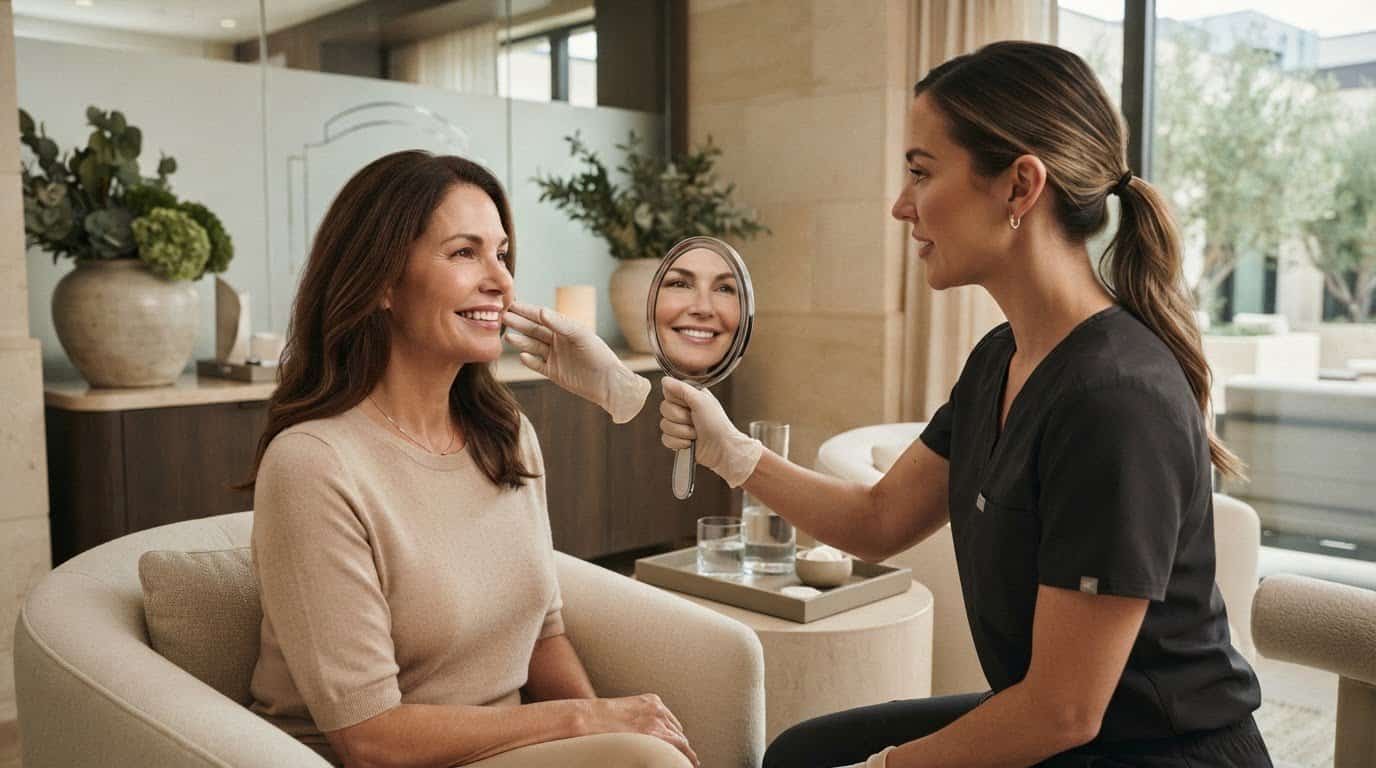
What if the fullness or blurred border you’ve noticed isn’t filler migration? A change in appearance can raise understandable questions, but swelling, product settling, or the cumulative effect of past treatments may also play a role. Fixing filler migration starts with understanding what may be causing the change, not automatically adding more filler or dissolving what’s already there.
If you’re unsure what you’re seeing, you’re not alone. Online advice can make the next step confusing, especially when suggestions such as massaging the area or getting more filler don’t account for your treatment history or symptoms. An individualized clinical assessment can help clarify what may be happening and whether any correction is appropriate.
This article explains what possible migration can look like, what information to share during an assessment, and how options may differ depending on the filler type and concern. At Reviive Lounge Aesthetics, our physician-led, education-first approach in Chino centers on personalized discussion, so you can explore your options without pressure or assumptions about which treatment is right for you.
Key Takeaways
- A visible change after filler doesn’t confirm migration. Several factors may affect appearance, so assessment matters.
- Filler type, treatment history, and individual anatomy can shape which options are appropriate to discuss.
- Fixing filler migration doesn’t automatically mean dissolving. Observation, further assessment, or correction may be considered based on the findings.
- Prepare for a consultation by gathering treatment details, dated photos, and notes on when the change began and how it has evolved.
- An education-first consultation at Reviive Lounge in Chino can help you explore individualized options without assuming a particular treatment is right for you.
What Does Filler Migration Look Like, and What Else Could Explain a Change?
A new fullness, contour change, or uneven area after filler can feel unsettling. It deserves a thoughtful assessment, but noticing a difference doesn’t establish its cause. Similar changes may relate to swelling, how light falls across the face, facial movement, or changes in surrounding tissue. The Dermal filler overview offers general background on filler types and uses, but interpreting a change requires considering your treatment history and anatomy.
Filler migration means product has moved from the area where it was originally placed into nearby tissue. It differs from an unexpected or uneven result, where the product may remain near its original placement but the outcome doesn’t look or feel as intended. These concerns can look similar, so a photo or mirror check may not distinguish them.
Appearance alone cannot confirm whether filler has migrated. Fixing filler migration starts with describing what you’ve noticed and assessing the area, rather than assuming a cause or choosing a correction in advance.
What signs might prompt a closer look?
A visible contour change, localized fullness, or a border that seems less defined may be useful to point out during an assessment. These are observations, not proof of migration. Where the change appears, when you first noticed it, your product and treatment history, and how the area looks during examination can all inform how a clinician interprets it.
Note what has changed without trying to diagnose it yourself. The timing and pattern can help distinguish a temporary change from one that warrants closer review.
Migration, swelling, or placement concerns: how are they different?
Similar appearances can have different explanations. Fullness shortly after treatment, for example, may be assessed differently from a contour change noticed later. An uneven result may relate to placement or how the area healed. The original treatment site matters because surrounding anatomy and facial movement can affect what is visible.
This comparison can help you describe what you see, but it can’t determine the cause. A clinical evaluation considers your treatment area and history together.
Observation: Fullness near the treated area. Possible explanation: Swelling or product-related volume. Assessment limit: Appearance and timing alone can’t establish which.
Observation: A contour change beyond the original treatment area. Possible explanation: Migration may be considered, alongside other changes in surrounding tissue. Assessment limit: Location and examination help inform interpretation.
Observation: An uneven or unexpected result around the original site. Possible explanation: Placement, healing, or individual anatomy may contribute. Assessment limit: An uneven appearance doesn’t by itself show that filler has moved.
Share when you first noticed the change and whether it has evolved, along with any product details you know. These details make the assessment more specific. You don’t need to arrive with a diagnosis or a preferred treatment in mind.
Why Can Filler Appear to Move, and Why Does Filler Type Matter?
A suspected change can’t be interpreted in isolation. Product placement may be one consideration, but the treated area, underlying facial structure, prior treatments, and individual response also shape what a clinician evaluates. Repeated treatments in the same region, for example, can contribute to a different overall contour over time without proving that filler has migrated.
Filler type matters because products are made from different materials and don’t all have the same correction options. Identifying what was used, as well as where and when it was placed, can help make an assessment more precise. If you don’t remember the product name, old treatment records or aftercare documents may help.
How anatomy and treatment history inform an assessment
Facial areas differ in structure and movement, so the same visible change can have different possible explanations depending on its location. A clinician may consider the original treatment area, nearby anatomy, and how the contour changes with facial expression. No single factor, including injection technique, explains every concern.
Before an appointment, gather whatever details you have: treatment dates, areas treated, product names, and any previous concerns or corrections. Clear information supports a more individualized discussion, even if some details are uncertain.
- Note when you first noticed the change and whether it has evolved.
- Bring product or treatment records if available.
- Describe the areas treated and any previous filler sessions.
Why hyaluronic acid and other fillers are not the same
Hyaluronic acid (HA) is a substance found naturally in the body and is also used as a material in many dermal fillers. For certain concerns involving HA filler, a clinician may consider hyaluronidase, an enzyme that can break down HA. It isn’t a universal filler dissolver, and its use requires clinical judgment because it can also temporarily affect the body’s own HA in the treated area.
Other filler materials require different consideration. Sculptra, for example, is made with poly-L-lactic acid, not HA, so hyaluronidase doesn’t dissolve it. The appropriate discussion may therefore differ based on the suspected product, the area involved, and the assessment findings.
Correction choices depend on the suspected product and an individualized clinical assessment. Knowing the filler material helps guide the conversation, but it doesn’t determine whether correction is needed or which approach may be appropriate. Fixing filler migration shouldn’t begin with assumptions based on online advice.
If you’d like to discuss your treatment history and concerns in a personalized setting, you can learn more about a dermal filler consultation at Reviive Lounge in Chino.
Does Filler Migration Always Need to Be Dissolved?
No. A change in appearance, even one that raises concern about migration, doesn’t automatically mean dissolving is indicated. First, understand what may be causing the change, identify the filler material if possible, and discuss what outcome matters to you. Depending on the assessment, a clinician may discuss observation, further evaluation, or possible correction rather than moving directly to treatment.
The appropriate next step depends on the assessment, filler type, and your goals. If a change is subtle and its cause isn’t clear, for example, a clinician may recommend gathering more information before discussing intervention. If a concern is confirmed, the product material and area involved can affect which options are relevant.
When might a clinician discuss dissolving or another correction?
A clinician can review the area, treatment history, timing, and product information before discussing possible next steps. For certain concerns involving hyaluronic acid (HA) filler, hyaluronidase may be considered because it can break down HA. It doesn’t dissolve every filler type, so identifying the product matters. If the filler material is unknown, that uncertainty can be part of the clinical discussion rather than a reason to assume.
Other possibilities may include continued observation or additional assessment, depending on the findings. These aren’t interchangeable choices, and none is right for everyone. A discussion can clarify the reasoning behind an option, what it may address, and what remains uncertain before you decide whether to proceed.
What are the limits and considerations of correction?
Correction doesn’t guarantee a predictable cosmetic result or an immediate change that matches your expectations. With hyaluronidase, the enzyme may also temporarily affect the body’s naturally occurring HA near the treatment area. The extent and visible effect can vary, which is one reason the decision and approach require clinical judgment.
Any intervention can involve potential side effects. With hyaluronidase, a clinician may discuss relevant allergy history, including reactions to bee or wasp stings, as well as other considerations specific to your health and treatment. The possibility of side effects doesn’t mean correction is unsuitable; it means benefits, limitations, and risks should be considered together.
Useful questions for a consultation include:
- What are the possible explanations for the change I’ve noticed?
- How certain are we about the filler material and its location?
- What are the potential benefits, limitations, and risks of each option?
- What would observation or further assessment involve before deciding?
Fixing filler migration is not a single, automatic procedure. An education-first conversation can help you understand the assessment and weigh possible next steps without pressure to choose a particular treatment.

What Should You Do Before a Filler Migration Consultation?
A little preparation can make a consultation more useful without requiring you to decide what’s happening in advance. Share a clear account of your treatment history and the change you’ve noticed so the discussion can focus on assessment and individualized options.
What information helps make the conversation more useful?
Gather what you can, even if dates or product details are approximate. Note which areas were treated, when appointments took place, and the product name if you know it. Share relevant medical history and previous filler-related experiences, including concerns or prior correction. Describe when you first noticed the change and how it has evolved, using neutral observations rather than a self-diagnosis.
A simple preparation checklist:
- Write down treatment dates, treated areas, and product information if available.
- Bring clear, dated photographs that show the area over time, if you have them.
- Note when you first observed the change and whether it has changed since.
- List relevant health details and questions you want to discuss.
Photos can provide context, especially when taken at different times, but lighting, angle, and facial expression affect how an image looks. They can’t replace an in-person assessment or establish on their own whether filler has moved.
What should you avoid doing while waiting for guidance?
Resist online suggestions to massage, reshape, or add filler to the area. These steps may not address the reason for the change and could complicate an assessment. Don’t attempt to dissolve filler yourself or change prescribed medicines based on general advice. If you’re considering any action, discuss it with a clinician who can consider your history and the area involved.
Keep observing, but avoid repeatedly pressing or manipulating the area to test how it feels. If you experience sudden or severe symptoms after filler, seek prompt medical assessment rather than waiting for a routine consultation. For less urgent concerns, recording what you notice and when can support a clearer conversation about fixing filler migration and other possible explanations.
Bring your notes and questions to an education-first discussion, where possible next steps can be considered without assuming a particular treatment is right for you. Discuss your concerns at a consultation with Reviive Lounge in Chino.
Discussing Filler Concerns with Reviive Lounge in Chino
Uncertainty about a change after filler can make it difficult to know what to do next. A consultation offers space to discuss what you’ve noticed, review your treatment history, and understand which options may be relevant. Reviive Lounge is a physician-led medical aesthetics practice in Chino, California, where the conversation is education-first and personalized. It doesn’t assume migration is the cause or that a particular correction is the answer.
How an individualized conversation can help clarify next steps
Bring your questions, goals, and any treatment details you have. The discussion can include when you noticed the change, which areas have been treated, the products used if known, and what outcome you hope to understand or achieve. Sharing candidly provides context; you don’t need to arrive with a diagnosis or a preferred treatment.
Recommendations depend on individual evaluation. A clinician can discuss possible explanations and options in light of your history and concerns, while acknowledging what remains uncertain. The conversation may help clarify whether further assessment, observation, or a correction discussion makes sense, but it can’t promise a particular procedure or result.
You may find it helpful to ask what information supports the assessment, what alternatives could be considered, and what limitations or risks are relevant to any proposed approach. Bring records or dated photographs if you have them. They can support the conversation, though they don’t replace examination.
Finding local aesthetic guidance in Chino
Reviive Lounge is located in Chino, California, and offers personalized dermal filler services alongside education-first consultations. This gives people seeking local aesthetic guidance an opportunity to discuss a filler concern in the context of their treatment history and goals. The focus is on informed, individualized next steps, not a one-size-fits-all plan.
Before your visit, consider reviewing reliable information about filler materials and treatment options, then bring any questions that remain. A general dermal filler treatment guide can help you become familiar with the topic, while a consultation can address how your circumstances may affect the discussion. Neither online reading nor photographs alone can establish what caused a change or determine which option is appropriate.
Decisions about fixing filler migration should follow careful assessment, especially when the product type or explanation for a visible change is uncertain. Take time to understand the rationale, potential benefits, limitations, and risks before deciding whether to proceed with any suggested next step.
If you’d like to discuss your concerns in a personalized, no-pressure setting, schedule a consultation at Reviive Lounge in Chino.
Take the Next Step With Clarity
You don’t need to have a diagnosis or treatment decision in mind before asking for guidance. Start with what you want to understand, what feels important to you, and the questions you’d like answered. A thoughtful conversation can help you consider your priorities and decide whether any next step feels appropriate.
Fixing filler migration isn’t about rushing toward a particular correction. It’s about making an informed choice based on your circumstances, with room to pause, ask questions, and weigh possible options. You deserve to feel heard as you consider what comes next.
If you’re ready to discuss your concerns, schedule a consultation at Reviive Lounge in Chino. Take the conversation one step at a time and move forward with greater confidence in your decision.
Frequently Asked Questions
Can filler migration happen years after an injection?
A concern noticed years after an injection doesn’t confirm that filler migrated at that time. Previous treatments, accumulated volume, and changes in surrounding tissue may affect appearance, and the original product may be relevant to an assessment. If you notice a new contour change, record when it began and share your treatment history, including approximate dates and areas, with a clinician. Avoid deciding the cause based on timing alone.
Is filler migration the same as filler swelling?
No. Migration describes filler moving from its original placement into nearby tissue, while swelling is a change in tissue volume that may have other explanations. Both can look like increased fullness, so appearance alone may not distinguish them. Note when the change appeared and whether it is changing, then describe those observations during an assessment. A clinician can consider the timing, treated area, and examination findings rather than relying on a single visual clue.
Can I massage filler back into place?
Don’t massage or press on an area to try to move filler without specific guidance from a clinician. Massage may not address the cause of a contour change, and pressure could irritate the area or make it harder to interpret what you’re seeing. After treatment, follow the aftercare instructions you were given. If you’re unsure whether massage is appropriate for your situation, ask a clinician before manipulating the area.
Does hyaluronidase dissolve every type of dermal filler?
No. Hyaluronidase acts on hyaluronic acid (HA) filler; it doesn’t dissolve fillers made from other materials, such as poly-L-lactic acid. The product name or treatment record can help a clinician understand what material may have been used. If you don’t know the product, say so rather than assuming. The suitability and potential risks of hyaluronidase require an individualized clinical discussion.
Can filler migration happen in the lips?
It can be considered when fullness or a changed border appears beyond the original lip treatment area, but those observations don’t establish migration. The lips move frequently, and swelling or other changes can also affect their appearance. For a useful assessment, describe when you noticed the change and whether it varies with expression or over time. Avoid trying to reshape the area yourself before receiving clinical guidance.
Should I get more filler to correct an uneven appearance?
More filler isn’t automatically the right response to an uneven appearance. Adding volume before understanding the cause could make the area look or feel different without addressing the concern. A clinician can review the original treatment, your goals, and the area before discussing possibilities. If you’re considering fixing filler migration, focus first on getting an assessment, not selecting a correction based on photos or online advice.
Can filler migration be prevented?
No approach can promise prevention, but careful planning may help reduce avoidable concerns. Discuss your goals and treatment history openly, and follow the aftercare guidance provided for your treatment, including instructions about pressure on the area. Conservative treatment planning and appropriate product selection are considerations for a clinician. At Reviive Lounge in Chino, an individualized conversation can help you understand dermal filler options and discuss questions before making a decision.