


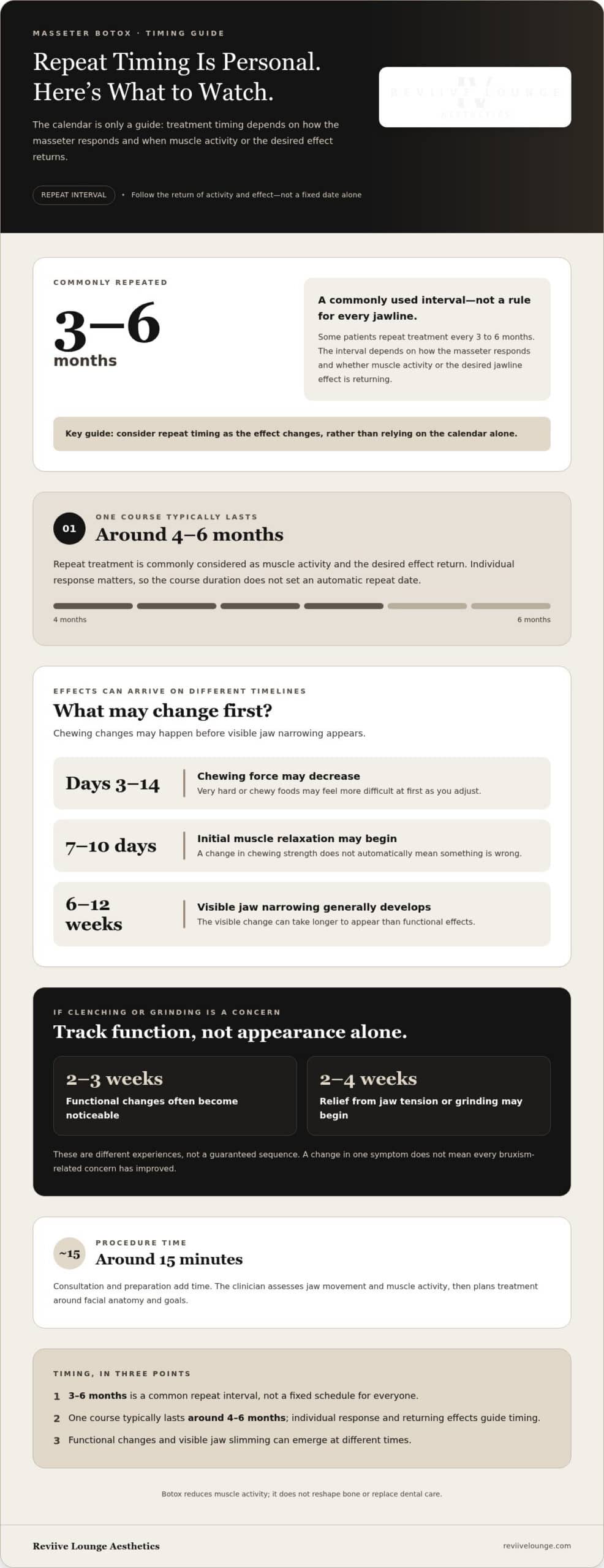
Masseter Botox is commonly repeated every 3 to 6 months, but the calendar alone shouldn’t determine your next treatment. For people considering masseter Botox for jaw slimming in Fontana, the more useful guide is when jaw muscle activity and the desired effect begin to return.
It makes sense to want a clear schedule, especially when treatment may also affect clenching or chewing. This article explains how to think about repeat timing, what changes may occur as the masseter relaxes, and why visible jaw slimming can take longer to appear than functional effects. You’ll also learn what to expect during treatment and recovery, so you can approach the decision with realistic expectations and useful questions for a consultation.
Key Takeaways
- Repeat timing is usually guided by how long the effect lasts and whether muscle activity or the desired jawline change is returning, not by a fixed schedule alone.
- Chewing may feel different as the masseter relaxes, particularly with very hard or chewy foods, while you adjust to reduced muscle activity.
- Treatment may ease clenching and jaw tension, but it does not replace dental care or protect tooth enamel on its own.
- Functional changes and visible jaw slimming can emerge on different timelines, so judging results too early may lead to the wrong expectations.
- Knowing what to expect during treatment and recovery can help you plan around temporary soreness, bruising, or other injection-site effects.
Chewing function after treatment
The masseter is one of the four muscles that help you chew, so relaxing it can change how your jaw feels. After treatment, chewing force typically decreases between days 3 and 14, before visible facial narrowing appears. The effect varies with the muscle’s activity and the treatment plan, so a change in chewing strength does not automatically mean something is wrong.
Very hard or chewy foods, such as tough steak or dense bagels, may feel more difficult at first. This temporary adjustment can ease as you adapt to reduced masseter activity. Choose softer foods if chewing feels tiring, and notice whether the discomfort improves or interferes with ordinary meals. Discuss persistent or worsening difficulty with the treating professional.
During the appointment, the injections may feel like brief pinches or stings. A masseter Botox procedure typically takes around 15 minutes, although the consultation and preparation add time. The clinician assesses your jaw movement and muscle activity, then plans treatment around your facial anatomy and goals. For masseter Botox for jaw slimming in Fontana, discuss both cosmetic aims and functional concerns before treatment.
Timeline matters. Initial muscle relaxation may begin within 7 to 10 days, while visible jaw narrowing generally develops over 6 to 12 weeks as the muscle loses bulk. That means chewing changes may come before the cosmetic benefit is apparent. A wedding or other event just weeks away may not leave enough time for the visible change to develop.
At consultation, describe clenching, grinding, jaw fatigue, dental work, and any previous difficulty chewing. These details help distinguish an active, prominent masseter from jaw width caused by bone structure. Botox reduces muscle activity; it does not reshape bone. Discuss your intended outcome, possible chewing changes, and whether your expectations align with what muscle relaxation can achieve.
To verify a Fontana injector’s credentials, review their professional listing through California’s official licensing lookup and confirm the listed name and credential. Ask to see the Botox product packaging before injection and have the injector explain its labeling and source.
Compare written quotes by checking what each includes, rather than focusing on the headline figure. Cost depends on the treatment plan, amount used, product, and any included follow-up. Ask how units are counted, since Botox, Dysport, and Xeomin units are not interchangeable unit for unit. A clear comparison helps you understand the planned treatment rather than assume the lowest quote covers the same plan.
Masseter treatment is not appropriate for every concern: muscle relaxation will not change prominent bone structure, and cracked or worn teeth still need dental care. Bring questions about chewing, cosmetic goals, and bruxism to a consultation. An individualized assessment can clarify whether the muscle contributes to jaw width and what changes to expect during treatment and recovery.
Do these Botox® injections help with teeth grinding (bruxism)?
Masseter Botox can reduce the force of clenching by relaxing the masseter muscles. It works by blocking nerve signals that trigger muscle contraction. For people with bruxism, this change may ease jaw tension and aching, but it does not necessarily stop grinding. Less forceful clenching is not the same as eliminating every source of tooth wear or jaw discomfort.
Functional changes often become noticeable within 2 to 3 weeks after treatment. Jaw stiffness and aching related to clenching commonly improve within a fortnight, while relief from jaw tension or grinding may begin over 2 to 4 weeks. These timelines describe different experiences, not a guaranteed sequence. Track specific changes, such as morning soreness, daytime clenching, or how tightly the teeth meet, rather than judging benefit by appearance alone.
Masseter relaxation can affect the lower face as well as muscle symptoms. If repeated clenching has made the muscle prominent, reduced activity may gradually soften its appearance. But a slimmer jawline does not show that bruxism has stopped, and ongoing grinding can still affect enamel. A night guard can protect teeth from contact; masseter Botox limits clenching force but does not stop grinding.
TMJ-related pain needs careful interpretation. Masseter Botox is not FDA-approved specifically for TMJ treatment, and its use for TMJ symptoms is off-label. Jaw discomfort can have causes beyond the masseter, so note whether pain occurs while chewing, upon waking, or during stressful periods. Share these patterns, previous dental findings, and any night-guard use during consultation. That history helps distinguish muscle tension from concerns requiring dental assessment.
Keep a brief symptom record before and after treatment. Note when clenching occurs, whether you wake with jaw soreness, and whether chewing feels different. A change in one symptom does not necessarily mean every bruxism-related concern has improved. If your teeth are cracked or worn, Botox does not replace dental care; a dentist can assess tooth damage and enamel protection separately.
Set expectations around function, not just cosmetic results. For example, someone who grinds during sleep may experience less forceful clenching yet continue to notice grinding. A night guard remains relevant for enamel protection, while follow-up focuses on how jaw tension and muscle activity have changed. To discuss how Botox treatment may relate to jaw tension and cosmetic goals, explore a professional treatment conversation.
How Often Should Masseter Botox Be Repeated?
There isn’t one repeat date that suits every jawline. One course typically lasts around 4 to 6 months, and repeat treatment is commonly considered as muscle activity and the desired effect return. Some patients repeat every 3 to 6 months, but the interval depends on how their masseter responds and their goals. Assessing too early can mislead: visible narrowing generally develops over 6 to 12 weeks, with the effect often judged around 3 months.
Masseter Botox relaxes an active muscle; jawline filler adds volume and contour, so they address different concerns. Neither treatment reduces prominent jawbone structure. Bony jaw-angle reduction requires an operation through incisions inside the mouth, a procedure uncommon in the United States. The comparison should start with the source of the square appearance, not a preference for one treatment.
A prominent masseter can contribute to a broad lower face, especially when it contracts strongly during clenching. During an assessment, a clinician can observe and feel the muscle as you bite down, then compare its prominence at rest. If width comes mainly from bone or facial fat, relaxing the muscle may not create the jawline change you expect. Muscle, bone, and fat can also contribute together.
Common factors associated with enlarged masseters include teeth grinding, jaw clenching, habitual chewing, stress-related tension, genetics, and compensatory patterns linked to dental or bite problems. For example, someone who frequently chews gum and clenches during stressful work may have different contributing factors from someone whose jaw shape reflects bone structure. Headaches or jaw discomfort can accompany clenching, but these symptoms alone do not establish that muscle size is the cause.
The toxin effect fades over about four to six months, while muscle bulk can rebuild and jaw width gradually return over six to nine months. These timelines do not mean everyone needs a new procedure as soon as the effect begins to soften. Consider whether clenching, discomfort, or the cosmetic change has returned, and compare that with your original goals. Muscle activity recovers gradually.
At follow-up, discuss the timing of changes, chewing comfort, and any returning symptoms. If your lower face still looks square despite reduced muscle prominence, bone structure or fat may contribute more than masseter size. If clenching or headaches persist, describe when they occur and mention any dental or bite concerns. A repeat plan should reflect functional changes and your appearance goals, not an automatic calendar reminder.
Consultation, injection, aftercare, and follow-up
A focused consultation connects your jaw goals with your muscle activity and medical history. The injection plan, aftercare, and follow-up should reflect those findings.
Consultation and Injection Placement
Consultation assesses the masseter muscles, facial movement, treatment goals, and relevant health history before injection placement. You may be asked to clench so the clinician can identify the muscles’ borders and activity. Mention jaw pain, previous injections, and any skin infection near the treatment area. Pregnancy, breastfeeding, or allergy to botulinum toxin products are contraindications listed for masseter treatment, so disclose these before planning injections.
Injection Discomfort and Downtime
Masseter injections involve brief needle sensations at planned points on both sides of the jaw. The procedure typically takes around 15 minutes, and soreness at injection sites may last 1 to 2 days. Mild swelling or bruising can occur. Plan around your comfort: if you have an important event, remember that visible cosmetic changes develop gradually, rather than immediately after the appointment.
Procedure and Dosage
Dosage is the amount of toxin selected for each masseter, based on muscle size, activity, and treatment goals. A typical masseter treatment uses 40 to 60 total Botox units, though the plan is tailored to the facial assessment. Botox, Dysport, and Xeomin units are measured differently and aren’t interchangeable unit for unit. Confirm which product is being used and how the intended dose is divided between both sides.
Aftercare helps limit avoidable disruption while the injection settles. Remain upright for at least 4 hours after treatment and avoid strenuous exercise for 24 hours. Follow the specific instructions provided for your procedure, and avoid rubbing or pressing the injection sites. If you notice unexpected facial movement or difficulty chewing, record when it began and contact the treating professional for guidance.
Results develop in stages. Initial muscle relaxation may begin within 7 to 10 days, while visible jaw narrowing generally develops over 6 to 12 weeks. A follow-up near the result-assessment period gives you time to describe changes in chewing, jaw tension, and facial shape. Bring concrete examples, such as whether clenching feels different during work or whether your jawline appears less square in comparable photos.
For a useful follow-up, compare the concerns discussed during consultation rather than judging by one photograph. Note changes in jaw pain, chewing comfort, and muscle prominence. If your goal was cosmetic, assess the contour after the muscle has had time to lose bulk. If you also wanted support with clenching symptoms, describe which situations still trigger tension and how those symptoms have changed.
Recovery and possible injection-site effects
Recovery after masseter Botox may involve short-term injection-site reactions and changes in muscle function. Knowing about possible effects can help you describe concerns clearly during follow-up.
Recovery After Injections
Recovery is the period when injection-site tenderness settles and the masseter responds to treatment. Soreness can last 1 to 2 days, while minor bruising usually resolves within a week. Keep track of when a symptom starts and whether it improves. For example, note whether tenderness fades while chewing feels progressively easier or remains uncomfortable.
Injection-Site Effects
Injection-site effects are local reactions such as mild swelling, bruising, or tenderness near the jaw. Mild swelling or bruising should subside within a few days, while soreness may last 1 to 2 days. These effects can make the area feel sensitive when touched. Record the location and duration, especially if one side feels noticeably different from the other.
Side Effects and Safety Considerations
Potential side effects include facial asymmetry, a crooked smile, lip drooping, unwanted facial wrinkles, and difficulty chewing or biting. These effects matter because nearby muscles contribute to facial movement as well as jaw function. Report a new smile change or persistent difficulty chewing to the treating professional. Allergy to Botox or other botulinum toxin products, pregnancy or breastfeeding, and skin infection in the treatment area are listed contraindications.
Chewing Effects and Smile Changes
Chewing effects can range from temporary weakness with hard foods to difficulty biting, while a smile change can alter facial expression. An altered smile can last a couple of months before resolving on its own. If you notice uneven movement when smiling, describe which side changes and when it began. These details help the treating professional assess the effect.
Use a simple recovery log for the first week: record soreness, bruising, swelling, smile movement, and chewing comfort each day. Compare both sides of the lower face in similar lighting instead of relying on one photo. If a reaction worsens or interferes with eating, contact the treating professional and share the timeline and specific symptoms.
Teeth grinding relief and cosmetic narrowing develop on different timelines, so don’t use an early jawline photo to judge every effect. Note changes in clenching separately from bruising or tenderness. A clear account of symptoms helps the follow-up focus on your experience and treatment goals. Discuss your Botox treatment and recovery questions as part of a personalized consultation.
Reviive Lounge Aesthetics: Botox & Neurotoxin Injections
Reviive Lounge Aesthetics offers Botox & Neurotoxin Injections for patients considering treatment for jaw muscle prominence or clenching concerns. A physician-led consultation can connect your goals with your facial anatomy, treatment history, and functional symptoms, such as chewing changes or jaw tension. You can also discuss expected timing, possible effects, and whether the concern appears muscle-related.
Consider a consultation if you’re weighing repeat treatment, assessing your response, or deciding whether Botox fits your cosmetic and functional goals. If your jaw width primarily reflects bone structure, muscle relaxation will not change that underlying shape. A careful discussion can clarify what treatment is intended to address and what to monitor afterward.
To discuss your goals with Reviive Lounge Aesthetics, visit reviivelounge.com.
Make Your Next Step Personal
Start with a clear priority: whether you’re seeking a softer jawline, support with clenching, or both. If you’re considering masseter Botox for jaw slimming in Fontana, describe the change that would matter most in daily life, not just the appearance you hope to see. This focus can make a treatment conversation more useful and help you decide whether the approach fits your goals.
Bring any remaining questions to the consultation: what outcome is realistic for your facial structure, how chewing comfort will be considered, and what signs should guide future treatment decisions. A thoughtful discussion should leave you with a clearer understanding of the plan and room to make an informed choice without pressure.
Reviive Lounge Aesthetics offers Botox & Neurotoxin Injections. Contact Reviive Lounge Aesthetics to discuss your goals and next steps. A considered plan can help you move forward with greater confidence.
Frequently Asked Questions
What Is the Masseter Muscle and How Does It Function?
The masseter is a jaw muscle that helps close your mouth and chew. It is one of four muscles involved in chewing. You can feel it tighten by placing your fingers over the side of your jaw and gently clenching, then relaxing. That movement differs from smiling, which relies on other facial muscles. The masseter’s size and activity can influence your lower-face contour.
Are There Side Effects?
Possible side effects include bruising, soreness, swelling, difficulty chewing or biting, and changes in facial movement. A smile may appear uneven, or the lips may droop if nearby muscles are affected. Note when an effect begins, which side is involved, and whether it changes over time. Share that information during follow-up, especially if chewing becomes difficult or a smile change persists.
What Results Are Possible?
Possible results include reduced masseter prominence and a softer-looking lower-face contour when muscle size contributes to jaw width. Some people also seek less forceful clenching. The visible change depends on whether muscle activity, rather than bone structure, is a major contributor. Compare relaxed facial photos taken in similar lighting, and assess muscle symptoms separately from cosmetic changes.
Are the Results Permanent?
No. Botox’s effect fades, and the masseter can gradually regain activity and bulk. Jaw contour may therefore move back toward its earlier appearance over time. If you’re considering ongoing treatment, use changes in your goals, facial contour, and chewing comfort to guide the discussion rather than assuming maintenance must follow a fixed schedule. Botox does not permanently alter the jawbone.
Does the Jaw Get Wider Again if You Stop?
Jaw width can gradually return as the masseter becomes more active and rebuilds muscle bulk. The change may be more noticeable if habits such as clenching or frequent gum chewing continue. Bone structure does not change as the toxin wears off. If you stop treatment, compare your jaw at rest and while clenching; these views can help distinguish returning muscle prominence from underlying facial structure.
How Does Jaw Botox Work?
Botox temporarily reduces muscle contraction by blocking nerve signals that prompt the masseter to tighten. With less activity, the muscle may gradually lose bulk, softening a square appearance driven by muscle size. The effect is localized to the treated muscle; it does not remove fat or reshape bone. This distinction helps set a realistic goal when jaw width has more than one cause.
How Is the Procedure Performed?
A clinician assesses your jaw movement and masseter activity, reviews your goals and health history, then plans injections on both sides. The selected amount depends on the muscle and treatment plan. Before proceeding, mention previous toxin injections, allergies, pregnancy or breastfeeding, and any skin infection near the treatment area. These details help inform whether treatment is appropriate and how it should be planned.
What Is Masseter Botox and How Does It Slim the Jaw?
Masseter Botox is an injection treatment that relaxes the jaw’s masseter muscles. As muscle bulk decreases, the lower face may appear narrower if those muscles contribute to its width. This is a gradual contour change, not surgical reduction of the jawbone. For readers in Fontana, the first step is understanding whether muscle prominence or another feature shapes the jawline.