


What if the most sophisticated solution for your persistent skin texture isn’t found in a laboratory, but within your own biology? You’ve likely tried a long cycle of topical creams and standard treatments only to find your acne scars remain stubbornly visible. It’s exhausting to invest time into modalities that don’t quite reach the deeper layers of the dermis where true remodeling happens. We understand that frustration; we believe you deserve a more precise, medically backed approach to skin rejuvenation using PRP for acne scars.
Accelerate your body’s natural healing response by leveraging concentrated growth factors found in your own blood. This clinical guide explains how Platelet-Rich Plasma transforms mechanical treatments into a targeted, regenerative therapy for smoother skin. We’ll explore the science behind the procedure, compare it to standard microneedling, and show you how our physician-led team provides the professional guidance necessary for lasting results. Restore your confidence with a refreshed, natural appearance that reduces the visibility of deep scars through a bespoke, expert-led experience that prioritizes your long-term skin health.
Key Takeaways
- Understand the biological mechanisms that cause persistent skin texture issues and why structural remodeling is essential for visible improvement.
- Explore how leveraging your body’s own growth factors through PRP for acne scars accelerates the natural healing of damaged dermal tissue.
- Evaluate the clinical advantages of combining PRP with microneedling compared to standard treatments and more invasive laser alternatives.
- Identify your specific scar profile to determine if regenerative therapy is the most effective path for your unique skin goals.
- Learn the importance of a physician-led approach in ensuring a safe, specialized experience tailored to your aesthetic needs.
Understanding Acne Scars: Why Structural Damage Requires Biological Repair
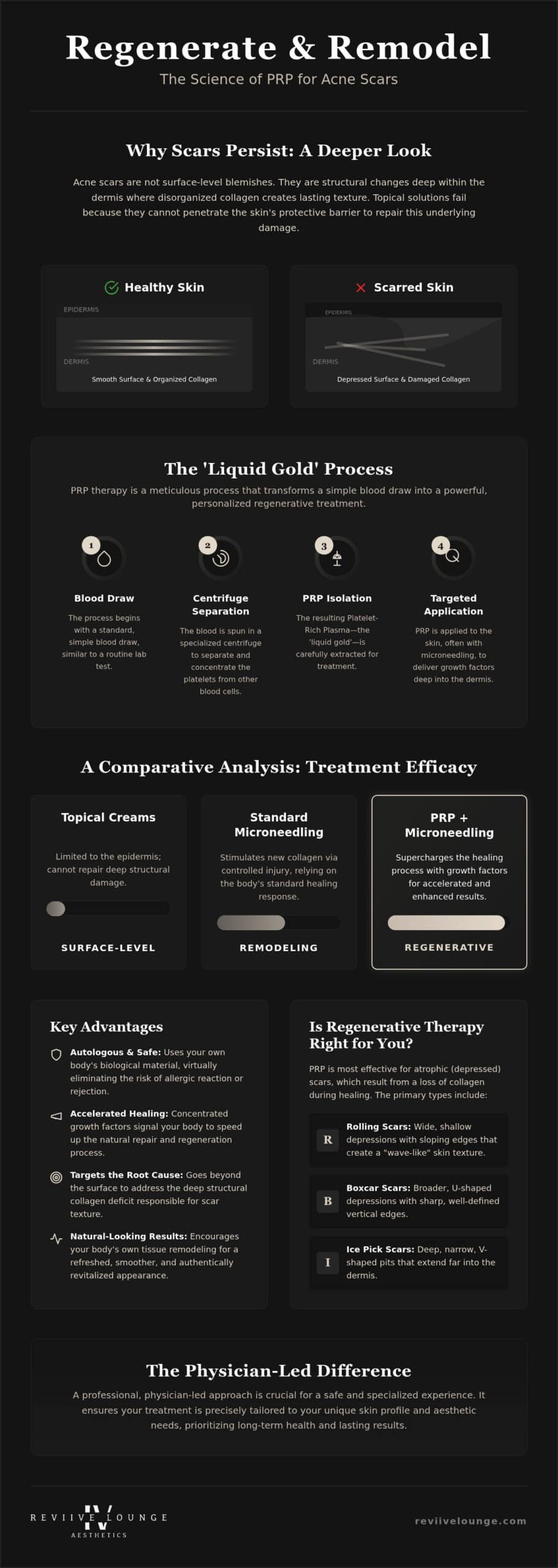
Acne scars represent a lasting change in your skin’s architecture. They aren’t just surface-level pigment issues; they’re the result of deep structural damage within the dermis. When inflammatory acne occurs, it damages the surrounding tissue and triggers a complex healing response. The body attempts to repair this damage by producing collagen, but the process is often imperfect. If the body produces too little or disorganized collagen, atrophic scars appear as visible depressions in the skin. Achieving a smooth, refined texture requires more than just topical care. It requires a biological intervention that addresses these underlying deficits.
The Anatomy of a Scar
Inflammation is the primary driver of scar formation. During an active breakout, the immune system triggers a cascade of events that can degrade the essential proteins, collagen and elastin, which provide the skin with its smooth texture and elasticity. Many people mistake post-inflammatory hyperpigmentation, which is merely a temporary change in color, for permanent scarring. True scarring involves a physical loss of tissue or a significant change in the skin’s structural integrity. Dermal remodeling is the ultimate goal of clinical scar therapy, focusing on restructuring these deeper layers to restore a level surface. Understanding The Science of PRP helps clarify how we can influence this biological process at a cellular level. By introducing concentrated growth factors, we can guide the body to repair the precise areas where the skin’s foundation has weakened.
Why ‘Surface-Level’ Solutions Fall Short
The epidermis serves as a highly effective barrier designed to keep external substances out. Because of this protective function, most over-the-counter topical creams cannot penetrate deep enough to reach the damaged dermal tissue. These products might improve skin brightness or hydration, but they simply can’t fill the physical depressions left by atrophic scars. Effective treatment requires bypassing the surface barrier to trigger a regenerative response. We use controlled micro-injuries to stimulate the production of fresh, organized collagen from within. This shift from simply hiding texture issues to actively remodeling the skin is why using PRP for acne scars has become a preferred clinical choice. By addressing the root cause of the structural deficit, you can achieve a smoother complexion that reflects your natural vitality. Clinical treatments provide the depth and precision necessary to transform the skin’s texture, moving beyond the limitations of standard skincare routines. Choosing a medically-backed approach ensures that your journey toward skin rejuvenation is grounded in safety and proven biological principles.
The Science of PRP: How Platelet-Rich Plasma Accelerates Healing
Platelet-Rich Plasma functions as a high-potency biological catalyst for tissue repair. It begins with a standard blood draw, much like a routine lab test. We then process this sample to isolate and concentrate the platelets, which are the specific components in your blood responsible for clotting and cellular regeneration. These platelets contain specialized proteins known as growth factors. When we apply this concentrated “liquid gold” during your procedure, these proteins act as messengers that signal your body to accelerate the production of new, healthy skin cells. Using PRP for acne scars ensures that the healing process is both faster and more robust than what your body could achieve through standard recovery alone.
The ‘Liquid Gold’ Process
Achieving the correct concentration of platelets is vital for clinical success. We use a specialized centrifuge to spin your blood at high speeds, which precisely separates the platelets from the red and white blood cells. This process creates a serum with a platelet count significantly higher than what is found in a normal blood sample. Modern preparation systems now allow for formulations with fewer inflammatory red blood cells, which helps minimize post-treatment swelling. Because the material is autologous, meaning it’s derived entirely from your own body, the risk of an allergic reaction or rejection is virtually non-existent. This personalized approach provides a level of safety and biological compatibility that synthetic alternatives simply cannot match.
Biological Catalysts for Collagen
PRP works most effectively when paired with clinical treatments that create direct pathways into the dermis. While microneedling creates tiny micro-channels in the skin, the addition of PRP fills those channels with regenerative signals that reach the deeper layers where scars reside. These growth factors interact directly with fibroblasts, the specific cells in your skin that manufacture new collagen and elastin. Research suggests that using PRP along with another treatment can significantly enhance the remodeling of stubborn scar tissue. Specific proteins called cytokines within the plasma also play a crucial role by modulating your body’s natural inflammatory response. Platelet-Rich Plasma effectively shortens the inflammatory phase of healing to allow for a more efficient transition to tissue remodeling. This biological synergy results in a more refined texture and a visible reduction in the depth of scars over time. If you’re ready to see how this regenerative science can be tailored to your specific needs, our team at Reviive Lounge is here to guide you through a personalized consultation.
PRP vs. Other Acne Scar Treatments: A Comparative Analysis
Choosing the right clinical path for scar revision requires understanding how different technologies interact with your skin. While many standard treatments offer specific benefits, the integration of PRP for acne scars provides a biological advantage that synthetic or purely mechanical methods lack. We often find that a multi-modality approach yields the most natural results by addressing both volume loss and surface texture simultaneously. This strategy focuses on long-term health rather than quick, temporary fixes.
PRP Microneedling vs. Standard Microneedling
Standard microneedling relies on the body’s inflammatory response to create new collagen. Adding Platelet-Rich Plasma enhances this process by delivering a high concentration of growth factors directly into the micro-channels created during the procedure. This synergy reduces post-procedure redness and significantly accelerates healing speeds compared to traditional methods. You’ll likely want to understand how long to see results from microneedling to set realistic expectations for your transformation. The deeper collagen induction achieved with PRP ensures that the remodeling process is more efficient and thorough.
Fractional lasers are another popular option for scar revision. They offer high efficacy but often come with significant downtime and a higher risk of pigmentation issues for certain skin types. PRP provides a regenerative alternative that minimizes recovery time while still promoting deep tissue repair. For clients seeking immediate results, dermal fillers can plump depressed scars instantly. However, fillers are temporary and don’t fix the underlying structural damage. PRP focuses on long-term remodeling by improving the skin’s actual foundation rather than just masking the depression.
Choosing the Right Modality
Your ideal treatment path depends on several factors including scar severity, budget, and your tolerance for downtime. While deep atrophic scars often require the regenerative power of PRP for acne scars, milder surface issues might be addressed differently. If you’ve been considering a DIY approach, understanding the critical differences between professional microneedling vs at home devices is essential before making any decisions about your skin health. In some cases, chemical peels for skin texture serve as an excellent starting point to refine the skin’s uppermost layers. These peels can prepare the skin for deeper regenerative work or maintain results after a series of more intensive treatments.
A professional consultation is the most reliable way to determine which combination of treatments will meet your unique goals. Our physician-led team focuses on creating a bespoke plan that ensures safety and delivers a refreshed, natural appearance. We prioritize education, ensuring you understand why a specific modality is recommended for your particular scar type. This steady, informative approach allows you to move forward with confidence in your personalized care plan.
Candidacy and Expectations: Is PRP Right for Your Scars?
Determining your candidacy is a vital step in a successful skin rejuvenation journey. Not all texture issues are created equal. A professional assessment ensures that we align the regenerative power of Platelet-Rich Plasma with your specific skin profile. While most individuals seeking smoother skin can benefit from this technology, understanding how different scar structures respond will help you set realistic goals for your transformation.
Scar Type Breakdown
Rolling scars feature gently sloped edges that create an undulating, wavy appearance on the skin’s surface. These respond exceptionally well to the dermal thickening stimulated by PRP for acne scars because the growth factors focus on filling the broad depressions from the foundation up. Boxcar scars have more defined, vertical borders that are often deeper than rolling scars. PRP helps soften these sharp edges by rebuilding the surrounding collagen foundation, which makes the transitions between scarred and healthy tissue much less noticeable.
Ice pick scars present a different challenge. These are narrow, deep, and often extend into the lower dermis. While using PRP for acne scars improves the overall health and elasticity of the surrounding skin, these specific marks may require a multi-modality approach. We often suggest pairing regenerative therapy with other clinical techniques like TCA cross or punch excision to address the depth of ice pick scars effectively. Our team focuses on identifying these nuances during your consultation to build a truly bespoke plan.
The Treatment Journey
Clinical results are progressive. You won’t see an instantaneous change after a single session because your body needs time to synthesize new collagen and elastin fibers. Most clients require a series of three to six sessions to achieve significant structural remodeling. This steady progression ensures that your results look natural and refined rather than overdone or artificial. We prioritize the health of your skin’s architecture over fleeting aesthetic trends.
Recovery is typically straightforward and fits easily into a busy lifestyle. You should expect mild redness and slight swelling during the first 24 to 48 hours after your procedure. This is a normal sign that your body’s healing response has been activated. For a comprehensive look at the recovery process, you can review our microneedling healing time guide. Safety remains our primary concern; therefore, individuals with active skin infections, certain blood disorders, or platelet dysfunction should seek alternative treatments. If you’re ready to discover the potential of your own biological growth factors, schedule your personalized consultation with our expert team today.
The Reviive Lounge Aesthetics Approach: Physician-Led PRP in Chino
Reviive Lounge Aesthetics stands as a beacon of clinical excellence in Chino. Unlike many facilities that offer aesthetic services as a side venture, our practice is fundamentally physician-led. This medical oversight ensures that every application of PRP for acne scars is performed with the highest standards of safety and precision. We serve clients throughout the Inland Empire, including Ontario, Rancho Cucamonga, and Eastvale, providing a steady hand in a complex field. Our modern environment is designed to be both welcoming and clinically advanced, ensuring your comfort throughout the process.
We believe that professional skin rejuvenation shouldn’t feel transactional. Instead, it should be a partnership where your unique skin goals are the priority. We integrate regenerative therapies into a broader wellness framework, ensuring your results contribute to your overall sense of self-assurance. By focusing on the science of healing, we help you achieve a complexion that feels as healthy as it looks.
A Focus on Natural Results at Reviive Lounge Aesthetics
Our philosophy centers on looking refreshed and confident, never “overdone.” We aim to enhance your natural features and restore the structural integrity that inflammation has compromised. By combining microneedling with PRP Inland Empire with other specialized treatments, we create a comprehensive path to renewal. For instance, many clients find that addressing texture with PRP for acne scars while utilizing Botox for fine lines creates a balanced, harmonious appearance.
Education remains at the heart of every interaction at our Chino practice. We don’t believe in high-pressure sales or fleeting trends. We provide the transparency you need to make informed decisions about your care. Every recommendation is grounded in evidence and tailored to your specific dermal architecture, ensuring that your journey is as unique as your skin.
Your Consultation at Reviive Lounge Aesthetics
Your journey begins with a thorough skin assessment where we evaluate your scar types, skin elasticity, and overall health. This initial meeting isn’t just about a single session; it’s about developing a long-term plan for skin health and maintenance. We take the time to listen to your concerns and answer your questions with clinical authority. This consultative approach allows us to manage expectations effectively while focusing on progressive, lasting improvements.
Once we’ve established your personalized plan, we’ll guide you through the next steps for booking your procedure. We offer flexible financing options to ensure that premium, medically-backed care remains accessible to our community. You’ll leave our lounge with a clear roadmap and a sense of certainty that you’re in the most capable hands possible. Our team is dedicated to being your trusted guide in the realization of your personal potential.
Embrace a New Standard of Skin Renewal
Achieving a refined complexion requires moving beyond temporary fixes to address the underlying dermal structure. By utilizing your own biological growth factors, PRP for acne scars offers a regenerative solution that works in harmony with your natural healing processes. This clinical approach ensures that your results are both subtle and enduring, focusing on the restoration of your skin’s foundation rather than just masking the surface.
Our physician-led team at Reviive Lounge Aesthetics specializes in creating bespoke treatment plans that prioritize your unique skin goals. We serve residents throughout the Inland Empire with a commitment to transparency, safety, and evidence-based care. You don’t have to navigate these clinical choices alone; our expert guides are here to act as your partner in achieving a refreshed, natural appearance that boosts your self-assurance.
Schedule a consultation at Reviive Lounge Aesthetics in Chino to discuss your goals and treatment options. We look forward to helping you realize your personal potential through medically informed care and a personalized path forward.
Frequently Asked Questions
How many PRP sessions are usually needed for acne scars?
Most clients see the best results after a series of three to six sessions spaced several weeks apart. The exact number of treatments depends on the depth of your scarring and your skin’s unique healing response. During your consultation in Chino, we’ll evaluate your dermal architecture to create a bespoke plan. While some improvement appears early, the most significant structural changes occur progressively as new collagen develops over several months.
Is PRP for acne scars better than laser treatments?
Whether PRP for acne scars is superior to laser depends on your skin type, scar severity, and tolerance for downtime. Lasers use thermal energy to resurface the skin, while PRP leverages biological growth factors to remodel tissue from within. Many patients prefer the regenerative nature of PRP because it typically involves a shorter recovery period and a lower risk of pigmentation issues. A personalized assessment helps determine which technology aligns with your specific goals.
What is the downtime after a PRP microneedling session?
You can expect mild redness and slight swelling for approximately 24 to 48 hours following your procedure. This initial reaction is a normal part of the body’s inflammatory response as it begins to repair damaged tissue. Most individuals return to their daily routines shortly after treatment, though we recommend avoiding direct sun exposure and intense exercise during the first two days. Your provider will give you specific aftercare instructions to ensure your skin heals beautifully.
Can PRP help with very deep ice pick scars?
Platelet-Rich Plasma improves the overall health and elasticity of the skin, but very deep ice pick scars often require a combination of treatments. Because these scars extend deep into the dermis, we may suggest pairing PRP with other clinical techniques like TCA cross or punch excision. This multi-modality approach allows us to address the specific depth of narrow scars while using growth factors to refine the surrounding texture for a more harmonious, refreshed appearance.
Is the blood draw for PRP painful?
The blood draw required for your treatment feels very similar to a routine laboratory test. We use a small needle to collect a sample, which we then process in a specialized centrifuge to isolate the plasma concentrate. Most clients find the process quick and manageable within the comfortable setting of our Chino practice. Our trained medical team prioritizes your comfort at every stage, ensuring the experience is professional, steady, and focused on your wellbeing.
How long do the results of PRP for acne scars last?
Results from PRP treatments are long-lasting because they involve the creation of actual new collagen and elastin fibers. While the structural improvements to your scars are durable, your skin will continue to age naturally over time. Many clients choose to schedule occasional maintenance sessions to preserve their refreshed appearance and support ongoing skin health. A consistent medical-grade skincare routine also helps protect the longevity of your results and maintains a smooth, vibrant complexion.
Are there any side effects to using your own plasma for skin repair?
Using your own autologous plasma significantly reduces the risk of allergic reactions or rejection because the material is derived entirely from your own body. Common temporary effects include mild redness, swelling, or bruising at the treatment site, which typically resolve within a few days. Because our practice is physician-led, we follow strict clinical protocols to ensure your safety. We’ll discuss your medical history during your consultation to confirm that this regenerative therapy is appropriate for you.
Is PRP microneedling safe for all skin tones and types?
PRP microneedling is generally safe and effective for a wide range of skin tones and types. Unlike certain laser treatments that carry a higher risk of post-inflammatory hyperpigmentation in darker skin, microneedling with PRP for acne scars focuses on mechanical and biological triggers rather than heat. This makes it a versatile option for our diverse Inland Empire community. We always perform a thorough skin assessment to ensure the treatment depth and protocol are customized for your safety. Before committing to any at-home devices as a supplement to your care plan, we encourage you to review the key distinctions outlined in our guide to professional microneedling vs at home treatments to protect your skin’s long-term health.