


Eating as little as possible on semaglutide may seem like the fastest route to weight loss, but eating strategically can better support your energy, comfort, and lean muscle. If you’re wondering what to eat on semaglutide, you’re not alone. Reduced hunger can make it difficult to know how much to eat, while nausea or other digestive discomfort can make food choices feel more complicated.
You may also worry about losing muscle or noticing changes in your appearance as your weight changes. A thoughtful nutrition plan can help you prioritize nourishment without forcing large meals or relying on guesswork. There’s no single “semaglutide diet,” and your needs can vary with your health, treatment, appetite, and activity level.
This guide explains how to build balanced meals, choose foods that may be gentler on your stomach, and support muscle with protein and resistance exercise. You’ll also learn how to think about hydration and calorie intake when hunger cues shift. Reviive Lounge Aesthetics’s medically supervised weight management program includes personalized planning and ongoing clinical support, so you can discuss nutrition in the context of your care.
Key Takeaways
- There’s no single semaglutide diet. Shape meals around appetite changes and your individual nutritional needs.
- Learn how to prioritize protein and strength-focused habits to support lean muscle as your weight changes.
- Identify foods that may aggravate nausea or reflux, and explore gentler options to try.
- Understand why hydration and nutrient-dense foods matter when you’re eating less than usual.
- Find out what to eat on semaglutide and how personalized, physician-supervised care can help tailor your approach.
Understanding the Semaglutide Diet: How GLP-1s Change Your Nutritional Needs
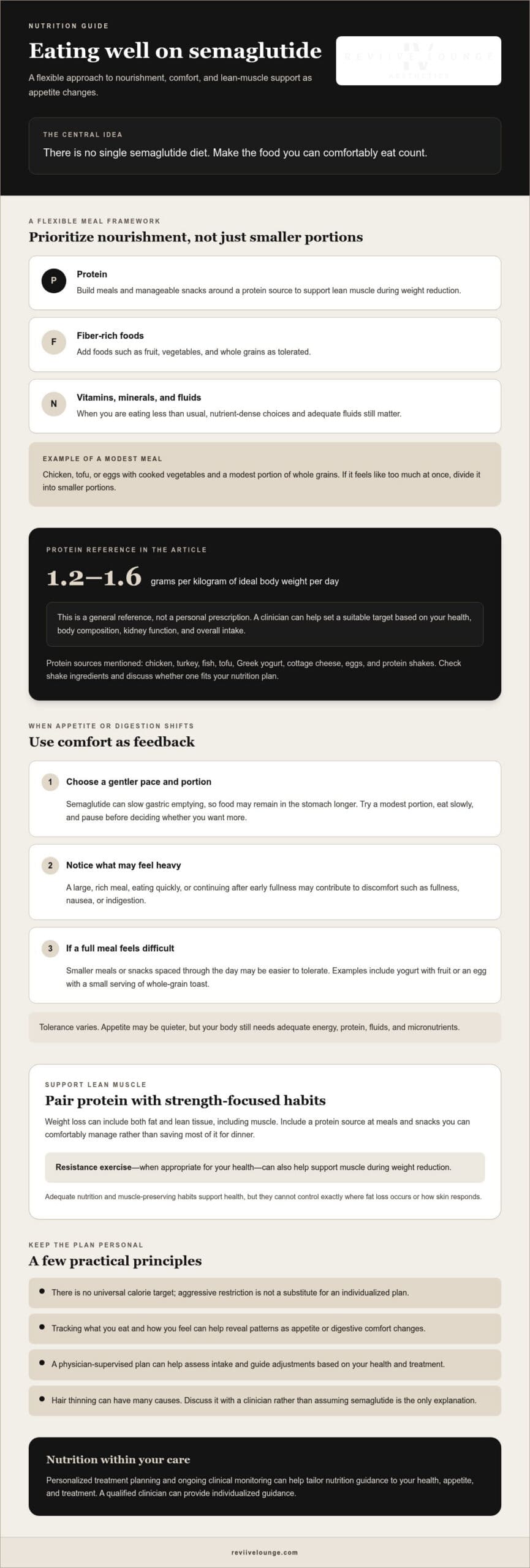
There’s no official, one-size-fits-all “semaglutide diet.” Instead, think of it as a flexible framework: choose foods that provide protein, fiber, vitamins, and minerals as your appetite and meal sizes change. Semaglutide acts on GLP-1 pathways, influencing appetite and digestion. For an overview of the medication and its mechanism, see Semaglutide.
These effects can make it easier to eat less, but they may also change how familiar fullness cues feel. The goal isn’t simply to reduce portions. It’s to make the food you can comfortably eat count.
The Role of Delayed Gastric Emptying
Semaglutide can slow gastric emptying, so food may remain in the stomach longer. A large, rich meal that once felt comfortable may now sit heavily and contribute to fullness, nausea, or indigestion. Eating quickly or continuing after you notice early fullness may add to that discomfort.
Try a modest portion, eat slowly, and pause before deciding whether you want more. If a full meal feels difficult, smaller meals or snacks spaced through the day may be easier to tolerate. Make those choices nourishing rather than grazing on low-nutrient foods. For example, try yogurt with fruit or an egg with a small serving of whole-grain toast. Tolerance varies, so use your symptoms as feedback.
Managing Appetite Suppression Safely
Not feeling hungry isn’t the same as no longer needing nutrients. Appetite cues can become quieter even while your body still needs adequate energy, protein, fluids, and micronutrients. If your intake remains too low, you may experience fatigue or have difficulty meeting nutritional needs. Inadequate nourishment can also threaten lean muscle. Hair thinning can have many causes, so discuss it with a clinician rather than assuming semaglutide is the only explanation.
Build meals around nutrient-dense options. A small plate might include chicken, tofu, or eggs with cooked vegetables and a modest portion of whole grains. If that feels like too much at once, divide it into smaller portions. There’s no universal calorie target that suits everyone, and aggressive restriction isn’t a substitute for an individualized plan.
Tracking what you eat and how you feel can help reveal patterns, especially when your appetite or digestive comfort changes. A physician-supervised plan can help assess whether your intake is appropriate and guide adjustments based on your health and treatment. Reviive Lounge’s physician-led medical weight management program in Chino includes personalized treatment planning and ongoing clinical monitoring. For candidacy and nutrition guidance, seek an individualized consultation with a qualified clinician.
The Protein-First Priority: Supporting Muscle During Weight Reduction
Weight loss can include both fat and lean tissue, including muscle. Preserving muscle matters for strength and everyday function, and it’s one reason to plan meals around protein rather than relying on appetite alone. Resistance exercise, when appropriate for your health, can also help support muscle during weight reduction.
For adults losing weight on GLP-1 medication, a general protein reference is about 1.2 to 1.6 grams per kilogram of ideal body weight per day. This isn’t a personal prescription. Your clinician can help set a suitable target based on your health, body composition, kidney function, and overall intake.
Muscle and facial appearance are related, but protein can’t guarantee against “Ozempic face” or loose skin. Facial changes may occur as body fat decreases, while skin laxity can be affected by several factors. Adequate nutrition and muscle-preserving habits support health during weight loss, but they can’t control exactly where fat loss occurs or how skin responds.
High-Quality Lean Protein Sources
Choose protein sources that feel manageable and fit your preferences. Chicken, turkey, fish, and tofu can be served in small portions, while Greek yogurt and cottage cheese offer convenient snack options. Pair them with foods that add fiber and other nutrients, such as fruit, vegetables, or whole grains, as tolerated.
If solid food is unappealing, a protein shake may be a practical alternative. Check its protein content and ingredients, and ask your clinician whether it fits your nutrition plan, especially if you have dietary restrictions or other health concerns.
Timing Your Protein Intake
Rather than saving most of your protein for dinner, include a source at each meal and snack you can comfortably manage. A protein-containing breakfast, such as Greek yogurt or eggs, may make it easier to distribute intake across the day. It doesn’t guarantee stable energy, but it can help you avoid leaving your protein goal until the end of the day.
Protein pacing means spreading protein-containing foods across meals and snacks to support muscle maintenance instead of relying on one large serving.
- Build a meal around fish, tofu, poultry, eggs, or dairy.
- Keep a tolerable snack option available for lower-appetite moments.
- Combine protein with resistance exercise suited to your ability and medical guidance.
If you’re unsure how to set a suitable protein target, discuss your needs in an individualized consultation with Reviive Lounge’s physician-supervised weight management team.
Navigating Side Effects: Foods to Consider for Nausea and Reflux
Food choices can affect how comfortable you feel as digestion slows on semaglutide. High-fat meals may linger longer in the stomach and contribute to fullness, nausea, or indigestion. Large portions, fried foods, and very sugary items can be harder to tolerate, but personal triggers differ. Notice what you ate, how much, and when symptoms followed. This can help you identify patterns without restricting entire food groups without guidance.
If you’re deciding what to eat on semaglutide during a queasy day, try a small, simple portion and eat slowly. Stop when fullness begins, then give your stomach time before eating more. Smaller meals may feel more manageable than one heavy meal.
Foods to Consider for GI Comfort
Gentle options may be easier to tolerate, though no food works for everyone. Try oatmeal, toast, or a small serving of rice, then add protein or other nourishing foods as symptoms allow. Ginger tea or ginger in food may help some people with nausea. Peppermint can feel soothing for some, but it may aggravate reflux in others, so skip it if you notice burning or regurgitation afterward.
Fiber supports bowel regularity, but increasing it quickly can cause gas or bloating. Add sources gradually, such as oats, peeled or whole apples as tolerated, and beans in modest portions. Sip fluids regularly, especially as you increase fiber, and adjust based on your clinician’s advice and health needs.
Foods to Limit or Avoid
Consider reducing foods and drinks that repeatedly trigger symptoms. You don’t necessarily need to eliminate them all. Portion size and timing can make a difference.
- Fried or rich foods: Greasy meals and heavy sauces can worsen fullness or indigestion for some people.
- Carbonated, sugary drinks: Bubbles can increase belching and gas, while very sweet drinks may be poorly tolerated.
- Caffeine: Coffee and energy drinks may worsen jitters or reflux in some people. Caffeinated drinks can also displace water, so pay attention to your fluid intake.
- Personal reflux triggers: Spicy foods, acidic foods, or late meals may bring on symptoms for some people, but responses vary.
Keep a brief food-and-symptom record and bring recurring concerns to your prescriber. Persistent vomiting, inability to keep fluids down, or severe or ongoing abdominal pain warrants prompt medical advice. Don’t change or stop prescribed medication without discussing it with your clinician.
Hydration and Micronutrients: Beyond the Plate
Drinking enough can be harder when appetite is low or nausea makes fluids unappealing. Vomiting or diarrhea can further increase fluid loss, and dehydration may contribute to symptoms such as dizziness, weakness, or fatigue. Sip regularly throughout the day and adjust your intake to your health, activity, climate, and clinician’s advice.
Strategic Hydration Habits
An 80-to-100-ounce daily water target isn’t right for everyone. Fluid needs vary, and some people have medical conditions that require individualized limits. Rather than forcing a fixed amount, keep water nearby and take frequent small sips. If drinking with meals makes fullness worse, try sipping more between meals. There’s no universal rule that water must be avoided while eating.
Electrolytes aren’t automatically necessary for every person taking semaglutide. They may be relevant in some situations, such as fluid loss, but supplements can be inappropriate for certain health conditions or medications. Ask a clinician before using them, particularly if you have kidney or heart concerns. For information about IV hydration therapy in Chino, discuss whether the service may be appropriate for your circumstances. IV therapy isn’t a substitute for urgent medical care when symptoms are severe.
Essential Supplementation and Monitoring
Taking semaglutide doesn’t mean you automatically need vitamin B12, vitamin D, or iron supplements. Fatigue alone can’t identify a deficiency, and taking iron or high-dose vitamins without a clinical reason may be unhelpful or harmful. A clinician can assess your diet, symptoms, health history, and whether testing is appropriate before recommending supplementation.
Reduced food intake can make overall diet quality important, but it doesn’t prove that a specific nutrient is low. Include a range of nourishing foods as tolerated, and raise persistent fatigue, weakness, or other new symptoms with your care team. Blood work may be considered based on individual risk and clinical judgment; testing needs aren’t identical for every patient.
Reviive Lounge describes its medical weight management care as physician-supervised, with personalized treatment planning and ongoing clinical monitoring. Learn more about physician-supervised GLP-1 therapy, and ask during an individualized consultation what monitoring and nutrition guidance fit your needs.
Hydration and nutrient choices complement, rather than replace, a balanced plan for what to eat on semaglutide. If you’re considering care in Chino, explore Reviive Lounge’s medical weight management program and discuss your candidacy and individual needs with a qualified provider.
Personalized Weight Management in Chino: Integrating Nutrition with Medical Supervision
A rigid meal plan may not fit your appetite, health history, food preferences, or response to semaglutide. One person may manage smaller meals comfortably, while another may need different food choices or support as nausea, constipation, or appetite changes arise. Personalized guidance connects nutrition goals with how you’re actually feeling, rather than asking you to follow a one-size-fits-all diet.
For people seeking care in Chino, Reviive Lounge provides physician-supervised medical weight management programs with personalized treatment planning and ongoing clinical monitoring. Nutrition is part of the broader conversation: what to eat on semaglutide should reflect your symptoms, nutritional needs, and clinician’s recommendations, not just a generic list of “good” and “bad” foods.
The Reviive Lounge Consultation Process
An individualized consultation is the place to discuss whether medical weight management may be appropriate for you. Share your health history, medications, previous weight-management approaches, typical eating patterns, and any digestive symptoms. These details help the provider assess candidacy and discuss goals that are realistic for your circumstances. They also give you an opportunity to ask how to respond if reduced appetite makes it difficult to meet your nutrition needs.
Reviive Lounge describes its approach as physician-led, with ongoing clinical monitoring. This support gives you an opportunity to bring new or worsening side effects to the care team, so questions about treatment and eating habits can be considered in context. It doesn’t mean every symptom has a dietary cause or that adjustments are guaranteed. Your provider can help determine an appropriate next step.
Your Partner in Long-Term Wellness
Weight management involves more than reaching a short-term number. As your weight changes, discuss how to maintain nourishing routines, preserve strength, and adapt your approach if appetite or treatment needs shift. A maintenance plan should be individualized too, and medication decisions belong with your prescribing clinician. Don’t stop or change a prescribed medication without discussing it with them.
Reviive Lounge also offers aesthetic services, including Sculptra. These are distinct from medical weight management and shouldn’t be presented as necessary for weight management or as a way to prevent changes in facial appearance. If you’re considering aesthetic care, discuss its separate goals, suitability, and potential risks with a qualified provider.
For a personalized discussion about medical weight management, candidacy, and nutrition support, schedule a consultation with Reviive Lounge. The clinical team can help clarify your options and identify questions to guide your next steps.
What to Eat on Semaglutide: Build a Sustainable Plan With Personalized Support
The best answer to what to eat on semaglutide isn’t a rigid menu. It’s a flexible approach that helps you nourish your body as appetite changes: prioritize protein, choose manageable portions, and adjust food choices to your digestive comfort. Hydration and nutrient-dense meals matter, too, especially when you’re eating less.
Consistency is easier when your nutrition plan reflects your needs and symptoms, not a one-size-fits-all rule. Physician-led clinical monitoring can help you raise concerns and make informed decisions as your treatment and goals evolve.
Reviive Lounge in Chino offers medical weight management care with personalized planning and ongoing clinical monitoring. An individualized consultation can help determine candidacy and clarify what support may suit you.
With thoughtful choices and appropriate clinical support, you can build habits that feel more manageable and support your long-term wellbeing. Schedule a consultation with Reviive Lounge in Chino to discuss your goals and treatment options.
Frequently Asked Questions
What is the #1 food to avoid while taking Semaglutide?
There isn’t one food everyone taking semaglutide must avoid, but greasy, high-fat meals are common triggers for fullness, nausea, or indigestion. Try smaller portions and notice whether fried foods, rich sauces, or other items consistently worsen your symptoms. Your personal tolerance matters more than a universal avoid list. If digestive symptoms are persistent or severe, discuss them with your prescribing clinician rather than relying on diet changes alone.
Can I drink alcohol while on a Semaglutide weight loss program?
Ask your prescribing clinician whether alcohol is appropriate for you, since individual health factors and treatment plans differ. Alcohol may aggravate nausea or reflux for some people, and drinking can make it harder to stay hydrated or follow your nutrition plan. If your clinician says it’s appropriate, consider your personal response and avoid drinking when you’re already unwell. Don’t use alcohol in place of meals or fluids.
How much protein do I really need to prevent muscle loss?
A general reference during weight loss on GLP-1 medication is 1.2 to 1.6 grams of protein per kilogram of ideal body weight daily. This is a general target, not a prescription for everyone. Needs can vary with health, kidney function, body composition, and activity. Ask your clinician or a registered dietitian to help set a suitable goal and distribute protein across meals and snacks.
What should I eat if I feel too nauseous to have a full meal?
Try a small portion of a simple food, such as oatmeal, toast, rice, yogurt, or an egg, and eat slowly. If tolerated, add a modest protein source rather than forcing a large meal. Sip fluids in small amounts, especially if nausea makes drinking difficult. Avoid foods you’ve identified as triggers, such as greasy or very rich meals. Contact your clinician if you can’t keep fluids down or symptoms are severe.
Are there specific ‘superfoods’ that boost Semaglutide results?
No particular “superfood” is proven to boost semaglutide’s effects. Aim for a varied pattern of nutrient-dense foods instead, including protein sources, vegetables, fruit, whole grains, and healthy fats as tolerated. When appetite is reduced, smaller portions that provide protein and other essential nutrients can be more useful than chasing a single ingredient. A clinician can help personalize food choices around your health needs, preferences, and digestive symptoms.
How do I prevent constipation while taking GLP-1 medications?
Increase fiber gradually with foods such as oats, fruit, vegetables, or beans, since adding a lot at once may cause bloating. Drink fluids regularly if your clinician hasn’t advised a fluid restriction, and include movement that’s appropriate for your health. Smaller meals don’t need to mean low-fiber meals. If constipation persists, worsens, or comes with significant pain, contact your clinician for guidance rather than starting supplements or laxatives without advice.
Should I take a multivitamin while on Semaglutide?
Not everyone taking semaglutide needs a multivitamin. Whether one is appropriate depends on your diet, health history, medications, and any identified nutrient gaps. A supplement can’t replace adequate food, and taking extra vitamins or minerals without a reason may be unsuitable. Ask your clinician whether dietary review or blood work is warranted before starting one, especially if you’re considering iron or high-dose supplements.
What happens if I don’t eat enough calories on this medication?
Consistently eating too little can make it difficult to get enough protein, fluids, and micronutrients, and may contribute to fatigue or loss of lean muscle. Appetite suppression doesn’t mean your body no longer needs nourishment. If you’re struggling to eat, briefly track symptoms and intake and raise the pattern with your care team. Reviive Lounge in Chino offers physician-supervised medical weight management with personalized planning and ongoing clinical monitoring.