

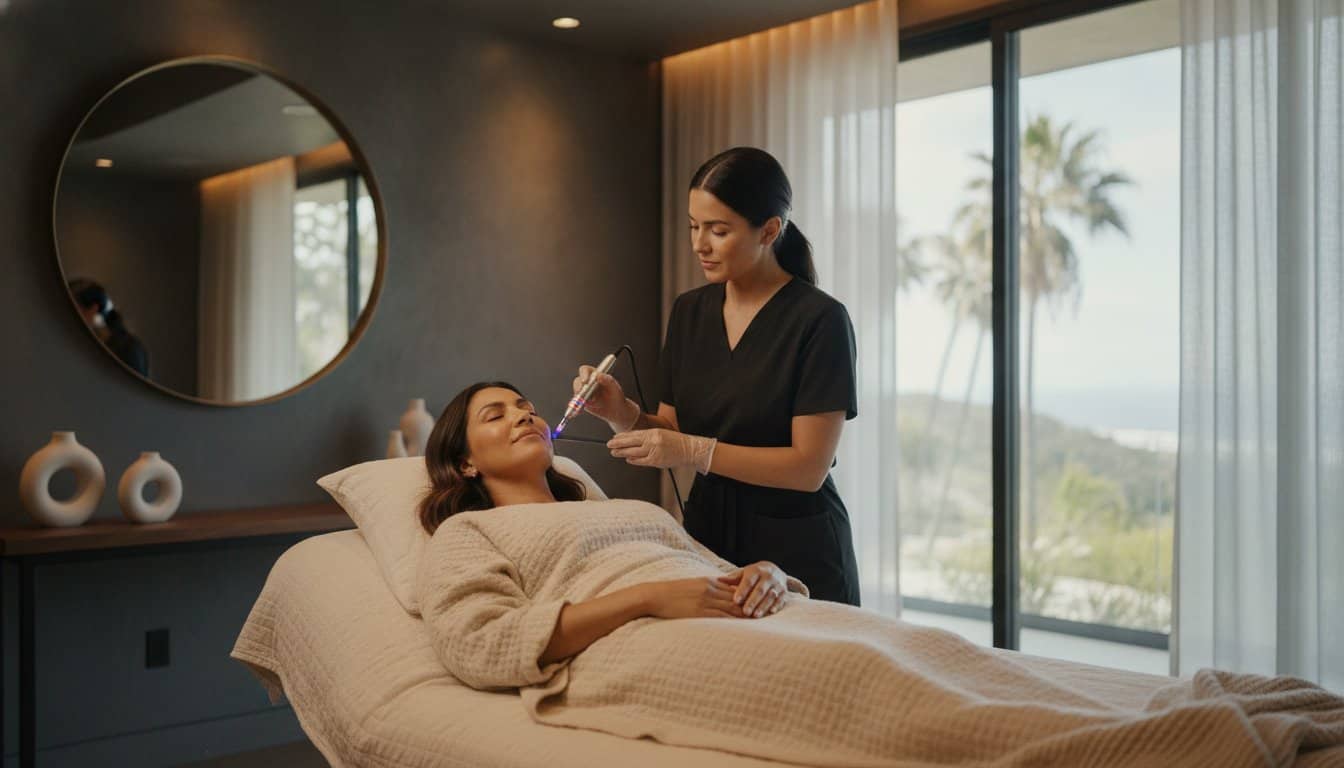
What if the DIY device you’re using to heal your skin is actually creating invisible micro-tears that hinder your long-term results? It’s understandable why you might look for accessible ways to treat acne scarring or uneven texture from the comfort of your own home. However, understanding the nuances of professional microneedling vs at home is essential for anyone serious about lasting skin health. While a home roller might offer a temporary surface glow, it often lacks the precision and depth required for true structural remodeling.
You deserve to feel confident in your skincare choices without the fear of causing accidental damage. This clinical guide clarifies the critical differences in safety protocols, needle lengths, and the superior results of medical-grade treatments. We’ll explore why professional devices, which are regulated as Class II medical tools, provide the controlled environment your skin needs to produce new collagen effectively. You’ll gain a clear understanding of how clinical expertise ensures a safer, more predictable journey toward the smooth complexion you’ve been working to achieve.
Key Takeaways
- Stimulate your skin’s natural renewal process by understanding the clinical mechanics of Collagen Induction Therapy.
- Compare the results of professional microneedling vs at home rollers to choose the safest and most effective path for your complexion.
- Ensure your safety by learning the critical differences between surface-level exfoliation and deep, structural clinical remodeling.
- Achieve predictable outcomes by utilizing sterile, medical-grade technology rather than manual DIY tools that may cause skin damage.
- Maximize your skin’s potential through a customized consultation that prioritizes your long-term health and personalized treatment goals.
What is Microneedling? Understanding the Mechanism of Skin Renewal
Microneedling is a minimally invasive procedure designed to stimulate the body’s natural healing response. Clinically referred to as Collagen induction therapy (microneedling), this process relies on the skin’s innate ability to repair itself after experiencing minor trauma. By creating thousands of microscopic channels in the epidermis and dermis, the treatment triggers a cascade of biological events that lead to rejuvenated skin. The primary goal is to achieve smoother texture, scar reduction, and visible anti-aging effects through cellular regeneration.
The “controlled micro-injury” is the core of this technology. These tiny punctures are precise and intentional. They don’t cause permanent damage; instead, they act as a signal to the immune system to disinfect the wounds, remove debris, and increase blood flow. This is where the debate of professional microneedling vs at home begins. Professional devices typically use motorized pens that create clean, vertical channels. In contrast, many home devices use manual rollers that can cause unnecessary lateral trauma if used incorrectly.
How Collagen Induction Works
When the skin detects these micro-injuries, it activates specialized cells called fibroblasts. These cells are the architects of your skin’s structural integrity. They begin producing new collagen and elastin fibers to bridge the microscopic gaps created by the needles. During this healing phase, the skin releases essential growth factors that accelerate tissue repair and strengthen the dermal matrix. For those seeking even more significant improvements, professional treatments can be paired with PRP for acne scars to leverage the healing power of your own platelets for enhanced recovery.
Common Skin Concerns Addressed
Microneedling is highly versatile. It effectively targets several common aesthetic concerns through a customized approach to needle depth. While some concerns are surface-level, others require deeper intervention to see a real change. Common issues addressed include:
- Fine lines and moderate wrinkles
- Enlarged pores and rough skin texture
- Hyperpigmentation and sun damage
- Stubborn acne scarring and stretch marks
Depth is the deciding factor for success. Superficial texture issues like dullness or minor pigment can be addressed with shorter needles that stay within the epidermis. However, deep structural scarring requires the precision and reach of professional-grade devices that can safely penetrate the deeper dermis. The depth of the needle determines whether you’re simply exfoliating the surface or truly remodeling the underlying tissue layers. This distinction is vital when choosing between a medical-grade session and a DIY kit.
At-Home Rollers vs. Professional Pens: The Mechanical Reality
Understanding the physical impact of these tools is the first step toward safe skin rejuvenation. The mechanical difference between professional microneedling vs at home devices directly influences how your skin heals and the quality of your results. While both methods involve needles, the way those needles interact with your tissue varies significantly. Precision is key to a successful outcome.
The Risks of Manual Dermarolling
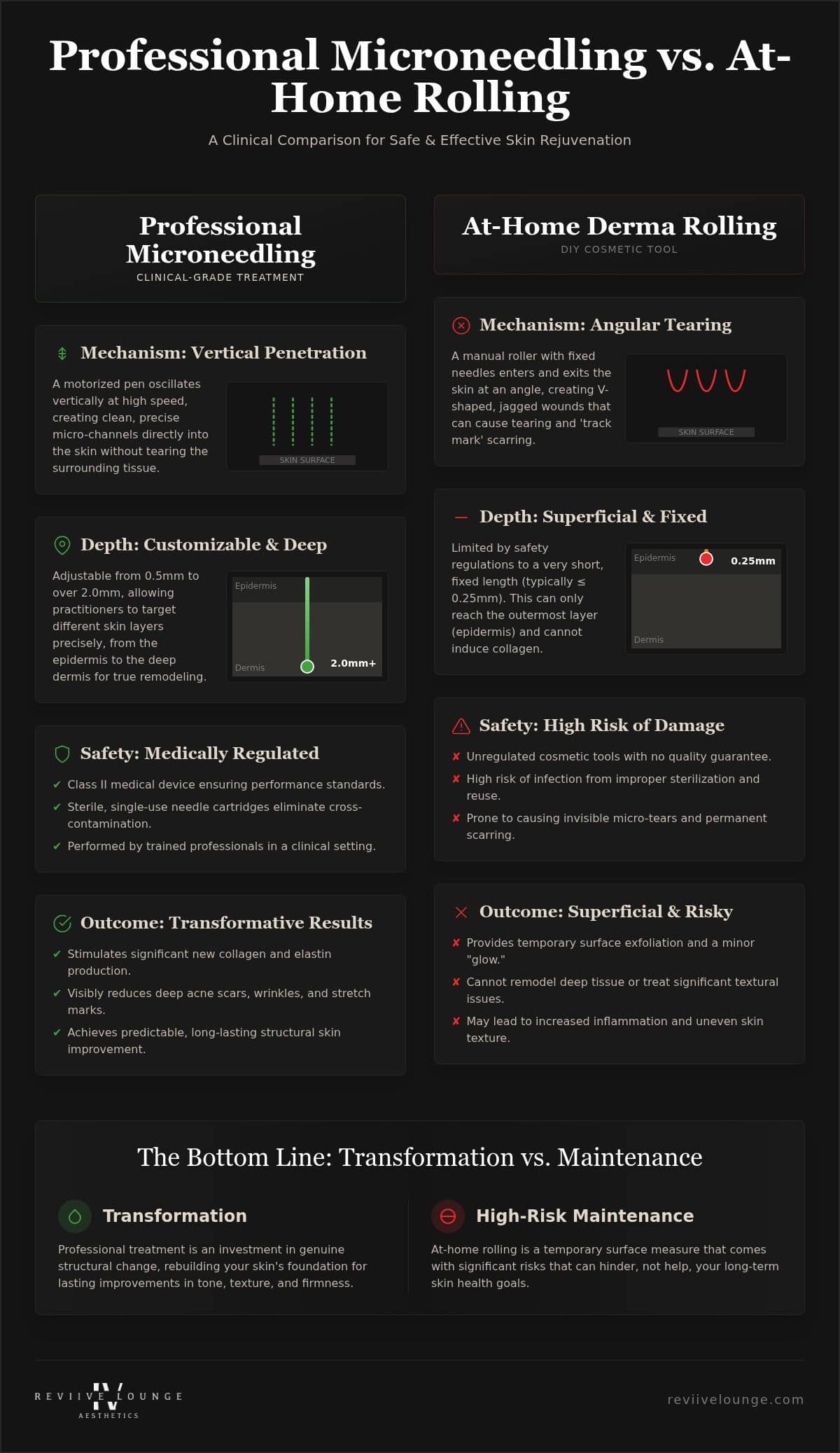
Manual rollers rely on a drum mechanism. Because the device rolls across the surface, the needles cannot enter the skin vertically. Instead, they slice into the tissue at an angle and exit with a pulling motion. This often results in ‘track mark’ scarring or unnecessary epidermal tearing. These jagged wounds trigger a significant inflammatory response. This often leads to longer downtime and an uneven texture after the skin heals. It’s a common reason why DIY enthusiasts often see more redness and irritation than those treated in a clinic.
Precision of Professional Microneedling Pens
Professional pens eliminate the risk of tearing. They use high-speed vertical oscillation to create thousands of clean, perpendicular micro-channels. This vertical approach leaves the surrounding tissue intact. It preserves the skin’s barrier while still reaching the deep dermis for remodeling. Motorized pens also offer a consistent speed. This ensures the needles penetrate the skin at the exact same depth with every stroke. This uniformity is what creates the predictable results associated with clinical care.
Clinical precision also allows for customized depth settings. A provider might use 0.5mm on the delicate under-eye area and 2.0mm on a stubborn acne scar. This level of control is impossible with a fixed-length at-home roller. When needles enter the skin at a perfectly 90-degree angle, the healing process is more efficient. Your body can focus on building new collagen rather than repairing surface-level trauma. The FDA provides specific guidelines on Safety, Sterility, and the 0.25mm Depth Limitation to help consumers understand why deeper treatments require professional oversight. You can explore your options with a personalized skin assessment to find the safest path for your unique complexion.
Safety, Sterility, and the 0.25mm Depth Limitation
Safety is the primary concern when evaluating professional microneedling vs at home tools. The FDA generally regulates devices with needles longer than 0.3 mm as Class II medical devices, which are intended for use by trained clinicians. For this reason, most consumer-grade rollers are limited to a 0.25 mm length. This shallow depth is sufficient for enhancing the absorption of your favorite serums, but it lacks the reach necessary to trigger the body’s structural repair mechanisms. It’s a cosmetic enhancement rather than a medical treatment.
Home devices are primarily designed to exfoliate the epidermis. While this can provide a temporary glow, it does not address the underlying causes of deep wrinkles or textural irregularities. Attempting to use longer needles at home without professional training significantly increases the risk of scarring and permanent skin damage. The FDA on microneedling device safety emphasizes that professional oversight is the best way to minimize these risks while pursuing your aesthetic goals.
Why Depth Matters for Scars and Wrinkles
True remodeling of deep tissue requires access to the dermis, the layer where collagen production actually occurs. This typically involves needle depths ranging from 1.5 mm to 2.5 mm, depending on the specific area being treated and the thickness of the skin. Reaching these depths is essential for breaking down old scar tissue and stimulating new growth. You can learn more about what to expect after a deep clinical session in our microneedling healing time guide, which outlines the phases of professional recovery and cellular repair.
Clinical Sterility Standards
Sterility is a non-negotiable standard in a medical setting. Clinical practitioners use single-use, medical-grade needle cartridges that are disposed of immediately after each session. This prevents cross-contamination and ensures that every puncture is made with a perfectly sharp, sterile tip. In contrast, DIY rollers are notoriously difficult to sanitize. Alcohol soaks often fail to remove microscopic skin cells and blood trapped at the base of the needles. Reusing these tools creates a breeding ground for bacteria.
A physician-led team follows strict protocols that include medical-grade skin preparation and a sterile environment. We use professional cleansers to remove all surface bacteria before the procedure begins. This level of decontamination is impossible to replicate in a home bathroom. DIY rollers often harbor pathogens that can be pushed deep into the skin, leading to granulomas or persistent infections. By choosing a clinical setting, you ensure that your journey toward clearer skin is protected by rigorous medical standards and expert oversight.
Results and ROI: Maintenance vs. Transformation
Investing in your skin requires a clear understanding of the return on investment each method provides. When comparing professional microneedling vs at home rollers, the primary distinction lies in the difference between surface maintenance and deep transformation. At-home tools are best viewed as an extension of your topical skincare routine. They provide a temporary brightening effect by helping serums penetrate slightly deeper. However, they lack the mechanical power to resolve structural issues like deep-seated acne scars or significant loss of elasticity.
Professional clinical treatments are designed to bypass the “results ceiling” inherent in consumer devices. Manual rollers often reach a plateau because they cannot safely penetrate deep enough to break down old scar tissue. Clinical intervention offers several advantages that DIY methods cannot replicate:
- Home devices primarily improve surface radiance and temporary glow.
- Clinical pens target the dermal matrix for genuine structural repair.
- Medical additives like PRP or exosomes provide biological signals for faster healing.
We often enhance these outcomes by integrating concentrated growth factors. These additives accelerate the healing process and amplify collagen production. This delivers a level of rejuvenation that manual rolling simply cannot achieve. By reaching the deeper dermal layers, professional sessions trigger a more profound and lasting regenerative response.
The Clinical Timeline for Results
Consistency is the foundation of visible change. While a home roller might offer a subtle glow the next morning, clinical results build progressively over several months. Most patients require a series of 2 to 4 sessions to address specific concerns like scarring or fine lines. You can explore a detailed breakdown of what to expect in our guide on how long to see results from microneedling. This methodical approach ensures that each treatment builds upon the last, leading to a long-term improvement in skin density and health.
Long-Term Skin Health and Safety
A physician-led treatment plan prioritizes the health of your skin over the long term. Professional oversight prevents the common DIY mistake of over-treating the skin. Excessive needling at home can lead to chronic inflammation or a compromised skin barrier. Our experts monitor your progress and adjust device settings based on how your tissue responds. This bespoke care often includes a holistic view of your aesthetic goals. For instance, we can integrate other clinical services like Botox to complement your new, smoother texture.
Choosing a medical environment ensures that your investment is backed by science and safety. You can schedule a consultation today to begin your journey toward a lasting skin transformation.
Professional Microneedling at Reviive Lounge in Chino
Reviive Lounge serves as a specialized destination for those seeking clinical excellence in the Inland Empire. Our physician-led team understands the nuances of professional microneedling vs at home care; we prioritize medical oversight to ensure your safety and satisfaction. Residents of Chino Hills, Ontario, and Eastvale find a supportive partner in our clinic. We offer a tailored approach that begins with a comprehensive consultation. This step is vital to determine your candidacy and to align our methods with your specific aesthetic goals.
While basic sessions offer significant benefits, we elevate the experience with advanced biological additives. You can choose to integrate Platelet-Rich Plasma (PRP), PDRN, or Exosomes into your treatment. These elements provide the specific growth factors your skin needs to heal faster and produce more robust collagen. This level of customization is a defining factor in why clinical care surpasses DIY attempts. Our expertise allows us to adjust every parameter of the procedure to suit your skin’s unique thickness and sensitivity.
The Reviive Experience: Beyond the Needle
We designed our modern lounge to offer a polished, comfortable environment where results are the priority. Our focus remains on natural-looking, refreshed outcomes that enhance your unique features without looking overdone. We believe professional skincare should be accessible; we offer flexible financing options to help you manage your treatment plan comfortably. Every detail of your visit reflects our commitment to clinical authority and welcoming wellness. You are not just a client; you are a partner in a journey toward self-assurance.
Your Personalized Skin Journey Starts Here
Transitioning from the limitations of DIY tools to professional guidance is a transformative step for your skin health. Our team is here to help you understand every option before you make a decision. We invite you to Schedule a consultation at Reviive Lounge in Chino to begin your journey. Stop settling for the surface-level results of a home roller and experience the structural change that only medical-grade technology can provide. We are ready to be your steady hand in this complex field, offering the certainty and professional oversight you deserve.
Embrace the Future of Your Skin Health
Deciding between professional microneedling vs at home devices is a choice between simple surface maintenance and deep, structural transformation. While DIY rollers provide a temporary glow by aiding serum absorption, they don’t have the mechanical capability to resolve deep scarring or significant texture issues. Clinical treatments offer a safer, more effective path by utilizing vertical needle technology and sterile, medical-grade environments. This precision ensures you achieve your goals without the risk of unnecessary skin trauma or infection.
At Reviive Lounge, we function as your trusted expert guide in the Inland Empire. Our physician-led medical practice focuses on personalized skin rejuvenation plans that prioritize your unique needs. We combine clinical authority with welcoming wellness to ensure you feel empowered throughout your journey. Whether you’re interested in the healing power of PRP or the advanced benefits of exosomes, our team is here to support your goals. You deserve a partner who values science and safety over fleeting trends.
Schedule a consultation at Reviive Lounge in Chino to discuss your skin goals. We’re ready to help you unlock a refreshed, natural look that reflects your true potential.
Frequently Asked Questions
Can at-home microneedling cause permanent skin damage?
At-home tools can cause permanent skin damage if they are used improperly or aren’t sterilized correctly. Manual rollers often create micro-tears because the needles enter and exit the skin at an angle. This can result in post-inflammatory hyperpigmentation or even granulomas. Clinical oversight ensures that needle depth is adjusted for your skin’s specific tolerance. This safety factor is a major consideration when comparing professional microneedling vs at home options.
How many professional microneedling sessions do I need for acne scars?
Most clients require a series of treatments to see significant structural changes in their skin. While a single session can improve surface radiance, addressing deep acne scars typically involves three to six sessions spaced several weeks apart. Your provider will evaluate the depth of your scarring during a consultation to create a personalized plan. This methodical approach allows your skin to build collagen progressively for more durable and visible results.
Is it safe to use a dermaroller on active acne?
You should avoid using a dermaroller or any microneedling device on active acne breakouts. Needling through pustules or inflamed lesions can spread bacteria across the face; this increases the risk of further infection and potential scarring. A clinical professional will assess your skin and may recommend clearing the active acne before starting a rejuvenation plan. We prioritize your safety by ensuring the skin is in a healthy state for the induction process.
What is the difference between microneedling and PRP microneedling?
Standard microneedling creates micro-channels to trigger collagen, while PRP microneedling adds your own growth factors to the process. We draw a small amount of blood and spin it in a centrifuge to isolate the platelet-rich plasma. This concentrated serum is then applied to the skin during the procedure to accelerate the healing phase. It enhances the overall rejuvenation effect and is a popular option for our clients at the Chino practice.
Does professional microneedling hurt more than at-home versions?
Professional treatments may feel more intense because they reach the deeper layers of the skin for remodeling. However, we use a medical-grade topical numbing cream to ensure your comfort throughout the entire session. At-home rollers use much shorter needles and don’t require numbing; but they also don’t provide the same level of tissue remodeling. Our team focuses on a gentle but effective delivery to make your clinical experience as pleasant as possible.
How often can I safely perform microneedling at home vs. in a clinic?
Home rollers with 0.25mm needles can often be used two to three times a week for product absorption. Clinical sessions are much deeper and require a recovery period of four to six weeks between visits. This interval is necessary to allow the fibroblasts to produce new collagen and for the tissue to remodel completely. Over-treating the skin at home can lead to chronic inflammation and a weakened skin barrier that hinders your progress.
Can I combine microneedling with weight loss programs or IV therapy?
You can certainly combine skin rejuvenation with our wellness services for a more holistic approach. Clients in Ontario and Eastvale frequently pair their facial treatments with IV hydration therapy to support cellular health from within. Supporting your body’s nutritional status can enhance your skin’s ability to repair itself after a session. We help you coordinate these services during your initial consultation to maximize your results and support your overall well-being.
What should I avoid after a professional microneedling session?
You should avoid direct sun exposure and strenuous exercise for at least 48 hours after your treatment. Sweat and heat can irritate the open micro-channels and lead to unwanted inflammation or breakouts. It’s also important to skip active skincare ingredients like retinol or vitamin C for a few days. We provide detailed post-care instructions to ensure your skin heals beautifully. Proper protection is essential for maintaining the integrity of your clinical results.