

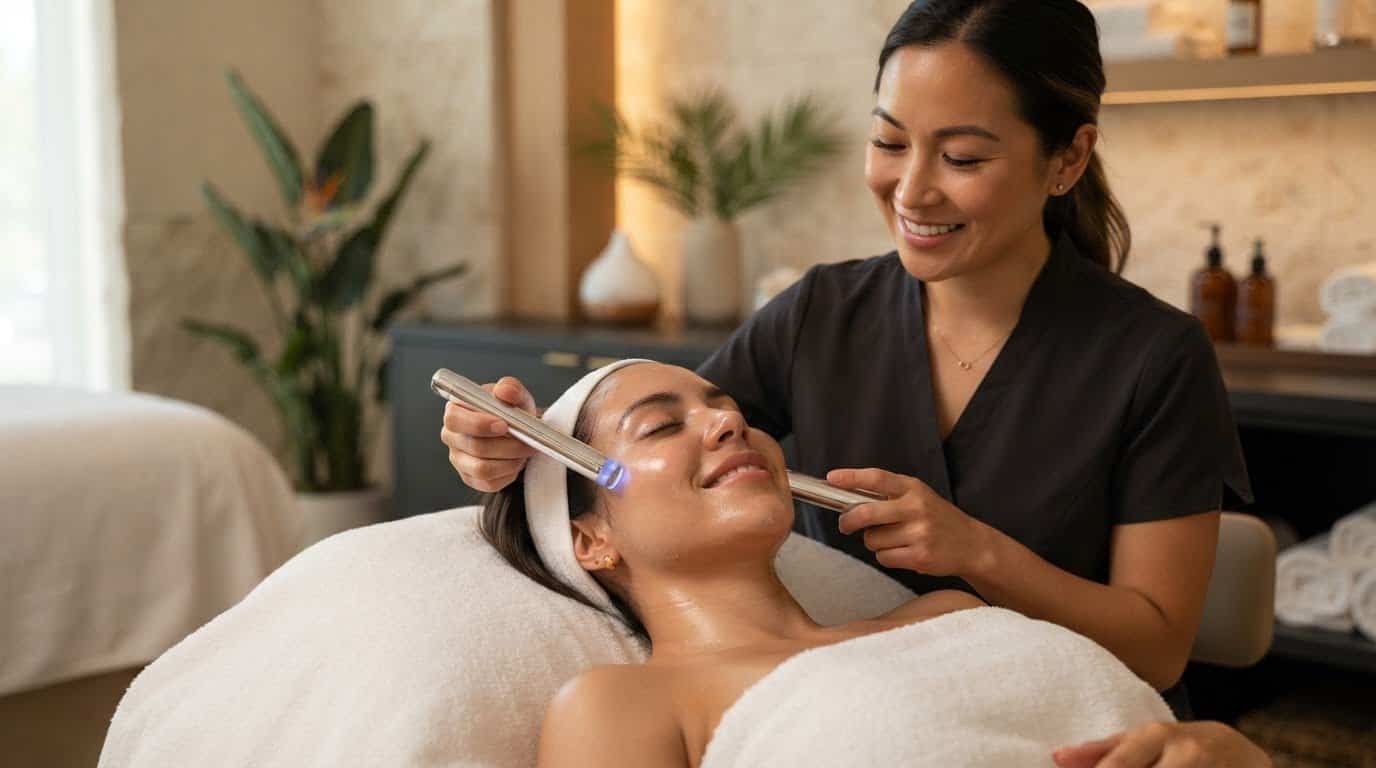
Dry skin doesn’t always need a harsher scrub; it may benefit more from gentle exfoliation paired with hydration. A HydraFacial for dry skin uses a three-step process to cleanse, extract impurities, and hydrate, while exfoliation removes dead skin cells from the surface. Hydrating serums, including those with hyaluronic acid, support a smoother, more refreshed appearance, and visible hydration may last five to seven days or longer.
If your skin feels tight, looks dull, or has rough, flaky patches, it’s understandable to wonder whether a facial will soothe it or leave it feeling more sensitive. HydraFacial can be customized, but the right approach depends on your skin’s current condition and how it responds to exfoliation. This article explains how the treatment may benefit dry skin, which hydrating ingredients it can deliver, what results may look like, and when sensitive or irritated skin may need a gentler plan.
Key Takeaways
- The treatment combines cleansing, gentle exfoliation, and hydration to address dullness and surface impurities.
- Maintenance sessions are commonly spaced every 4-6 weeks, with frequency shaped by your skin’s needs and goals.
- Hydration and visible results may last five to seven days or longer; consistent skincare can help support your skin afterward.
- Many people notice smoother texture and a brighter appearance, though the changes can vary with skin condition and treatment customization.
- Dry or sensitive skin may benefit from a gentler approach, while active irritation, sunburn, or rosacea are reasons to postpone treatment until skin calms.
How Does HydraFacial® Help Fix Dull, Dry Skin in Chino?
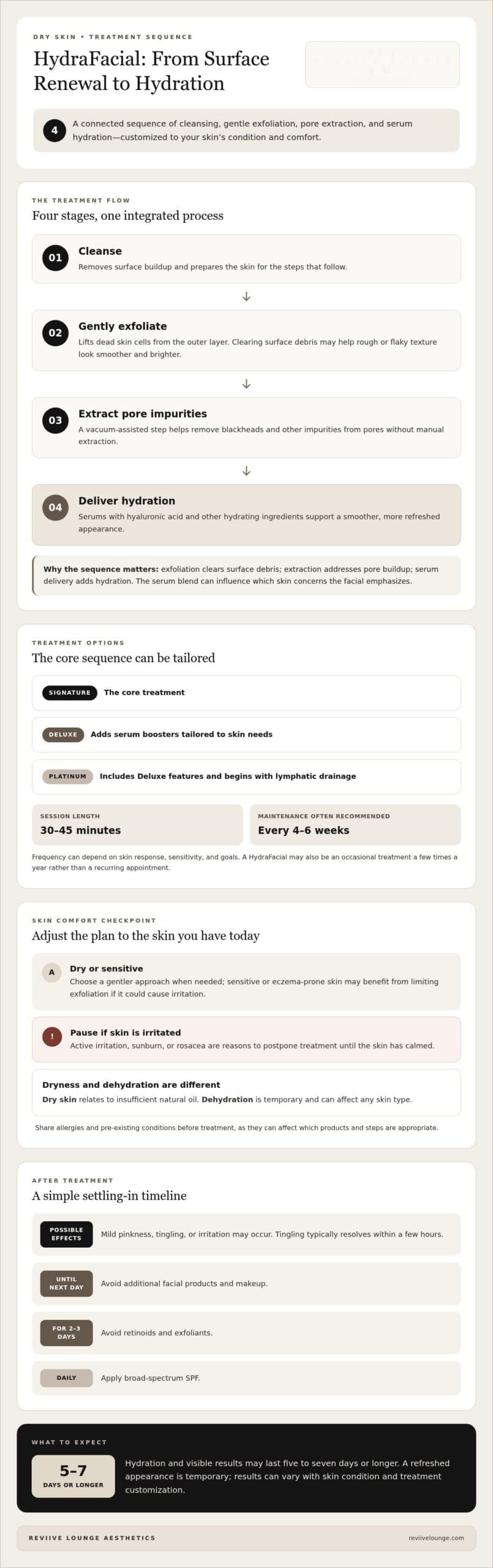
HydraFacial uses a sequence to cleanse, exfoliate, extract impurities, and hydrate skin. For dry, dull complexions, it pairs surface renewal with hydrating serums rather than relying on exfoliation alone.
Cleansing and Exfoliation
Cleansing removes surface buildup, while gentle exfoliation lifts dead skin cells from the outer layer. This prepares the skin for the steps that follow. When dead cells accumulate, rough or flaky texture can look more noticeable; clearing the surface may help skin appear smoother and brighter.
Unlike a facial focused on a single step, HydraFacial combines cleansing and exfoliation with extraction and hydration. The exfoliation is designed to be gentle, but dry skin can also be sensitive. The sequence matters: exfoliating first clears surface debris, then extraction and hydration address pore buildup and moisture.
Pore Extraction and Hydration
After cleansing and exfoliation, the extraction step uses a vacuum to help remove blackheads and other impurities from pores. This offers a non-manual approach to clearing congestion. The final step delivers serums containing hyaluronic acid and other hydrating ingredients, supporting a smoother, more refreshed appearance after surface debris has been removed.
The balance is relevant for dry skin: extraction addresses pore buildup, while serum delivery adds hydration. HydraFacial also combines deep cleansing, gentle exfoliation, painless extraction, intense hydration, and antioxidant protection. The specific serum blend can influence which skin concerns the facial emphasizes.
Compared with other facials for dry skin, HydraFacial combines cleansing, exfoliation, extraction, and serum hydration in one procedure. Other facials may focus on different steps or ingredients, so the distinction is the integrated sequence, not a claim that one approach suits everyone.
Possible short-lived effects include mild pinkness, tingling, or irritation; tingling typically resolves within a few hours. Very sensitive or irritated skin, sunburn, or rosacea are reasons to postpone treatment until the skin has calmed. Dryness does not always mean dehydration: dry skin has insufficient natural oil, while dehydration is temporary and can affect any skin type.
Before treatment, share allergies and pre-existing conditions, since these can affect which products and steps are appropriate. Afterward, avoid additional facial products and makeup until the next day; avoid retinoids and exfoliants for 2-3 days, and apply broad-spectrum SPF daily. These steps help protect the skin as it settles after exfoliation and hydration.
How Does Dry Skin Benefit from Getting a HydraFacial?
A HydraFacial combines cleansing, exfoliation, extraction, and hydration, with options that adjust the treatment’s focus. For dry skin, the treatment plan and maintenance interval can be tailored to skin concerns and comfort.
Treatment Steps and Options
The treatment follows a sequence of cleansing, exfoliation, extraction, and hydration, then varies by option. Signature provides the core treatment, Deluxe adds serum boosters tailored to skin needs, and Platinum includes Deluxe features and begins with lymphatic drainage.
A session typically takes 30-45 minutes. The options matter because they change what the facial emphasizes, from the core sequence to targeted boosters or lymphatic drainage. For example, someone focused on hydration may discuss a booster suited to that concern, while another person may prioritize congestion or overall complexion.
Customization for Different Skin Types
Customization adjusts the treatment to skin type, texture, and damage rather than applying one approach to every complexion. HydraFacial is suitable for all skin types and tones, including sensitive skin, and the selected serums and steps can reflect individual skin concerns.
Dryness and dehydration are not identical: dry skin relates to low natural oil, while dehydration can affect any skin type. That distinction helps shape the approach. Sensitive or eczema-prone skin may need a gentler plan, including limiting exfoliation if it could irritate the skin.
Providers usually recommend maintenance treatments every 4-6 weeks. That interval offers a regular rhythm for addressing concerns such as dryness, congestion, or uneven texture. Skin’s response, sensitivity, and the goals for the complexion all help determine whether that cadence makes sense. A HydraFacial can also be an occasional treatment a few times a year, rather than a routine appointment every 4-6 weeks.
Consistency is a choice, not a requirement for enjoying a facial. Someone seeking a refreshed appearance for a particular occasion may prefer an occasional session; someone addressing ongoing concerns may value a recurring schedule. The plan can also change as skin condition changes, such as when sensitivity increases or dryness becomes more noticeable.
How much does a HydraFacial cost at Reviive Lounge in Chino? The price depends on the case and is given after a quote request; treatment option, selected boosters, and customization are cost factors.
For a HydraFacial plan shaped around your complexion and skin concerns, explore personalized aesthetic care.
HydraFacial options can be tailored to individual skin concerns. Vacuum extraction helps clear impurities from pores, while hydrating serums support a smoother, more refreshed appearance. The treatment plan should reflect your skin type and current condition.
Expected duration of visible results
HydraFacial hydration and visible results may last five to seven days or longer. The glow is temporary, so it helps to distinguish a refreshed appearance from lasting changes to skin. Hydration can make dry skin look smoother and more plump, while the underlying causes of dryness remain separate concerns.
How the glow and hydration change over time
The treatment’s timeline can vary across the first several days. One account described the biggest difference three days after treatment, with dewier, brighter-looking skin lasting about ten days. That experience illustrates a possible timeline, not a fixed duration for every complexion.
Hydrating serums containing hyaluronic acid support the treatment’s moisture-focused effect. As visible hydration fades, skin may gradually return to its usual appearance. Extraction and exfoliation can also leave the surface looking clearer, but those steps don’t make the glow permanent.
Dryness can affect how noticeable the change feels. Fine lines and wrinkles may appear more prominent when skin has reduced plumpness, so temporary hydration can soften their appearance. This is a short-term cosmetic effect, not lasting wrinkle correction or a substitute for an invasive procedure.
Supporting results after treatment
After treatment, daily broad-spectrum SPF supports skin care, while avoiding retinoids and exfoliants for 2-3 days reduces extra irritation from layered active products. The next day, clients can resume their regular skincare routine. A gentle moisturizer helps maintain comfort as the treatment’s immediate hydration changes.
For an event, scheduling the facial two or three days beforehand allows time for the skin’s appearance to settle and may align with the reported three-day point of strongest visible difference. That timing also leaves room to notice temporary pinkness, which may clear within a day or two.
Think of the result as a brief period of enhanced radiance rather than a permanent reset. The five-to-seven-day timeframe describes expected visible hydration, while the ten-day account shows that some people notice a longer glow. Changes in dryness, texture, and fine-line appearance can make the result feel different from day to day.
Daily SPF, gentle moisturizing, and pausing exfoliating products for 2-3 days provide a simple aftercare framework. These measures support the skin while the immediate glow fades; they don’t extend a HydraFacial result indefinitely. For dry skin, lasting comfort also depends on maintaining a consistent routine beyond the treatment window.
Potential skin texture and radiance benefits
HydraFacial’s sequence can refresh the skin’s surface by combining exfoliation, extraction, and hydration. For dry complexions, those steps may improve the appearance of texture and radiance without making lasting structural changes to the skin.
Hydration and Other Skin Benefits
Exfoliation removes dead skin cells from the surface, which can make rough texture and dullness less noticeable. Extraction helps clear blackheads and other impurities, while hydration supports a smoother, plumper-looking complexion. Together, these steps address several visible concerns in one facial rather than treating surface buildup alone.
HydraFacial can also tighten the appearance of pores, helping reduce the debris and oils that contribute to pimples and congestion. Clearer-looking pores can complement the effect of exfoliation: skin may look brighter when surface cells and pore buildup no longer obscure its texture. These are appearance-focused benefits, not a promise to prevent acne.
Potential Long-Term Benefits
One session can leave skin feeling smoother, and most clients experience smoother texture after one HydraFacial session. That immediate change comes from surface exfoliation and cleansing, not from a permanent alteration. For example, flaky areas may feel more refined after dead skin cells are removed, while hydration can lend the complexion a temporarily plumper appearance.
Keep long-term expectations distinct from immediate results. A facial can support a more polished-looking surface, but it doesn’t permanently change pore size, erase fine lines, or stop future congestion. The visible effect depends on what the treatment addresses, such as dullness from surface cells or roughness associated with dryness.
Hydration is another part of the result. HydraFacial delivers serums with hyaluronic acid and other hydrating ingredients, helping skin look smoother and feel more supple. That fresh appearance is different from a lasting change in the skin itself. A consistent routine, including moisturizer and daily broad-spectrum SPF, supports skincare between treatments.
There’s little downtime for most people after treatment, so a refreshed complexion can fit into a regular schedule. Aftercare still matters: avoid retinoids and exfoliants for 2-3 days, then resume regular skincare the next day. This gives the skin a chance to settle after exfoliation, while SPF helps protect the surface during everyday exposure.
Think of the benefits as a combination of visible refinement and temporary hydration. For instance, someone concerned about dullness may notice brighter-looking skin after exfoliation, while someone focused on congestion may value clearer-looking pores after extraction. These changes can improve the appearance of texture without making the treatment equivalent to an invasive procedure.
Is HydraFacial safe for sensitive or very dry skin?
Whether a HydraFacial for dry skin is appropriate depends heavily on its current condition. Skin that is sunburned, irritated, or affected by rosacea should calm before treatment. Very dry skin also needs careful assessment, especially if it is cracked, brittle, or reddened.
That distinction matters because dry, cracked, brittle, or reddened skin can be more susceptible to infection. Exfoliating an already irritated surface can add discomfort rather than improve its appearance. For example, flaky skin without active redness differs from skin that is inflamed, tender, or sunburned.
For ultrasensitive or eczema-prone skin, the provider may skip exfoliants. Exfoliating ingredients can irritate sensitive skin or trigger an eczema flare. Adjusting this part of the procedure means the same exfoliation is not necessary for every skin type. Discussing current symptoms helps shape the treatment steps.
Temporary responses can include mild pinkness, tingling, or irritation. Tingling or irritation typically resolves within a few hours, and mild post-treatment pinkness is usually short-lived. Most clients experience no peeling or discomfort after treatment. Persistent or worsening irritation is different from brief, mild pinkness and deserves prompt attention.
Before treatment, disclose allergies and pre-existing conditions. Those details can affect which serums or steps are appropriate. Also mention recent aesthetic treatments and medications. AdventHealth advises against HydraFacial within two weeks of neurotoxin or filler injections, and during pregnancy or nursing. It also advises against treatment for people with a pacemaker or cardiac concerns, lymphedema, or isotretinoin use for acne.
These considerations make timing and skin condition central to treatment planning. For instance, calm, sensitive skin may call for a different approach from active rosacea or a fresh sunburn. Recent neurotoxin or filler injections also matter, even if the skin itself feels comfortable. Sharing these details supports an individualized discussion.
After a session, avoid makeup and additional facial products until the next day, then resume regular skincare. Avoid retinoids and exfoliants for 2-3 days, and apply broad-spectrum SPF daily. These steps reduce extra irritation while the skin settles. If visible redness occurs, it should typically clear within a day or two.
For an informed discussion of skin concerns and treatment options, explore personalized aesthetic care at Reviive Lounge Aesthetics.
When evaluating skin sensitivity and treatment choices, it can help to distinguish the cleansing step from whether the skin is ready for treatment. Blaine Plastic Surgery states that dry, cracked, brittle, or reddened skin can increase susceptibility to infection. The page states that HydraFacial vacuum cleansing does not harm or swell the skin, but active irritation and marked dryness still matter when assessing whether to proceed. A HydraFacial provider may skip exfoliants for clients with ultrasensitive or eczema-prone skin because they can cause irritation or trigger an eczema flare-up.
The page states that most HydraFacial clients experience only mild, short-lived pinkness, with no peeling or discomfort. That typical response is not a guarantee for every individual, or a reason to disregard a reaction that persists or worsens. For sensitive or very dry skin, share changes in redness, tenderness, or dryness before the appointment and discuss whether the treatment steps should be adjusted.
Explore HydraFacial Options in Chino
Compare HydraFacial and customized facial services at Reviive Lounge in Chino. Ask the team which option fits the concerns you want to discuss and what the appointment includes.
For published membership rates, see our HydraFacial pricing guide. To ask about a single visit or availability, contact the Chino team.
Choose a Next Step That Fits Your Skin Goals
Let your main concern guide what you explore next. If your focus is dryness, consider how a HydraFacial for dry skin could fit alongside your existing skincare habits. If your goals extend beyond hydration, separate those concerns and consider them individually rather than expecting one treatment to address everything.
Reviive Lounge Aesthetics offers Botox & Neurotoxin Injections, Dermal Fillers, and Medical Weight-Loss Programs. These services address different aesthetic or wellness goals, so they may be relevant when your interests go beyond facial hydration. A thoughtful conversation can help you clarify what matters most and consider an appropriate next step without pressure.
When you’re ready to discuss your goals, contact Reviive Lounge Aesthetics. A considered approach starts with your priorities, and you can move forward at a pace that feels right for you.
Frequently Asked Questions
How does HydraFacial help dry skin?
HydraFacial for dry skin combines surface exfoliation with hydrating serum delivery, which may help skin feel smoother and look more refreshed. It can complement daily moisturizing, but it doesn’t replace a regular home-care routine. For example, someone with a dull, rough-feeling complexion may value the surface refresh, while continuing moisturizer helps maintain everyday comfort between treatments.
What HydraFacial serums or boosters are best for dry skin?
A serum containing hyaluronic acid is one hydrating option for dry skin. Booster selection can also reflect other concerns, such as dullness or uneven texture, rather than dryness alone. There isn’t one universal booster for every complexion. The treatment can be tailored to skin condition and goals, so discuss sensitivities and ingredients during your consultation.
What happens during a HydraFacial treatment?
The treatment moves through cleansing, exfoliation, pore extraction, and serum hydration. Cleansing and exfoliation prepare the surface, extraction targets pore buildup, and the final step delivers hydrating ingredients. Antioxidant protection may also be part of the treatment. If your skin is particularly reactive, tell the provider before your facial so the approach can account for your comfort and skin condition.
How long do HydraFacial results for dry skin last?
Visible hydration and glow may last five to seven days or longer. Some people notice a refreshed appearance beyond that window, while others see the effect fade sooner. Skin condition and home care can influence how the complexion looks afterward. For an occasion, plan around a temporary radiance boost rather than expecting the treatment to replace ongoing moisturizer or sun protection.
How often should you get a HydraFacial for dry skin?
Maintenance treatments are commonly scheduled every 4-6 weeks. A monthly session may suit someone seeking regular care, while an occasional facial a few times a year can fit a less frequent routine. Your skin’s response, sensitivity, and main concerns help shape the schedule. Keep the interval consistent with the treatment plan and avoid treating a recommended cadence as a requirement for everyone.
How much does a HydraFacial cost at Reviive Lounge in Chino?
Published monthly memberships are $179 for Signature, $199 for Deluxe, and $249 for Platinum. These are recurring membership rates, not confirmed single-visit prices. Compare current membership inclusions and rates, or contact the team for a one-time appointment quote and current terms.