


The cost of dermal fillers in the Inland Empire depends on the filler selected, the treatment area, and the amount used. A syringe price is only part of the picture, especially for lip enhancement, where the plan should reflect your goals and facial features.
It’s reasonable to want a clear estimate before deciding whether fillers fit your goals. This guide explains what dermal fillers are, how product and syringe pricing can differ, what may affect results over time, and what shapes the cost of lip enhancement in the Inland Empire.
You’ll also learn why treatment areas can call for different amounts of filler and how maintenance fits into the overall plan. With those details in view, you can better understand the choices involved and have a more informed conversation about a natural-looking result that suits you.
Key Takeaways
- Compare the full treatment plan, not just the per-syringe figure; the area treated and amount of filler both affect the total.
- Understand how filler type and brand relate to your aesthetic goals before weighing prices.
- Plan for maintenance with the understanding that longevity varies by filler and treatment area.
- Lip augmentation costs depend on the product and amount used, so a personalized plan helps clarify what may shape the estimate.
- Explore how a physician-led approach to dermal fillers can support informed, tailored treatment decisions.
How Much Does One Syringe of Filler Cost?
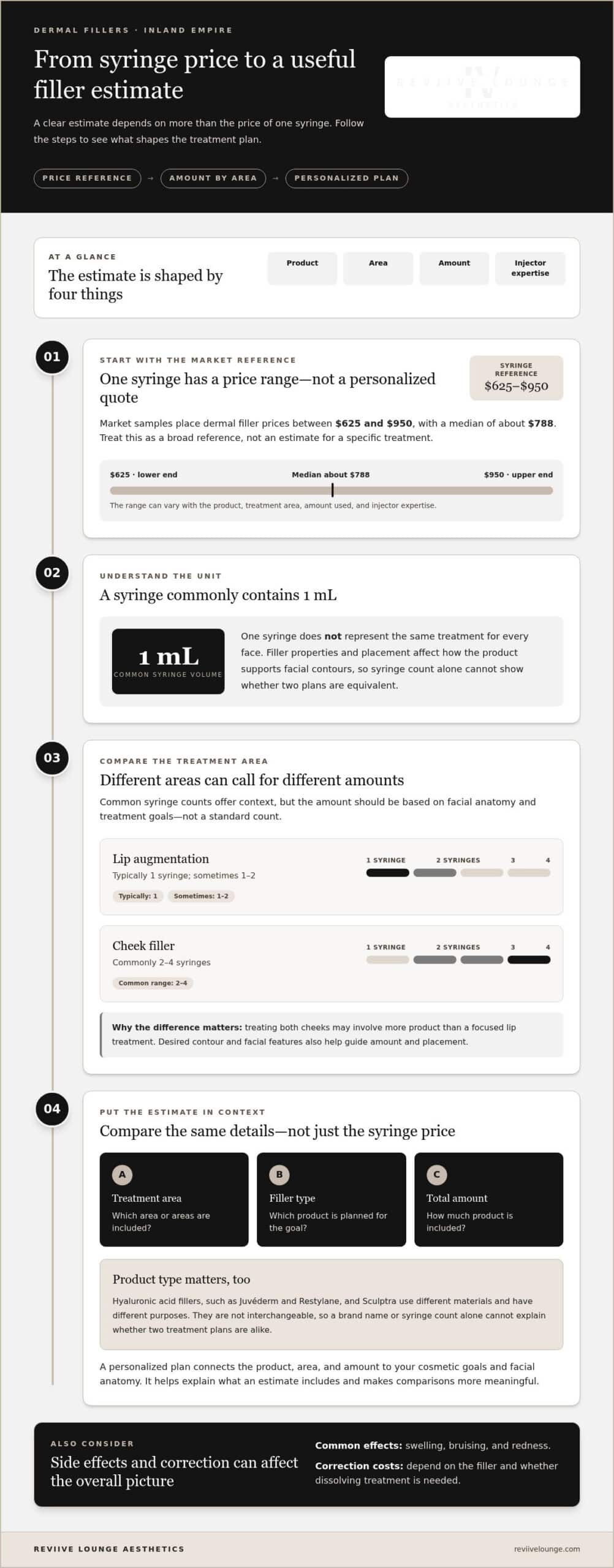
Market samples place dermal filler prices between $625 and $950, with a median about $788. Common effects include swelling, bruising, and redness; correction costs depend on the filler and whether dissolving treatment is needed.
That market range is a reference, not a personalized treatment estimate. The final amount depends on the product, treatment area, amount used, and injector expertise. A prefilled syringe commonly contains 1 mL, but one syringe does not represent the same treatment for every face.
Syringe Counts by Treatment Area
Syringe counts describe the amount of filler commonly used for a treatment area. Lip augmentation typically uses 1 syringe, sometimes 1-2, while cheek filler commonly requires 2-4 syringes.
These examples show why the treatment area affects the overall plan. Treating both cheeks may involve more product than a focused lip treatment, and the desired contour matters too. The amount should be based on facial anatomy and treatment goals, not a standard syringe count.
One milliliter can be a helpful reference when comparing plans, but it does not determine the result on its own. Filler properties and placement affect how a product supports facial contours. Different filler types, such as hyaluronic acid fillers and Sculptra, are not interchangeable, so syringe count alone cannot establish that two plans are equivalent.
The area matters, too. Cheek treatment may involve more product than a focused lip treatment. A personalized plan considers whether your goal is subtle definition, added volume, or balance between facial features. Those goals help guide product amount and placement.
Personalized Plans and Pricing
A personalized plan connects the treatment area, product, and amount to your cosmetic goals. That context matters because it clarifies what a treatment estimate includes.
A consultation can clarify which areas you want to address, your goals, and whether one area or several are part of the plan. This gives an estimate context, instead of leaving you to compare syringe prices without knowing what each includes.
When comparing estimates, look at the planned treatment area, filler type, and total amount. A quote may cover a focused area, while a broader plan may involve more product. These details make the difference between a useful comparison and a misleading price-per-syringe comparison.
Combining filler with another cosmetic treatment changes the scope of a plan. For example, filler adds volume, while Botox and other neurotoxin injections address a different aesthetic concern. Consider each treatment separately so a filler estimate is not mistaken for the cost of a combined plan.
Side effects can include temporary swelling, bruising, and redness. Springer Nature describes reports of swelling and tissue thickening at injection sites months after BDDE-cross-linked hyaluronic acid filler use; correction costs depend on the issue, filler, and treatment needed.
What Are Dermal Fillers?
Dermal fillers are injectable medicines used for temporary cosmetic changes. They can restore facial volume, soften lines, and refine contours such as the jawline. The cost of dermal fillers in the Inland Empire reflects more than the product alone: location, filler type, provider expertise, and treatment requirements all shape pricing.
Hyaluronic acid fillers, including Juvéderm and Restylane, add volume beneath the skin. Hyaluronic acid is a substance that occurs naturally in the body. Juvéderm can soften lines around the mouth and nose, while Restylane can restore volume in areas such as the lips and cheeks. Different products suit different treatment goals and facial areas.
Other filler materials work differently. Radiesse uses calcium hydroxylapatite and can address facial aging signs and restore cheek volume. Sculptra contains poly-L-lactic acid and is used for facial volume loss. These distinctions matter because product type influences the treatment plan, the injection approach, and the way clinicians assess the desired result.
Regional pricing also reflects the practice’s location and local market. Inland clinics and coastal California clinics may have different operating costs and pricing patterns. The overall market band for dermal filler is between $625 and $950, with a median about $788. Treat that range as a broad market reference, not a quote for a specific treatment.
Provider expertise, the procedure performed, and the time and effort required can affect the estimate. For example, a plan addressing several facial areas may involve different work than treatment focused on one line. The filler selected also matters: a hyaluronic acid injectable and a biostimulatory option have different materials and purposes.
An individualized assessment connects these factors to your goals. A clinician considers facial anatomy, the area being treated, the product’s intended use, and the degree of change you want. Jawline contouring differs from softening lines near the mouth, so the approach and amount may differ too.
Comfort can be part of the treatment conversation, but it does not establish a standard price. The procedure, treatment area, and product selected shape the plan. A useful estimate describes what is included rather than presenting an injectable price without context.
To understand an estimate, compare the same elements: filler type, treatment area, and planned procedure. A plan for one area may not be directly comparable with a plan for another. These distinctions help explain why regional averages can inform budgeting, while an individualized plan determines the relevant estimate.
Filler prices by brand
Brand comparisons are useful only when the treatment area and product type are clear. Hyaluronic acid fillers and Sculptra have different materials and purposes, so a brand name alone cannot explain a treatment estimate.
Inland Empire prices can differ by practice, product, injector expertise, and the work involved. A per-syringe quote describes product quantity, while a per-session estimate may reflect the full treatment plan. The American Society of Plastic Surgeons publishes national cost information, but a national benchmark isn’t a local quote.
Brand also relates to the treatment goal. For example, Juvéderm Voluma XC is used to restore cheek volume and facial shape, while Restylane products can address lips, cheeks, lines, or facial contours. Sculptra is used for facial volume loss. The appropriate comparison is between products intended for similar areas and outcomes.
Lip filler estimates may be discussed by product amount or by treatment plan. The amount considered depends on your goals and assessment. Do not assume that a smaller quantity will cost a fixed proportion of a larger plan, since the product and treatment approach shape the estimate.
Consultation, injector, and facility fees aren’t uniform across Inland Empire med spas. Some estimates may include these charges, while others may itemize them, so the written total should make clear what the quoted treatment covers.
Promotions and payment options vary by practice. Reviive Lounge Aesthetics offers flexible financing options. Financing is separate from choosing which filler may suit your aesthetic goals.
For a meaningful comparison, patients can organize estimates using these details:
- Product: Record the filler brand and type, such as hyaluronic acid or poly-L-lactic acid.
- Plan: Note the treatment area, syringe quantity, and whether the estimate is per syringe or per session.
- Included charges: Identify whether consultation, injector, or facility fees appear in the total.
These details make an estimate easier to interpret without treating different plans as equivalent. A consultation can connect the product, treatment area, and your goals, clarifying what the treatment plan includes.
Filler longevity and maintenance
Dermal filler results typically last 6-24 months, but the product influences how long volume remains visible. Hyaluronic acid fillers last 6-18 months, while specific products can have different duration estimates. Maintenance planning is therefore tied to the filler selected, not just the treatment date.
Juvéderm Voluma XC results can last up to 24 months, and Juvéderm results may smooth facial lines for as long as a year. A follow-up Juvéderm treatment is usually recommended every 6-18 months to maintain results. These figures describe different Juvéderm uses and don’t mean every patient follows the same schedule.
Restylane is a hyaluronic acid filler, so its duration fits the broader category estimate of 6-18 months. The exact treatment area and product matter when interpreting that range. A lip plan and a cheek-volume plan can have different goals, making the product-specific maintenance discussion more useful than one universal timeline.
Other filler materials have separate estimates. Radiesse, a calcium hydroxylapatite filler, is described as lasting around two years in the United States; another broad estimate for this filler type is around 18 months. Sculptra results may last for an extended period, though duration can vary. These distinctions help patients compare expected duration by material.
Results may become noticeable after about two weeks and last up to one year, according to a broad dermal-filler estimate. That range differs from product-specific timelines because it describes fillers generally. The American Society of Plastic Surgeons reported about $715 per syringe in 2023, a cost figure rather than a lifespan estimate.
Maintenance means considering when the effect changes, not automatically repeating treatment on a fixed date. Hyaluronic acid fillers generally need to be rebuilt every 6 to 24 months. The filler type, treated area, and visible change are relevant when discussing whether another treatment fits the original goal.
A practical maintenance conversation can focus on three details:
- Product: Identify whether the filler is hyaluronic acid, calcium hydroxylapatite, or poly-L-lactic acid.
- Timeline: Compare the product’s stated duration with the visible result and treatment area.
- Goal: Clarify whether the aim is to maintain volume, refine contour, or address a different area.
A medical professional can explain how the selected product relates to your treatment plan. Different filler materials have different purposes, so future care should be discussed in relation to the product and your individual plan. This helps you plan with a clearer understanding of the options.
Average cost of lip augmentation with dermal fillers
Lip filler pricing depends on the individual treatment plan, including the product, treatment area, and amount used. At Reviive Lounge Aesthetics, pricing is provided after an individualized consultation.
One syringe is a typical starting quantity for lip filler; some plans use 1-2 syringes. That range helps explain why a single average may not represent every procedure. A plan for subtle definition can differ from one intended to restore more volume or balance the upper and lower lips.
The treatment area also guides product choice and placement. Lip borders, the body of the lips, and surrounding lines are distinct areas with different aesthetic goals. Lines around the mouth may be part of the discussion, but treating them is not the same as adding lip volume.
Estimates can vary because practices may describe treatment costs differently. One estimate may refer to product quantity, while another may describe the planned procedure and product together. Compare what each includes rather than treating every lip filler estimate as the same service.
During planning, clarify your goals and the amount of product being considered. A consultation can identify whether you are seeking contour, symmetry, or volume, and whether the plan focuses on the lips alone. These details connect the estimate to the treatment area.
Use these questions to understand a lip augmentation estimate:
- Quantity: Does the plan use 1 syringe or a different amount?
- Product: Which filler is proposed, such as a hyaluronic acid option?
- Scope: Does the estimate cover lips only, or another area as well?
- Session basis: Is the quote for product quantity or the complete procedure?
Product choice should reflect the treatment goal, not price alone. RHA filler is one named filler option, while Juvéderm and Restylane are other recognized brands. Their names don’t make their plans interchangeable; the selected product and placement should correspond to the area and desired result.
Future care may also factor into longer-term planning. Results vary by product and treatment area, so discuss what to expect for your specific plan. A later treatment is a separate decision and is not automatically included in an initial estimate.
For a clear comparison, pair an estimate with the product, amount, and treatment scope. That gives a more useful picture of lip enhancement in California than a standalone figure, while keeping attention on the goals of the treatment.
Reviive Lounge Aesthetics: Botox & Neurotoxin Injections
Reviive Lounge Aesthetics offers Dermal Fillers for people exploring personalized facial volume or lip enhancement. The physician-led practice can help connect your goals with a treatment plan and explain how product choice, treatment area, and amount shape pricing.
Botox and other neurotoxin injections address different concerns than fillers, so they may be considered separately when your goals involve both volume and expression lines. Reviive Lounge Aesthetics also offers Microneedling with PRP and Medical Weight Loss Programs for distinct aesthetic and wellness goals.
Dermal filler pricing depends on the individual treatment plan and is provided after a quote request. Contact Reviive Lounge Aesthetics or visit reviivelounge.com to discuss your goals.
Choose a Plan That Fits Your Goals
Use what you’ve learned about the cost of dermal fillers in the Inland Empire to guide a more useful conversation: which feature would you like to address, and what kind of change feels right for you? Sharing those priorities can help shape a personalized treatment discussion.
At Reviive Lounge Aesthetics, you can explore Dermal Fillers alongside Botox & Neurotoxin Injections, which address different aesthetic concerns. The practice also offers Medical Weight Loss Programs. These services serve distinct goals, and a consultation can help you consider options that align with your interests.
Contact Reviive Lounge Aesthetics to continue the conversation and take an informed next step toward care that feels considered and personal.
Frequently Asked Questions
How Long Until I See the Results?
Juvéderm results are usually visible within minutes of treatment, while broader dermal-filler estimates describe results becoming noticeable after about two weeks. The timing depends on the product and treatment area. Early swelling or bruising can also affect how the area looks at first, so the initial appearance may not reflect the final result. Follow the treating professional’s aftercare guidance and discuss any unexpected changes with them.
How Many Appointments Will I Need?
The number of appointments depends on the areas treated, the product selected, and whether the plan includes follow-up care. A focused treatment may differ from a plan addressing several facial areas. For example, cheek enhancement commonly uses more syringes than lip treatment, but syringe quantity alone doesn’t establish how many visits you’ll need. Ask for a plan that distinguishes the treatment visit from any recommended review or maintenance appointments.
What Should You Check Before Comparing Filler Prices?
Compare the same details in each estimate: product name, treatment area, planned syringe quantity, and whether the quote is per syringe or per session. Also look for any separately itemized consultation or facility charges. For example, a one-syringe lip plan and a multi-syringe cheek plan aren’t equivalent comparisons. Reviewing the treatment scope alongside the injector’s qualifications gives the price context needed to make an informed decision.
What is the average cost of dermal fillers in the Inland Empire, California?
There’s no single estimate that applies to every treatment plan. The cost of dermal fillers in the Inland Empire depends on the filler type, treated area, amount used, and injector expertise. For treatment at Reviive Lounge Aesthetics, pricing depends on the individual case and is provided after a quote request. Those same factors help explain why regional averages shouldn’t be treated as an individual treatment quote.
How much do dermal fillers cost per syringe in Riverside and San Bernardino counties?
Prices can vary across Inland Empire communities, including Chino, Norco, Corona, Chino Hills, Rancho Cucamonga, Ontario, Eastvale, Pomona, La Verne, Upland, and Fontana. A useful estimate identifies the filler and planned treatment, rather than giving a product figure without context. Reviive Lounge Aesthetics in Chino discusses pricing as part of an individualized consultation.
What are the prices of popular fillers like Juvéderm, Restylane, and Radiesse in the Inland Empire?
Different fillers have different materials and intended uses, so their prices are not directly interchangeable. The selected product, treatment area, and amount used shape an estimate. A product selected for one area may not be comparable to one intended for another. Focus on the treatment included in the estimate, not the product name alone.
How does filler pricing vary by treatment area, such as lips, cheeks, and under-eyes?
Treatment area affects the amount of product and the plan required. Lip filler typically uses one syringe, sometimes one to two; cheek filler commonly uses two to four syringes. Under-eye treatment has different anatomical considerations, so its plan isn’t directly comparable with lip or cheek enhancement. These examples help explain why a quote should specify both the area and the planned quantity.
How can patients compare dermal filler prices and injector qualifications in California?
Compare quotes by matching the filler, treatment area, syringe quantity, and included charges. Then assess whether the injector has relevant medical qualifications and an understanding of facial anatomy. California treatment estimates can reflect provider expertise, procedure complexity, time, and location, so a lower figure alone doesn’t show what care includes. A physician-led consultation can clarify the plan and help you understand the clinical reasoning behind product selection and placement.