


Redness usually settles within 24–48 hours after microneedling, though mild sensitivity or redness can linger for up to 14 days. Knowing what to expect after microneedling also means allowing for gradual change: collagen-related improvements develop over weeks to months, rather than appearing overnight. Skin’s response can vary, so a little temporary redness doesn’t necessarily mean something is wrong.
It’s natural to wonder when your skin will look normal again, when makeup is safe, and which skincare products should wait. In the first few days after microneedling, your skin may feel warm or tight, and light flaking can occur. Gentle care helps support recovery while your skin settles.
This guide walks through the recovery timeline, how results emerge, and when to reintroduce makeup and active ingredients. It also explains practical aftercare for microneedling with PRP, including how to handle the PRP after treatment and what changes should prompt you to seek professional guidance.
Key Takeaways
- Expect redness and sensitivity to settle gradually; light flaking can appear during recovery, so keep care gentle and let peeling skin shed naturally.
- Microneedling results build over time as collagen develops, and a treatment series may be needed to address your skin goals.
- Wait at least 24–48 hours before applying makeup, and give sweaty workouts, pools, and saunas a pause while your skin recovers.
- Hold off on retinoids and exfoliating acids, then reintroduce active ingredients gradually once your skin has settled.
- For microneedling with PRP, follow your provider’s instructions for how long to leave PRP on your skin and how to care for the treated area.
1. Is 2 microneedling sessions enough?
Two sessions can begin the process, but they’re usually fewer than a typical initial series. A common plan includes 3 to 6 treatments, spaced 4 to 6 weeks apart. The right number depends on the concern being treated and how your skin responds. For texture or scarring, changes develop gradually, so judging the outcome immediately after session two can be premature.
Some improvement in tone and texture may appear 2 to 3 weeks after the first session. Collagen production continues over 2 weeks to 3 months, and results can keep developing after visible redness has faded. After the initial series, maintenance may involve a session every 3 months or 1 to 2 sessions per year. These different schedules reflect that treatment plans vary with skin goals and response.
Professional microneedling is performed by a trained provider who can assess your skin and tailor treatment settings. At-home derma rolling is self-administered and does not include the same professional assessment or individualized treatment plan. These approaches are not interchangeable, especially when deciding how often to repeat a session.
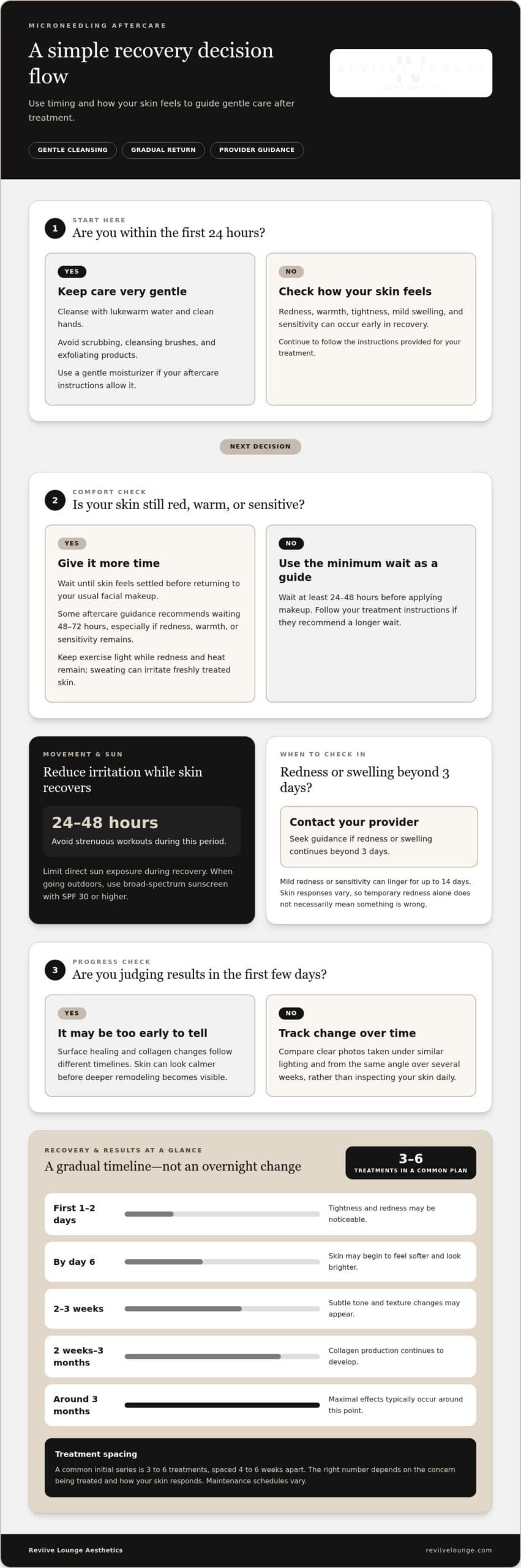
For the first 24 hours, cleanse with lukewarm water and clean hands. Avoid scrubbing, cleansing brushes, and exfoliating products while the skin feels sensitive. After cleansing, use a gentle moisturizer to ease dryness; hyaluronic acid is commonly used for hydration after treatment. Follow the aftercare instructions provided for your session, since the treatment approach can affect what products are suitable.
Redness, warmth, tightness, mild swelling, and sensitivity can be normal early responses. During the first 1 to 2 days, skin may feel tight and look red, much like a mild sunburn. Tenderness, swelling, or redness may last 2 to 3 days, while mild redness or sensitivity can linger for up to 14 days. Dryness or light itching may also appear as the skin settles.
Keep exercise light while redness and heat remain; sweating can irritate freshly treated skin. Avoid strenuous workouts for 24 to 48 hours, and limit direct sun exposure during recovery. Apply broad-spectrum sunscreen with SPF 30 or higher when going outdoors. These steps support comfort, but they don’t replace gentle cleansing or the treatment-specific aftercare instructions.
If redness or swelling continues beyond 3 days, contact your provider for guidance. A second session may be part of a longer plan, rather than the full course, because collagen changes take time and goals differ.
2. Gradual collagen production and treatment results
Microneedling results unfold in stages, so surface healing and collagen changes follow different timelines. Skin can look calmer before deeper remodeling becomes visible. At 48 hours, redness may still be settling, while the processes linked with new collagen continue afterward. A mirror check during the first few days won’t show the full treatment outcome.
By day 6, skin may begin to feel softer and look brighter. Subtle changes in tone and texture can become noticeable 2 to 3 weeks after treatment. These early shifts are not the same as the complete result; collagen production develops over 2 weeks to 3 months. Progress is gradual rather than a sudden change on one morning.
Different concerns have different visible timelines. Pigmentation improvement may begin around 3 weeks, while changes in lines, wrinkles, and scarring may start at 4 to 6 weeks. Texture and scars can take until the third or fourth month of consistent treatments to show visible improvement. These milestones help frame progress; they aren’t interchangeable measures of one result.
Use consistent comparisons rather than relying on memory. Take a clear photo before treatment, then repeat it under similar lighting and from the same angle. Compare photos over several weeks instead of inspecting your skin daily. This makes gradual changes easier to recognize and helps distinguish temporary dryness from longer-term texture changes.
Keep your routine simple while your skin feels sensitive. Gentle cleansing and a suitable moisturizer can support comfort; hyaluronic acid is commonly recommended for hydration after microneedling. Avoid judging results while flaking or dryness remains, since temporary surface changes can affect how smooth or bright your skin looks. Reintroduce stronger products gradually once your skin has settled, following your treatment aftercare instructions.
Collagen changes continue after visible healing, and the maximal effects typically occur around 3 months after treatment. Full results are usually visible after four to six sessions, rather than after a single appointment. A typical course includes 3 to 6 treatments spaced 4 to 6 weeks apart. That spacing gives the skin time between sessions while progress develops.
For a clearer view of how aesthetic care can fit your goals, explore personalized treatment options. Track changes across the treatment course, not just the first week. A steady record helps you discuss specific improvements, such as smoother texture or more even tone, when reviewing progress.
3. Makeup After Microneedling—When Is It Safe?
Wait at least 24–48 hours before applying makeup after a microneedling treatment. Some aftercare guidance recommends waiting 48–72 hours, especially while redness, warmth, or sensitivity remains. Follow your treatment instructions, and wait until the skin feels settled before returning to your usual facial makeup.
During the first 24 hours, keep cleansing simple. Wash with lukewarm water and clean hands, then apply a gentle moisturizer if your aftercare instructions allow it. Avoid scrubbing or using a cleansing brush. Freshly treated skin can feel sensitive, so rubbing during cleansing or makeup removal may add irritation.
When makeup is appropriate, start with a light application rather than your full routine. Use clean hands or applicators, and avoid pressing or dragging products across areas that still feel tender. Remove makeup gently at the end of the day. If foundation stings or increases redness, stop using it and return to a simple routine.
Sun exposure needs separate attention. Avoid direct sun during early recovery, and use broad-spectrum sunscreen with SPF 30 or higher when going outdoors. Makeup with SPF shouldn’t replace sunscreen as your primary sun protection. A vitamin C serum is an active product, not a substitute for sunscreen or a reason to speed up your regular routine.
Pause strenuous exercise and activities that cause heavy sweating for at least 24–48 hours. Heat and sweat can make treated skin feel more sensitive or swollen. Some guidance recommends waiting longer, up to one week, before heavy sweating, or until inflammation and flaking have subsided. Resume gradually rather than returning straight to an intense workout.
Give pools, saunas, steam rooms, and hot tubs a pause, too. Avoid them for at least 48 hours after treatment; some guidance recommends 3–4 days away from swimming, sauna, and long hot baths. Heat can aggravate flushing, while shared water may expose freshly treated skin to irritants. Choose a gentle shower instead of a hot soak during early recovery.
Use how your skin looks and feels to guide your return to makeup and activity. For example, if redness has eased but your cheeks still feel warm, wait before applying foundation or exercising. Light flaking can appear around days 3–5, so avoid rubbing makeup over peeling areas. Resume your usual facial routine gradually, and follow the specific aftercare directions for your session.
4. Post-treatment skincare ingredients to avoid
Pause products that exfoliate or stimulate the skin while it recovers. Retinol, prescription retinoids, alpha hydroxy acids (AHAs), and beta hydroxy acids (BHAs) may add irritation during healing. Check ingredient labels, as exfoliating acids can appear in cleansers, toners, serums, and treatment masks.
Wait at least one week before using chemical exfoliants, including AHAs and BHAs. Avoid retinol and other retinoids for 5–7 days after treatment. Treat vitamin C as an active: pause it while skin remains irritated, then reintroduce it gradually once redness and sensitivity have resolved.
For the first 24 to 48 hours, avoid strong active skincare ingredients. That includes formulas that sting or leave skin feeling hot, tight, or more sensitive. If a product combines several actives, set it aside rather than testing one ingredient at a time on freshly treated skin.
- Exfoliants: Skip glycolic acid, salicylic acid, and exfoliating scrubs for at least one week. Avoid cleansing brushes, too, because friction can aggravate flaking.
- Retinoids: Keep retinol and prescription retinoids out of your routine for 5–7 days. Restart gradually rather than applying them nightly immediately.
- Vitamin C: Resume only after irritation has settled. If it stings or brings back redness, stop and return to gentle skincare.
Choose a simple routine during early recovery. Use a gentle cleanser and lukewarm water, then apply a moisturizer without exfoliating acids or retinoids. Hyaluronic acid is commonly recommended for hydration after microneedling. Don’t pick at flaking skin; let it shed naturally rather than lifting it with a scrub or washcloth.
Sun exposure also matters during the healing process. Avoid direct sun exposure for at least 5–7 days after treatment, and use broad-spectrum sunscreen with SPF 30 or higher when going outside. Don’t use a tanning bed during early recovery. Sunscreen protects treated skin outdoors, but it doesn’t make prolonged exposure a good idea.
Avoid activities that create excess heat or sweat while inflammation is active. Strenuous exercise, saunas, and steam rooms may make freshly treated skin feel more irritated. Avoid harsher post-treatment services for two full weeks, giving your skin time to recover before another exfoliating or intensive procedure.
Reintroduce skincare one product at a time after redness, sensitivity, and flaking have resolved. For example, restart a retinoid on a limited schedule before returning to frequent use. If severe redness, swelling, or pain lasts longer than 5 days, contact a skincare professional.
5. Aftercare for microneedling with PRP
Follow the specific directions for platelet-rich plasma (PRP), since it’s applied as part of treatment. Depending on your provider’s instructions, PRP may remain on the skin for 4–8 hours immediately after treatment. Don’t wash it off early unless your instructions say otherwise. This timing matters when planning your first cleanse or applying other products.
Keep the treated area clean and avoid unnecessary touching during those first hours. After the PRP waiting period, cleanse gently with lukewarm water and clean hands. During the first 24 hours, avoid scrubbing, cleansing brushes, and fragranced or active products. Pat skin dry with a clean towel rather than rubbing.
Redness, warmth, tenderness, and mild swelling can occur after microneedling with PRP. Mild swelling commonly lasts 24–48 hours, while tenderness or sensitivity can make routine skincare uncomfortable. Choose a gentle moisturizer when permitted by your aftercare instructions. Hyaluronic acid is commonly recommended for hydration, but avoid adding an acid serum or other strong active during early recovery.
Dryness and peeling may follow the first day. From days 2–5, skin can feel rough or dry, and light flaking may appear around days 3–5. Let peeling shed naturally. Picking, rubbing, or using an exfoliating product can aggravate irritation and disrupt the healing process. Keep the routine simple until flaking and sensitivity have settled.
Protect the treated skin from sun exposure. Use broad-spectrum sunscreen with SPF 30 or higher when going outside, and limit direct UV exposure for at least a full week. Avoid strenuous activity during the first few days, especially exercise that causes heavy sweating. Keep away from extreme temperatures for the first 1–2 days, including saunas and very hot environments.
Most patients heal from microneedling within 3–7 days, though the skin’s appearance changes during that period. Notice whether redness and swelling are easing, rather than judging progress by one moment in the mirror. Avoid harsher post-treatment services for two full weeks, and resume your usual skincare routine after one week or once inflammation has resolved.
Contact a skincare professional if severe redness, swelling, or pain lasts longer than 5 days. Pus, fever, extreme sensitivity, or a suspected allergic reaction to an aftercare product also warrants prompt professional guidance. A consultation can help distinguish expected peeling from irritation that needs attention. For support planning your skin-care next step, discuss your treatment goals.
Microneedling Services and Follow-Up in Chino
Explore microneedling services at Reviive Lounge in Chino if you are comparing treatment options. If you have already had a procedure, follow the instructions from your treating provider and contact that provider about recovery concerns.
For questions about an appointment at Reviive, contact the Chino team. Ask about the specific procedure, written aftercare instructions, and how to reach the provider after treatment.
Choose a Next Step That Fits Your Goals
Let your next aesthetic decision reflect what matters most to you now. Understanding what to expect after microneedling can help you make considered choices about future skincare without feeling pressured to add treatments before you’re ready. Notice which concerns remain important as your skin settles, then use those priorities to shape a thoughtful plan.
If your goals extend beyond skin texture, Reviive Lounge Aesthetics also offers Botox & Neurotoxin Injections, Dermal Fillers, and Medical Weight Loss Programs. These services address different aesthetic and wellness needs, so start by considering the outcome you want to explore. A personalized discussion can help you consider which option, if any, aligns with your priorities.
Whether you’re considering another microneedling session or exploring a different goal, you can take the next step at your own pace. Contact Reviive Lounge Aesthetics to discuss your goals and move forward with clarity.
Frequently Asked Questions
How long does it take to look normal after microneedling?
Most visible redness eases within 24–48 hours, but skin can take 5–7 days to look settled. Mild sensitivity may linger longer. Understanding what to expect after microneedling means distinguishing surface appearance from deeper recovery: collagen-related changes continue after redness fades. If you’re planning photos or an event, leave a buffer rather than scheduling treatment immediately beforehand.
What Should I Expect After Microneedling In Terms Of Downtime?
Expect a few days of visible redness, warmth, or sensitivity, with possible light peeling later. Downtime is usually manageable at home, but work involving prolonged sun exposure, heat, or heavy sweating may require adjustments. For example, reschedule outdoor tasks and keep a hat and sunscreen available. Follow your treatment instructions if they specify a different timeline.
Can you use moisturizer after microneedling?
Yes, a gentle moisturizer can support comfort when used according to your aftercare instructions. Choose a simple formula without fragrance, retinoids, or exfoliating acids, and apply it with clean hands rather than a tool or cloth. If it stings or intensifies redness, stop using it. After PRP treatment, follow your instructions about when to cleanse or apply products.
Makeup After Microneedling—When Is It Safe?
Wait at least 24 hours before makeup, and give skin longer if it remains warm, irritated, or tender. Before applying foundation, check that your usual cleanser removes it gently without scrubbing. Use clean brushes or applicators, and avoid sharing makeup during recovery. If makeup catches on peeling areas or causes stinging, remove it gently and wait before trying again.
What Are the Risks of Microneedling?
Temporary redness, swelling, dryness, itching, or sensitivity can occur; breakouts and skin irritation are also possible. A skin infection or an allergic reaction to a post-care product needs prompt attention. Watch for worsening pain, pus, fever, or an unusual reaction rather than treating it with extra skincare. Contact a healthcare professional about concerning symptoms, especially if the treated area is bleeding or swelling persistently.
Can I drink alcohol after microneedling?
Avoid alcohol for at least 24 hours after treatment. During that period, prioritize water and gentle skincare, and avoid combining alcohol with heat or strenuous activity that could make facial flushing more noticeable. If you’re receiving microneedling with PRP, follow the personalized instructions provided for your procedure. For example, don’t drink while you’re still observing a required PRP-on-skin period.
Can I exercise after microneedling?
Wait at least 24–48 hours before strenuous exercise, and resume only after the initial redness and heat have settled. Sweat and increased warmth can make treated skin feel more sensitive. Start with light activity, such as an easy walk, rather than a high-intensity class or sauna session. If exercise brings back burning or pronounced redness, stop and let your skin cool.
Can you use vitamin C after microneedling?
Wait until your skin no longer feels irritated before restarting vitamin C. Strong active ingredients are generally avoided for 24 to 48 hours, and sensitivity can make some formulas uncomfortable beyond that. Reintroduce the serum gradually, applying it to clean, settled skin rather than layering it with retinol or acids. If it stings or brings back redness, pause it again.