


Smile line filler can cause brief discomfort, but topical numbing cream and lidocaine in the filler may make injections more comfortable. For smile line filler in La Verne, results may last six to eighteen months. Restylane Refyne may continue settling over the first one to two weeks as swelling fades.
It’s reasonable to want to know what treatment may feel like before deciding. This guide explains sensations you might notice, factors that can affect comfort, and how long results may last. You’ll also learn how hyaluronic acid fillers are used for smile lines, what settling and common short-term effects may look like, and which potential risks deserve attention. These details can help you weigh your options and prepare questions for a personalized consultation.
Key Takeaways
- Filler selection depends on fold depth and the facial movement you want to preserve, so treatment planning should be tailored to your features.
- Hyaluronic acid fillers can be dissolved with hyaluronidase if needed, a useful consideration when weighing treatment options.
- Mild swelling or bruising may occur after treatment and typically fades within a few days.
- Vascular occlusion is rare but serious and requires immediate treatment with hyaluronidase.
- Learn how a personalized dermal filler assessment can help align treatment choices with your goals and safety considerations.
How long do fillers for smile lines last?
Hyaluronic acid filler results for smile lines may last six to eighteen months. Duration varies with the filler type and individual response. Smile lines, also called nasolabial folds, run from the sides of the nose to the corners of the mouth. Filler adds volume beneath these folds to soften their appearance while preserving facial movement. A subtle result depends on placement and an amount suited to the fold.
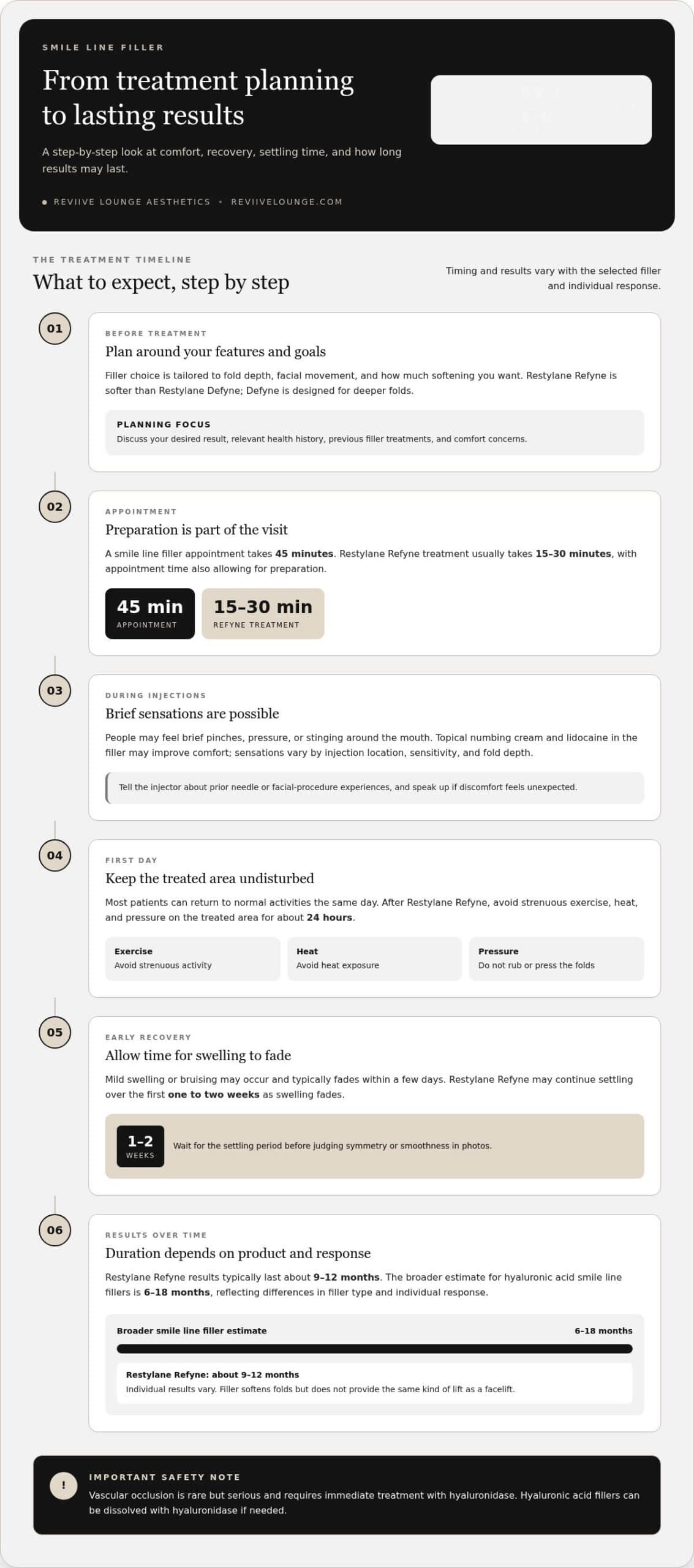
Appointment time and injection time aren’t always the same. A smile line filler appointment at the practice takes 45 minutes, while Restylane Refyne treatment usually takes 15 to 30 minutes. The appointment allows time for preparation as well as treatment. Topical numbing cream and lidocaine in the filler help improve comfort during injections. You may still feel pressure or brief pinching as the dermal filler is placed.
Results vary with the product selected and each person’s response. Restylane Refyne results typically last about 9 to 12 months. A broader estimate for smile line fillers is six to eighteen months, reflecting differences in filler type and individual response. Ask how the chosen filler is intended to address your fold and what result its formulation is designed to support. Filler softens folds without surgery, but it doesn’t provide the same kind of lift as a facelift.
Unlike filler, Botox and other neurotoxin injections target muscle activity. Filler adds volume beneath a fold, laser treatment focuses on skin texture, and a facelift is surgery that lifts facial tissue. These options address different concerns. The relevant comparison depends on whether your priority is a fold, facial movement, skin quality, or laxity.
Nasolabial fold filler in La Verne is another name for smile line filler, a treatment offered by medical aesthetics clinics that provide dermal fillers. A suitable filler choice depends on fold depth, facial movement, and how much softening you want. These factors guide a personalized plan rather than a one-size-fits-all approach.
Plan for a low-key day after treatment. Most patients can return to normal activities the same day. After Restylane Refyne, avoid strenuous exercise, heat, and pressure on the treated area for about 24 hours. This includes pressing or rubbing the folds while the area settles. Following these steps supports a smoother recovery; mild swelling or bruising can still affect how the result looks at first.
Think of the early appearance as provisional, not final. Restylane Refyne may continue settling over the first one to two weeks as swelling fades. Allow time for this process before judging symmetry or smoothness in photos. If you’re considering smile line filler in La Verne, discuss your desired degree of change, facial anatomy, and filler options during a consultation. These details can help set expectations for duration and recovery.
Does smile line filler hurt?
People often describe filler injections as brief pinches, pressure, or stinging around the mouth. Restylane Refyne contains lidocaine, which may improve comfort during treatment. Sensations vary with injection location, individual sensitivity, and fold depth. Before treatment, tell the injector about previous experiences with needles or facial procedures.
Comfort planning starts with discussing your concerns and desired result. A clinician can explain the injection approach, selected filler, and sensations you may notice. For example, you might feel pressure as filler is placed along a fold, followed by temporary tenderness. Speak up if discomfort feels unexpected so the injector can respond during the procedure.
Filler candidacy depends on your facial anatomy and goals, not simply the presence of smile lines. An assessment should consider fold depth, movement around the mouth, skin condition, and whether added volume suits your features. Someone seeking softer folds while keeping a natural expression may have a different plan from someone hoping to erase every crease. A conservative approach can help avoid an overfilled appearance.
Product choice also matters. Restylane Refyne is softer than Restylane Defyne, which is designed for deeper folds. This distinction can guide selection based on fold depth and the support desired. During a consultation, compare the product’s intended use with your goals, then discuss placement and how you want the result to look when smiling and at rest.
If you’re considering smile line filler in La Verne, use a consultation to discuss whether treatment may suit your goals. Share your priorities, relevant health history, previous filler treatments, and any concerns about comfort. The injector can assess whether the fold is your main concern or whether another facial feature affects its appearance. These details help shape a plan around your anatomy rather than a standard syringe amount.
For California, assess an injector’s professional credentials, relevant training, and experience with facial anatomy and dermal filler procedures. Ask how they plan placement around the nasolabial folds and how they handle treatment concerns. A clear explanation of product choice, expected sensations, and aftercare helps you make an informed decision without relying on credentials alone.
Before choosing treatment, consider whether your goal is softer folds or a broader facial change. Filler adds volume in targeted areas; it doesn’t stop facial movement or address every cause of lines. If your priority is subtle softening around the mouth, describe what you want to preserve, such as your natural smile. A useful discussion connects comfort, product selection, and realistic aesthetic goals.
Expected results and settling time
With Restylane Refyne, results may continue settling over the first one to two weeks as swelling fades. Early fullness can make lines around the mouth look different from their later appearance. Give swelling time to subside before judging symmetry or deciding whether the change feels natural. This settling period can help distinguish temporary fullness from the lasting effect of the filler.
Use consistent photos to compare before and after treatment. Take a baseline photo, then compare it with one taken after the one-to-two-week settling period. Match the lighting, camera distance, angle, and expression. For example, compare relaxed-face images rather than a smiling image with a neutral one. Consistency makes changes in volume easier to observe without confusing lighting or expression with treatment effects.
A useful result may soften a fold without erasing every crease. Smile lines move with facial expression, so consider how the area looks both at rest and while smiling. During planning, describe the specific lines that concern you and the degree of softening you hope for. A reference photo can help communicate your preferences, but your facial structure remains the guide for treatment planning.
Filler adds volume beneath a fold, and the amount influences the degree of correction. Some people may need one or two syringes for subtle enhancement, but that isn’t a fixed target for every face. Fold depth, facial proportions, and desired change shape the plan. A conservative approach can help avoid an overfilled look and leave room to assess the result after swelling fades.
Restylane Refyne results typically last about 9 to 12 months. Smile line filler results more broadly can last six to eighteen months, depending on filler type and individual response. These ranges describe differences between formulations and personal responses, not a guaranteed timetable. Product choice, fold characteristics, and how each person responds influence how long the visible softening remains.
Before-and-after photos can help you prepare questions for a follow-up discussion. Note whether the fold looks softer at rest, whether your smile still feels like yours, and whether one side appears different. Avoid judging the final result during the first one to two weeks, while Refyne is settling. If concerns persist after that period, explain what you observe and when you notice it.
For smile line filler in La Verne, focus expectations on a change in fold depth, not a completely different face. The aim is to address lines around the mouth while respecting facial movement and proportions. Clear photos, specific concerns, and a preference for subtle or more noticeable softening provide a practical basis for discussing possible results and duration.
Hyaluronic acid fillers
Smile line fillers are injectable gels placed beneath nasolabial folds, the creases that run from the nose toward the mouth. Hyaluronic acid filler adds volume under the fold to create a smoother visible appearance without freezing facial movement. The goal is usually to soften the crease, not erase every expression line. During a consultation, describe the change you want and how your face looks when smiling.
Hyaluronic acid attracts and holds water, contributing to the gel’s volume-supporting effect. Formulations have different characteristics, so product selection and placement should suit the fold and area being treated. A moderate fold and a deeper crease, for example, may call for different approaches. Discuss the treatment area, the product’s intended use, and how the proposed plan relates to your concerns.
Restylane Refyne is one hyaluronic acid option used for smile lines. In 2016, the FDA approved Restylane Refyne for correcting moderate to severe facial wrinkles and folds, including smile lines. It is approved for mid-to-deep injection, while use in other areas is off-label. Restylane Refyne is approved for adults over 21. These details help frame a consultation around the specific product and treatment area.
Ask how the filler formulation fits your desired result. Restylane Refyne may soften folds while allowing facial movement, but the right choice depends on your anatomy and goals. A useful consultation covers where the gel will be placed, the intended degree of correction, and how the treatment supports a natural-looking change. This helps distinguish targeted fold softening from a plan focused on broader facial volume.
Hyaluronic acid fillers have an important practical feature: they can be dissolved with hyaluronidase if needed. This enzyme breaks down hyaluronic acid filler, allowing a qualified professional to address a result that needs adjustment. Reversibility is one consideration, not a reason to approach treatment casually. Before proceeding, discuss how the product can be dissolved and which concerns warrant clinical assessment.
For a smile line consultation, clearly describe your priorities, such as softening one visible crease while preserving your smile. Share details of past filler treatments and whether you prefer a subtle change or more noticeable correction. These specifics can guide product choice and placement. Ask how the proposed filler relates to the fold, what result to expect, and how hyaluronidase fits into the treatment plan.
Filler risks and complications
Smile line filler can cause mild swelling or bruising around the nasolabial folds. With Restylane Refyne, these effects may fade within a few days. Temporary changes can affect the treated area’s initial appearance, so avoid judging the result too soon. Note when swelling or bruising begins and whether it changes over the following days.
A rare but serious complication is vascular occlusion, which occurs when filler blocks a blood vessel and requires immediate treatment with hyaluronidase. This differs from mild swelling or bruising, which may fade within a few days. If you’re concerned about a change after treatment, contact the treating professional promptly rather than waiting for a routine follow-up.
Before injections, use your consultation to understand the specific risks and response plan. Ask which filler is planned for your smile lines, where it will be placed, and what steps would follow if a complication occurred. For hyaluronic acid filler, discuss hyaluronidase, which can dissolve the filler. Understanding this plan helps distinguish an adjustable result from a complication that needs immediate attention.
Share relevant treatment history and concerns before the procedure begins. For example, mention previous filler in the same area and describe any earlier reaction. This information can help the practitioner consider placement and product choice for your nasolabial folds. A clear discussion also gives you a chance to understand expected changes during recovery and what warrants prompt attention.
Keep recovery observations specific. Record the treatment date, area treated, and when swelling or bruising appears. If the area changes, note whether it’s improving or worsening, then share those details with the treating professional. Mild swelling or bruising from Restylane Refyne may fade within a few days; vascular occlusion is rare but requires immediate treatment with hyaluronidase.
Smile line injections are not surgery, but they still carry risks that deserve careful discussion. Treatment planning should account for facial movement, fold location, and filler amount. Ask how a conservative plan can support a natural appearance without excessive correction. Understanding the difference between expected temporary effects and a serious complication can help you make an informed decision.
Before proceeding, make sure you understand the product, placement, aftercare, and response plan. If you’re weighing dermal filler for smile lines, discuss your treatment goals and safety questions with a qualified professional. Clear expectations and a defined plan help you approach treatment with informed attention to both results and risks.
Reviive Lounge Aesthetics: Botox & Neurotoxin Injections
Reviive Lounge Aesthetics offers dermal fillers for people considering softer smile lines. Botox and other neurotoxin injections target muscle activity, while filler adds volume beneath folds. The right option depends on your concern. A personalized discussion can clarify how facial movement, fold depth, and your preference for subtle results shape treatment planning.
If you have questions about filler choice, possible results, or safety, Reviive Lounge Aesthetics can help you explore your options in a personalized consultation. Contact the team to discuss your aesthetic goals and possible next steps.
Make Your Next Step Personal
Choosing smile line filler in La Verne is a personal decision shaped by the features you want to soften and the expression you want to preserve. Before a consultation, consider what would feel meaningful: a gentler fold, a refreshed appearance, or simply a clearer understanding of which approach suits your priorities. Clear goals can focus the conversation and help you decide whether treatment feels right for you.
Reviive Lounge Aesthetics offers aesthetic services including dermal fillers and Botox and neurotoxin injections. A conversation can help you explore your goals and discuss the approach that aligns with them, without pressure to pursue treatment. You can contact Reviive Lounge Aesthetics to take that next step and move forward with greater clarity.
Frequently Asked Questions
Can it be combined with other procedures?
Yes, smile line filler may be planned alongside other aesthetic procedures, with the combination and sequence tailored to your goals. At a consultation, mention every treatment you’re considering, previous injections, skin procedures, and upcoming events. This helps the practitioner map which concerns each procedure addresses and plan suitable timing. For example, a fold concern and a separate skin-texture goal may call for distinct treatment steps.
How long do the results last?
Smile line filler results may last six to eighteen months, depending on filler type and individual response. This range reflects differences between formulations and personal factors, so it isn’t a fixed expiration date. For planning, note the treatment date and when you first notice the softening changing. This record can be a useful reference when discussing maintenance with your injector.
Is this a good option if I’ve never had fillers before?
Smile line filler may be an option for someone new to filler who wants to soften nasolabial folds. Start by describing what you’d like to change and what you want to preserve, such as your usual smile. Bring photos showing your typical appearance, if helpful, and share previous cosmetic treatments. A consultation can clarify product choice, placement, and a suitably conservative plan before you decide.
Ready to Smooth Smile Lines Without Surgery?
Smile line filler is an injectable option, not a surgical facelift. It can add volume beneath folds, while surgery takes a different approach to facial changes. If you’re considering nonsurgical treatment, define the specific lines that concern you and the change you’d find worthwhile. Reviive Lounge Aesthetics offers dermal fillers and can discuss your goals and treatment options. Contact the practice to start that conversation without pressure.
What Are Smile Lines (Nasolabial Folds)?
Smile lines, or nasolabial folds, are creases extending from the sides of the nose toward the corners of the mouth. They may be visible at rest or become more pronounced with facial expression. Their depth and appearance vary from person to person. If you’re considering treatment, identify whether your concern is the fold itself, nearby volume, or how the area looks when smiling.
Will my face look stiff or overfilled?
Filler adds volume; it doesn’t prevent facial movement. Discuss the possibility of an overfilled appearance directly during treatment planning. Explain whether you want subtle softening or a more noticeable change, and review how the result should look while smiling and at rest. Careful placement and a conservative approach can align the plan with your natural features, though results vary between individuals.
What types of dermal fillers are used for smile lines?
Hyaluronic acid fillers are used for smile lines, and Restylane Refyne is one named option. Formulations have distinct characteristics, so the choice should reflect fold depth, facial movement, and intended correction. Ask which filler is being considered and why it suits the treatment area. Understanding the product and its intended use makes the consultation more specific to your concerns.
How long do smile line filler results last?
Results can last six to eighteen months, while Restylane Refyne results typically last about 9 to 12 months. The difference reflects the specific filler and an individual’s response. For a practical comparison, take a baseline photo before treatment and use similar lighting and expression in later photos. This can help you track changes in the folds over time and discuss them clearly at a follow-up.