


Give your skin a makeup-free day after a HydraFacial whenever possible. The most helpful HydraFacial aftercare tips include waiting 24 hours before applying makeup and keeping your skincare routine gentle while your skin settles. If you need to wear makeup on treatment day, use clean brushes and non-irritating products.
It’s natural to want to show off your fresh-looking skin right away, but thoughtful aftercare can help limit unnecessary irritation. This guide covers when to cleanse and moisturize, which active ingredients and treatments to pause, how to protect your skin from the sun, and what reactions may warrant contacting your provider. You’ll also learn what to expect as your skin settles, so you can care for it with confidence.
Key Takeaways
- Keep cleansing and moisturizing gentle after treatment to support skin comfort while it settles.
- Pause retinoids, exfoliating acids, scrubs, and other strong products until your skin is ready for them again.
- Protect treated skin from direct sun, and make sunscreen part of your daytime routine.
- Whenever possible, wait until the following day to apply makeup; if you wear it sooner, choose gentle products and clean brushes.
- Mild, short-lived sensitivity can occur, but worsening or persistent redness, a rash, or increasing tenderness warrants contacting your provider.
1. Gentle cleansing and moisturizing
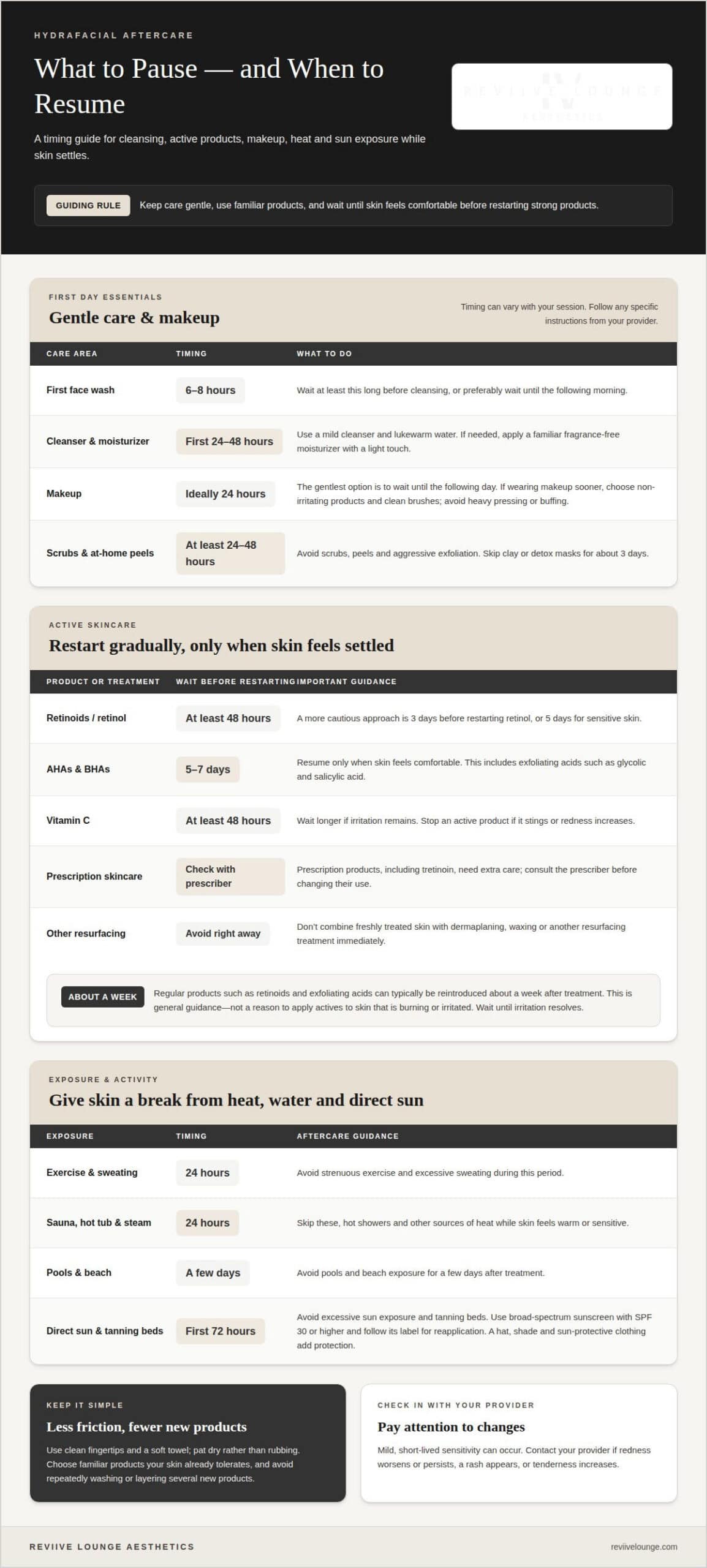
Give your skin time before its first cleanse. Wait at least 6-8 hours after treatment, or preferably until the following morning, before washing your face. These HydraFacial aftercare tips start with respecting that first pause, which helps avoid disturbing products applied during the session. Follow any specific timing instructions provided for your treatment.
For the first 24-48 hours, choose a mild facial cleanser and lukewarm water. Wet your face, spread cleanser gently with clean fingertips, then rinse without rubbing. Pat your skin dry with a clean, soft towel. Avoid washcloths, cleansing brushes, and vigorous circular motions during this short recovery period.
Keep your routine simple. If your skin feels dry, use a familiar, fragrance-free moisturizer unless your provider advises otherwise. Apply it with clean hands after cleansing, using a light touch rather than massaging firmly. A moisturizer your skin already tolerates is a safer choice than trying a new product while sensitivity may be more noticeable.
A gentle, hydrating cleanser can remove everyday residue without adding exfoliation. Choose one with ingredients your skin already tolerates. If you use a hydrating serum, stick to a familiar, non-exfoliating formula and stop if it stings or increases discomfort. Hydration should feel comfortable, not tingly.
For makeup, the gentlest option is to wait until the next day, ideally for 24 hours. If you need makeup on treatment day, apply non-irritating products with clean brushes. Avoid pressing or buffing heavily, and remove makeup gently when it’s time to cleanse. This limits friction against freshly treated skin.
Think of aftercare as protecting your skin, not adding more steps. During the first day, avoid layering several new products or washing repeatedly in pursuit of extra cleanliness. A gentle cleanse at the appropriate time, followed by a familiar moisturizer, is a practical approach.
If dryness appears, apply another light layer of your familiar moisturizer instead of reaching for a scrub or strong active serum. Use lukewarm water and a gentle touch. Two useful HydraFacial aftercare tips are to stick with familiar products and avoid friction. These small choices can support comfort while your skin settles after treatment.
2. Avoiding exfoliants, retinoids, and harsh skincare products
HydraFacial exfoliates the skin during treatment, so adding another exfoliating step too soon can increase dryness, flaking, or irritation. For at least 24 to 48 hours, avoid scrubs, at-home peels, and aggressive exfoliation. A gentle routine gives treated skin time to settle without extra friction or strong active ingredients.
Can you use retinol, exfoliants, or acids after a HydraFacial, and when? Wait at least 48 hours before using retinoids or exfoliating products; a more cautious approach is to wait 3 days before restarting retinol, or 5 days for sensitive skin. For AHAs and BHAs, wait 5-7 days, and resume only when skin feels comfortable.
Products containing glycolic acid, salicylic acid, benzoyl peroxide, or vitamin C may feel too strong immediately after treatment. Wait at least 48 hours before restarting vitamin C, and avoid active ingredients longer if your skin remains irritated. Prescription skincare, including tretinoin, needs extra care; consult the prescriber before changing its use.
Skip clay or detox masks and at-home facial peels for about 3 days. Don’t combine freshly treated skin with dermaplaning, waxing, or another resurfacing treatment right away. Timing can depend on your skin type and whether the HydraFacial included additional treatments, so follow the aftercare instructions for your session.
When can you exercise, swim, or use a sauna after a HydraFacial? Avoid strenuous exercise and excessive sweating for 24 hours, and skip saunas, hot tubs, and steam rooms during that period. Avoid pools and beach exposure for a few days, and keep showers lukewarm while your skin feels warm or sensitive.
Heat can intensify redness or discomfort while skin is settling. For the first 24 hours, avoid hot showers, intense cardio, and other activities that leave your face overheated. If redness or tenderness is already present, wait until your skin feels settled before returning to heat or a hard workout.
Don’t try to speed recovery with extra exfoliating skincare. If a product stings or redness increases after you apply it, stop using that active rather than adding another product to counteract the reaction. Keep cleansing gentle, and wait until irritation resolves before reintroducing retinoids, acids, or scrubs.
Because a HydraFacial exfoliates the skin, facial scrubs or peels immediately afterward may feel uncomfortable while your skin is sensitive. Give it time to settle instead of testing several strong products at once. Avoid exfoliating acids, retinoids, and harsh scrubs for a few days, and ask your skincare provider before restarting benzoyl peroxide, exfoliating acids, or retinol. This cautious approach helps you decide what to return to your routine, rather than assuming every product is suitable as soon as treatment ends.
People can typically begin reintroducing regular skincare products, such as retinoids and exfoliating acids, about a week after a HydraFacial. Treat this as general guidance, not a reason to apply an active product to skin that is burning or irritated. Wait until the irritation resolves, even if that takes longer than usual. Likewise, avoid heat from strenuous workouts or saunas while your skin remains sensitive, warm, tender, or red. If you’re unsure whether your skin has settled, ask your skincare provider before resuming a strong product.
3. Sun protection after treatment
Protect treated skin from direct sunlight after your facial. Apply broad-spectrum sunscreen with SPF 30 or higher, and follow its label for reapplication. For the first 72 hours, avoid excessive sun exposure and tanning beds. A hat, shade, and sun-protective clothing add practical protection when outdoor plans cannot be avoided.
Make sunscreen part of your morning routine, not an afterthought before you leave home. Apply it evenly to exposed skin and reapply according to the product directions. Limit direct sun exposure, especially during the first few days. A hat and a shaded route can also reduce exposure during a walk or commute.
Does HydraFacial aftercare differ for sensitive or acne-prone skin? Yes. Sensitive skin may benefit from gentler treatment solutions and a simple routine. If you’re acne-prone, avoid picking or squeezing bumps, and don’t use scrubs or peels to address irritation.
Plan treatment timing carefully when combining procedures. Botox or fillers may be performed on the same day as a HydraFacial, but the HydraFacial should come first. For medium to deep chemical resurfacing or laser treatments, allow two weeks before having a HydraFacial. The type and intensity of the other procedure matter when planning the schedule.
After a HydraFacial, wait two weeks before having a chemical peel or microdermabrasion. Allow a full week before facial waxing, laser hair removal, or intense resurfacing. These intervals help avoid stacking treatments while your skin is still settling. If a treatment causes redness or irritation, postpone additional procedures until your skin has been assessed.
Keep an eye on your skin after sun exposure. If irritation develops, return to gentle skincare and avoid exfoliating products. A new breakout isn’t a reason to scrub or squeeze, since extra friction can worsen discomfort. Persistent or worsening redness needs attention, not another facial treatment.
Plan outdoor activities around your skin’s comfort during the first few days. For example, choose a shaded route instead of walking for a long stretch in direct sun. If you’ll be outside, use sunscreen, a hat, and protective clothing. These steps work together, especially when you can’t avoid sun exposure.
A consultation can help you coordinate HydraFacial timing with resurfacing, laser hair removal, or other facial treatments. Share what you’ve recently had and any sensitivity or irritation you’re experiencing. This context supports a more considered schedule and helps avoid overlapping treatments before your skin is ready.
4. Can I wear makeup after a HydraFacial?
Wait 24 hours after a HydraFacial before applying makeup whenever possible. That usually means waiting until the following day, rather than covering freshly treated skin immediately. Your skin may look glowing after treatment, but allowing a makeup-free interval can reduce unnecessary product contact while it settles.
If you need to wear makeup on treatment day, keep it minimal. Choose familiar, non-irritating products and clean brushes. Avoid pressing or buffing makeup firmly across your face. A clean applicator and light touch limit friction, especially if your skin feels sensitive after a HydraFacial.
Makeup timing can depend on how your skin feels. If redness, warmth, or irritation is present, wait for it to settle before applying foundation, concealer, or powder. Don’t use makeup to cover skin that feels increasingly uncomfortable. Give your skin more time, and follow the aftercare instructions for your session.
Plan around exercise, too. Avoid strenuous workouts and excessive sweating for 24 hours after treatment. If you’re getting ready for a workout the next day, exercise first, let your skin cool, then apply makeup to clean, comfortable skin. This avoids layering cosmetics over sweat or applying them before an activity that raises heat.
Heat can also affect your plans. Avoid saunas, steam rooms, and hot tubs for at least the first 24 hours; some aftercare recommendations extend heat avoidance to 24-48 hours. If your face still feels warm or sensitive, skip the sauna and keep makeup off until your skin feels settled.
For the first few days, avoid adding new cosmetics or strong skincare beneath makeup. A new primer or active serum can make it harder to identify the cause if your skin reacts. Stick with products you already tolerate, and avoid scrubbing to remove makeup. Gentle handling matters more than a full-coverage finish.
Makeup doesn’t determine how long results last, but careful application can help avoid unnecessary irritation. If makeup stings, feels uncomfortable, or worsens redness, remove it gently and pause further application. Resume once your skin feels calm. Your provider’s instructions take priority, especially if your HydraFacial included additional treatments.
If you’re unsure about timing, ask your provider when you can resume makeup and exercise after a HydraFacial. They can clarify what’s appropriate for your skin.
5. Expected reactions and when to contact a provider
A little pinkness, warmth, or sensitivity can follow a HydraFacial. Mild redness often fades within a few hours, though a flushed appearance can last up to one day. Mild dryness or fine flaking may also occur over the next few days. These temporary changes don’t mean your radiant result has disappeared.
Notice the direction and timing of any reaction. Redness that steadily fades differs from redness that intensifies or spreads. Contact your provider if redness or irritation feels particularly intense, worsens, or lasts longer than 48 hours. A rash or increasing tenderness also deserves prompt attention rather than another skincare product.
Keep your routine gentle if dryness or flaking appears. Use a familiar moisturizer, avoid picking at flakes, and don’t try to smooth the area with a scrub or peel. If irritation follows sun exposure, pause strong active products and protect your skin from direct sunlight. Extra exfoliation can increase friction when your skin already feels uncomfortable.
Small bumps can occur, but painful or cystic breakouts need assessment. Contact your provider if these develop or if blemishes persist for more than a week after treatment. Don’t squeeze or pick at them. Avoid using an at-home peel or scrub to “clear” the area, since further irritation may complicate recovery.
Pay attention to changes after the first day. If redness spreads, tenderness increases, or a rash appears, note when it began and how it has changed. Photos taken in consistent lighting can help show progression. Include any new product, facial treatment, or notable sun exposure when describing what happened.
Hold off on scheduling another cosmetic treatment until a reaction has been assessed. Your skin’s appearance, tenderness, and whether symptoms are improving all matter when deciding on timing. A radiant finish isn’t worth masking a reaction or layering treatments onto irritated skin. Give your provider clear details about your symptoms and how long they’ve lasted.
If you’re unsure whether a reaction needs attention, contact the practice about your post-treatment concerns. Describe the symptom, when it started, and whether it’s getting better or worse. Seek help promptly for spreading redness, a rash, increasing tenderness, or painful breakouts, rather than waiting for your usual aftercare routine to resolve them.
Reviive Lounge Aesthetics
Reviive Lounge Aesthetics is a physician-led practice for people considering aesthetic treatments or planning how treatment timing fits their skincare routine. If you’re considering a HydraFacial alongside other procedures, discuss the sequence and your skin’s recovery needs before scheduling. The practice offers aesthetic services including Botox and neurotoxin injections, dermal fillers, and microneedling with PRP. Each has different aftercare considerations, so planning can help you understand what to expect and how to space procedures. Contact Reviive Lounge Aesthetics to discuss your treatment questions and next steps.
Make your next skincare decision with confidence
Use these HydraFacial aftercare tips as a starting point for a thoughtful, personalized approach to aesthetic care. A conversation about how your skin responds, what you hope to address, and how different treatments may fit your goals can help guide your next step. Reviive Lounge Aesthetics offers Botox and neurotoxin injections, dermal fillers, and medical weight loss programs as part of its broader range of services.
Choose care that feels aligned with your priorities rather than adding treatments without a clear reason. If you’re considering an aesthetic service or want to discuss your next step, contact Reviive Lounge Aesthetics. A considered plan can help you move forward feeling informed and confident.
Frequently Asked Questions
Can I wear makeup after a HydraFacial?
Ideally, wait until the day after treatment before applying makeup. If you have an event that day, keep application light and use clean brushes and products your skin already tolerates. For example, avoid testing a new foundation or primer right after your appointment. If makeup stings or makes your face feel more irritated, remove it gently and leave it off until your skin feels comfortable.
How long do HydraFacial results last?
Visible results commonly last about 4 to 6 weeks, while the immediate glow may be most noticeable for 5 to 7 days. These are different parts of the result, so skin can look especially radiant at first and then settle into a subtler appearance. Your skincare routine, skin goals, and treatment plan influence how HydraFacial results look over time. Consistent sun protection helps care for your skin between appointments.
How to take care of your face after a hydrafacial?
Keep your routine simple: cleanse gently when it’s time to wash, pat dry, and apply a familiar moisturizer. For example, skip a cleansing brush and use clean fingertips instead. Protect exposed skin with broad-spectrum SPF 30 or higher, following the label’s directions. Avoid trying new active products while your face feels sensitive. If you use prescription skincare, speak with the prescriber before changing how you use it.
Is redness normal after a HydraFacial?
Mild pinkness or a flushed appearance can happen after treatment and often fades within a few hours, though it may last up to a day. Note whether it is improving or worsening. Contact your provider if redness intensifies, spreads, lasts beyond 48 hours, or comes with increasing tenderness or a rash. Avoid adding a scrub or peel to calm the area, since extra exfoliation can worsen irritation.
What should you avoid after a hydrafacial?
Avoid retinoids, exfoliating acids, facial scrubs, and at-home peels while your skin settles. Also avoid excessive sun exposure and tanning beds for 72 hours. For the first day, skip strenuous workouts and high heat, including saunas and hot tubs. Don’t pick or squeeze bumps, or try to correct a reaction with another peel. Resume active products gradually only when your skin feels comfortable.
Can I exercise after a HydraFacial?
Wait 24 hours before strenuous exercise or activities that cause excessive sweating. For example, move a spin class or intense run to the following day, especially if your face feels warm or sensitive. Heat and sweat can be uncomfortable on freshly treated skin. Gentle normal activities can resume sooner, but avoid a sauna or hot shower during the initial recovery period.
How long does it take to heal after a hydrafacial?
Most people have little or no downtime, but temporary redness or sensitivity may last a few hours, sometimes up to a day. Mild dryness or flaking can resolve within a day or two. Healing isn’t the same as results fading: your skin may feel settled before the visible glow changes. Contact your provider about intense or worsening reactions, or symptoms that persist beyond 48 hours.
What should you do after a HydraFacial?
Follow the aftercare instructions for your appointment, keep skincare gentle, and protect your face from direct sun. Drink water throughout the day, and avoid picking at bumps or flakes. If you’re planning another facial, peel, or laser treatment, consider the timing rather than scheduling procedures close together. Tell your provider about any new rash, increasing tenderness, or persistent redness before booking another cosmetic treatment.