


Dissolving lip filler doesn’t always return lips to their exact pre-filler appearance. To understand how to dissolve lip filler, start with the product: hyaluronidase breaks down hyaluronic acid filler, but it does not dissolve every type of filler. It can also temporarily affect the lips’ natural hyaluronic acid, so lips may look thinner while the tissue settles.
If your lips look uneven, feel overfilled, or no longer suit your preferences, it’s understandable to want a clear picture of your options. Hyaluronidase may help dissolve hyaluronic acid filler, while waiting for swelling to settle may be appropriate after a recent injection. The right approach depends on the filler used and the change you hope to make.
This guide explains how hyaluronidase works, what treatment and recovery may involve, and what side effects can occur. It also covers why lips may look temporarily smaller than expected and when a clinician may consider correction rather than dissolution.
Key Takeaways
- Hyaluronidase breaks down hyaluronic acid filler, but it won’t dissolve every filler material.
- Consider how dissolving may temporarily affect natural lip volume before deciding what outcome you want.
- Learn what happens during treatment and why the final result may take time to assess.
- Understand the possible side effects, including temporary swelling, bruising, and allergic reactions.
- Explore when waiting, correcting, or dissolving filler may be appropriate based on the concern and filler type.
Will Hyaluronidase injection to dissolve Juvederm affect natural volume in my lips?
Yes. Hyaluronidase can temporarily reduce natural lip volume because it breaks down hyaluronic acid, including the body’s own. Hyaluronidase can temporarily affect natural lip volume as well as filler, so lips may look thinner after treatment.
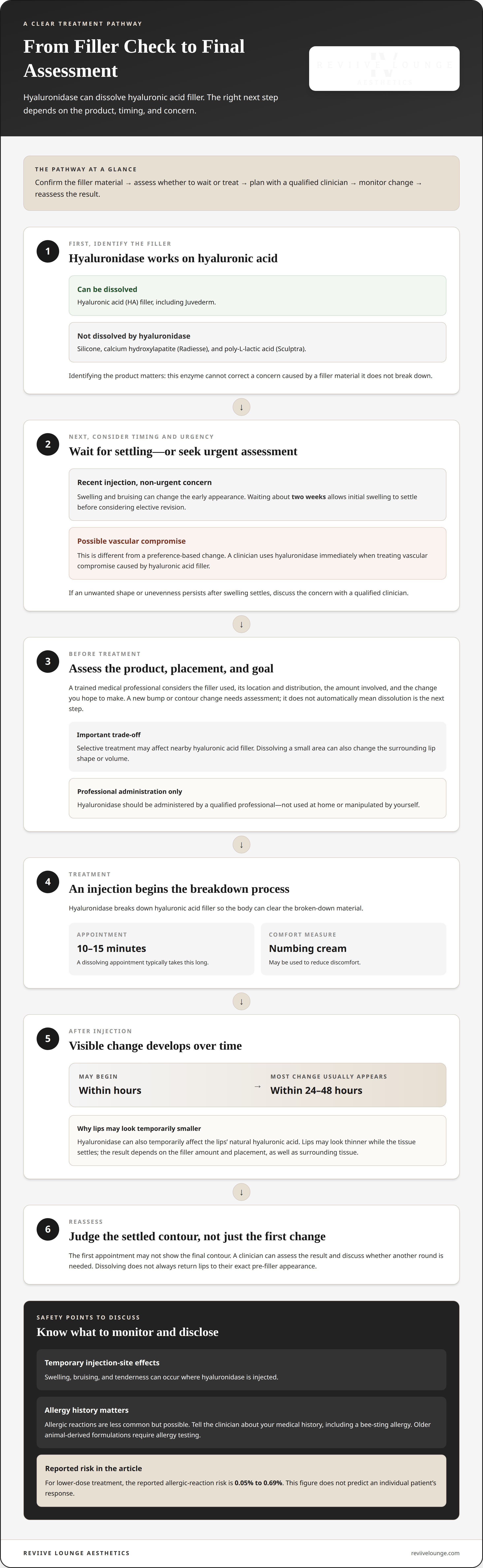
Juvederm is a hyaluronic acid filler, so hyaluronidase can dissolve it. The enzyme acts on the filler’s hyaluronic acid molecules, allowing the body to clear the broken-down material. Visible change may begin within hours, and most of the change usually appears within 24 to 48 hours. The result depends on the amount and placement of filler, and the surrounding tissue.
Treatment can affect areas beyond the precise injection site. Dissolving filler in one small area may also reduce nearby hyaluronic acid filler. For example, treating a small spot within the lips can change the shape or volume around it. A clinician assesses the filler’s location and distribution before deciding where to inject.
Hyaluronidase works on hyaluronic acid filler, including Juvederm. It does not dissolve silicone, calcium hydroxylapatite fillers such as Radiesse, or poly-L-lactic acid products such as Sculptra. Identifying the filler matters because the enzyme cannot correct a concern caused by a material it does not break down.
How do you know whether to dissolve filler or wait for swelling to go down? Swelling and bruising after lip injections can affect the early appearance. Waiting about two weeks allows initial swelling to settle. If unevenness or an unwanted shape persists after that, discuss whether dissolution may be appropriate.
Who is qualified to dissolve lip filler in the United States? A medical professional trained in injectable treatments and hyaluronidase can assess the filler and perform dissolution. The assessment considers the product used, your concern, and the change you want.
How much does lip filler dissolution cost in the United States? The price depends on the case and is given after a quote request. Factors include the amount of filler to address, hyaluronidase required, and whether additional treatment is needed.
Can lip filler be dissolved at home, and what should you avoid? No. Hyaluronidase should be administered by a qualified professional, not used at home. Do not try to dissolve or manipulate filler yourself: you cannot reliably target the product or control its effect on natural lip volume.
What is a dissolving lip filler procedure?
A dissolving procedure uses an injection of hyaluronidase to reduce hyaluronic acid filler. The enzyme breaks down the filler so the body can clear it. Understanding how to dissolve lip filler starts with identifying the product, its placement, and the concern. A qualified clinician then considers whether targeted dissolution or a broader change better fits the treatment goal.
People consider dissolution for different reasons. One person may feel their lips look overfilled; another may notice uneven contours after swelling settles. A visible ridge above the lip can also raise concern about filler migration. These concerns can overlap, but they are not the same. The filler’s location, amount, and distribution help shape a correction plan.
Small lumps, asymmetry, or an unwanted contour may also prompt questions about dissolution. For example, someone may want to reduce a distinct bump while preserving surrounding lip volume. Hyaluronidase can be injected selectively, but it may also affect nearby hyaluronic acid filler. The clinician considers this trade-off before treatment.
Timing matters after a recent cosmetic injection. Swelling and bruising can temporarily change lip shape, so the early appearance may not reflect the settled result. Waiting about two weeks after lip injections can allow swelling or inflammation to subside before elective revision. That is different from seeking urgent assessment for a possible complication.
Some complications need immediate medical attention. A clinician uses hyaluronidase immediately when treating vascular compromise caused by hyaluronic acid filler. This is different from dissolving filler because of preference, migration, or overfilling. The concern and urgency, not appearance alone, guide the response.
For someone asking how to dissolve lip filler after noticing a new bump, the first step is an assessment, not an automatic injection. The clinician considers whether the change reflects swelling, filler placement, or another concern. A dissolving appointment typically takes 10 to 15 minutes, and numbing cream may be used to reduce discomfort.
The enzyme’s effect develops after treatment, so the first appointment may not show the final contour. A clinician can assess the result and discuss whether another round is needed. A personalized clinical assessment can help clarify the concern and whether dissolution fits the desired outcome.
Are There Side Effects or Risks?
Hyaluronidase treatment can cause temporary effects at the injection site, and allergic reactions are a separate risk. Knowing what to monitor can help distinguish expected discomfort from symptoms that need prompt medical attention.
Side Effects and Allergic Reactions
Swelling, bruising, and tenderness can occur where hyaluronidase is injected. Allergic reactions are less common but are also a consideration. The formulation and your medical history inform the clinician’s assessment before treatment.
Older animal-derived hyaluronidase formulations require allergy testing. A history of allergic reaction to a bee sting is especially important to disclose because it can raise concern about anaphylaxis. Lower-dose treatment has a reported allergic-reaction risk of 0.05% to 0.69%, but that figure doesn’t predict an individual patient’s response.
Tell the clinician about previous reactions to injections, medicines, or bee stings before treatment. This information helps them consider whether testing or a different clinical plan is appropriate. Do not dismiss new symptoms as routine swelling if they worsen or differ from expected injection-site effects.
Temporary Side Effects
Minor swelling and bruising after hyaluronidase are temporary effects that usually resolve within a few days. Some bruising or swelling can last up to a week, so your lips’ appearance may change during early recovery.
For example, a small bruise near an injection site may remain visible after tenderness starts to ease. Track whether the area is improving rather than judging the result immediately. Persistent or worsening symptoms need medical assessment, especially if they differ from expected local effects.
Temporary effects can also make lip shape look uneven at first. That alone does not show whether too much filler has been dissolved. Allow the tissue time to settle, and follow the treating clinician’s guidance on follow-up and care.
Severe Symptoms and What to Do
Severe pain, skin discoloration, or vision changes after filler injection require urgent medical assessment. These symptoms may signal vascular compromise, which needs immediate attention rather than routine observation at home.
If you experience vision changes or severe pain, seek emergency medical care immediately and tell clinicians when the filler was injected. Hyaluronidase is used immediately to treat vascular compromise caused by hyaluronic acid filler. Rapid assessment matters because affected tissue may need prompt treatment.
Concerning skin discoloration after an injection also warrants urgent assessment. Do not wait for a scheduled follow-up or try to manage these symptoms yourself. Tell the medical team which filler was used, when it was injected, and what treatment has already been given.
By contrast, mild bruising after dissolution that improves over several days follows a different pattern. Keep a clear record of when symptoms began and how they changed, so a clinician can distinguish temporary injection effects from a complication.
What to expect during lip filler dissolving
A hyaluronidase appointment begins with a review of your filler, treatment goals, and medical history. The injection takes a few minutes, but the result develops afterward, so the initial appearance may not be the final one.
The enzyme can start working within hours, and patients usually need one to two visits. Timing and the number of sessions depend on the amount of filler, its placement, and the change being addressed.
Expected Results and Recovery
Dissolving reduces hyaluronic acid filler, with visible changes developing as the tissue settles. Temporary swelling or bruising may affect the early appearance, so avoid judging the final contour immediately after the appointment.
Patients can return to work and normal routines the same day. Taking it easy for 24 hours and avoiding hard exercise during that period can support recovery. Tissue may take three to 10 days to settle, which helps explain why the initial result can look different from the later one.
Timing of Results
Hyaluronidase begins working within hours, but it can take up to two weeks to assess the full result. This allows time for the enzyme to act and the tissue to settle, making it easier to judge the remaining shape.
A follow-up within one to two weeks allows the clinician to assess the result and whether another round may be appropriate. A second visit may be considered if filler remains or the desired change has not been achieved.
During the consultation, the clinician reviews the filler type, where it was placed, and the concern you want addressed. This information guides the injection plan, including which areas to treat and how much dissolution may be appropriate. Numbing cream may be used before injection to reduce discomfort.
The appointment typically lasts 15 to 30 minutes, although the injection itself takes only a few minutes. A brief sting or burning sensation may occur during treatment. Discuss prior reactions and any concerns before the procedure, so the clinician can account for them in the plan.
Mild swelling or bruising can occur after treatment. Icing the area during the first one to two days may help reduce swelling. Follow the clinician’s aftercare directions, since massage or other care depends on the treatment area and plan.
If you’re considering fresh hyaluronic acid filler afterward, wait at least 14 days after dissolution. This gives the treated tissue time to settle before another injection changes the lip contour.
Options for correcting or dissolving filler
The right choice depends on what you notice, when the injection occurred, and the filler type. A temporary change after a recent injection calls for a different discussion than persistent migration or unwanted volume after the lips settle. Start by identifying the concern rather than assuming every uneven contour needs dissolution.
Waiting may be appropriate when swelling or bruising obscures the result. These effects can make a lip look asymmetrical soon after treatment, even when filler placement is not the issue. A clinician may recommend letting the tissue settle before considering elective correction. For example, a newly visible bump alongside bruising may need reassessment after early swelling improves.
Migration describes filler appearing outside its intended area, such as fullness above the lip border. Overfilling means the overall volume or shape feels too pronounced. Both can affect an aesthetic result, but their location and pattern help distinguish them. A focused assessment considers whether the concern is temporary swelling, misplaced filler, or more volume than you want.
For hyaluronic acid filler, hyaluronidase can be used for partial or more extensive dissolution. A targeted injection may address a localized concern, such as one persistent lump, while preserving as much surrounding filler as possible. Nearby product may also be affected, so partial correction cannot guarantee that only one small spot will change. Full dissolution is an option when the goal is to remove the existing hyaluronic acid filler more broadly.
The product matters. Hyaluronidase works on hyaluronic acid filler, including Juvederm, but does not dissolve silicone, Radiesse, or Sculptra. If the material is not hyaluronic acid, this enzyme will not provide the intended correction. Identifying the filler is central to choosing between waiting, targeted treatment, and another approach.
After dissolution, allow the lips time to settle before planning another filler treatment. A new hyaluronic acid injection should be delayed for at least 14 days after dissolving, giving the treated tissue time to recover and the result time to become clearer. This pause can help avoid making a second aesthetic decision while the first result is still changing.
Discuss your preferred outcome in specific terms: less upper-lip projection, a softer border, or removal of a visible migrated area. Those examples help guide a tailored plan. To discuss which correction approach fits your concern, request a personalized filler assessment.
Reviive Lounge Aesthetics: Dermal Fillers
Reviive Lounge Aesthetics offers dermal fillers in Chino, making it a relevant next step if you are considering your lip goals or future filler treatment. A personalized consultation can help you explain what feels unsuitable, discuss your desired appearance, and consider how previous filler may shape future aesthetic choices.
If you are weighing dissolution against a different approach, bring your concerns and treatment history to the discussion. Details about the product and when it was placed can help guide a thoughtful conversation about next steps.
Contact Reviive Lounge Aesthetics to discuss your aesthetic goals.
Choose a Next Step That Reflects Your Goals
Your next step can be a clear conversation about the result you want, not a commitment to another treatment. Before discussing how to dissolve lip filler, consider what you would like to change: overall volume, a particular contour, or how your lips look in proportion to your features. Describing your goal helps keep the discussion focused on your preferences.
It may help to bring details of previous filler treatments, including the product name and when it was placed, if you have them. Explain what feels right to you and what you would prefer to avoid. You can ask questions, weigh your options, and decide on a considered next step at your own pace.
For a personal discussion of your aesthetic goals, connect with Reviive Lounge Aesthetics. A thoughtful plan starts with what feels right for you.
Frequently Asked Questions
Can hyaluronidase fix lumps or bumps from filler?
Yes, hyaluronidase can reduce a lump made from hyaluronic acid filler. First, the clinician assesses whether the bump is filler, swelling, or another tissue change. For example, a raised spot near the lip border may need a different plan from general fullness across the upper lip. Hyaluronidase does not dissolve non-hyaluronic acid products, so identifying the filler matters before choosing this option.
What is the difference between hyaluronidase and Vitrase?
Hyaluronidase is the enzyme used to break down hyaluronic acid, while Vitrase is a product name for a hyaluronidase formulation. These names do not describe two different ways of dissolving filler. Formulations can differ, including animal-derived and recombinant forms. Tell the treating professional about allergies or previous reactions so they can consider your history and the formulation when planning treatment.
Does hyaluronidase damage your lips permanently?
Hyaluronidase can temporarily affect natural hyaluronic acid in the lips, making them look thinner while the tissue recovers. Natural hyaluronic acid may regenerate over four to eight weeks. Temporary swelling or bruising can also change the appearance during recovery. These effects are different from permanent damage. Discuss lasting discomfort, unusual changes, or other concerns with the clinician who treated you.
How many treatments will I need?
People commonly need one to two visits, depending on the amount and placement of filler and the degree of change desired. A clinician can reassess the lips after the first treatment, once initial changes have developed. For example, a small remaining area may call for targeted additional treatment rather than repeating the original plan across the whole lip.
What is hyaluronidase?
Hyaluronidase is an enzyme that breaks down hyaluronic acid, including the hyaluronic acid in certain cosmetic fillers. Clinicians use it to reduce or dissolve hyaluronic acid filler, not fillers made from other materials. The product name and filler type matter: knowing whether the original injection was a hyaluronic acid product helps determine whether this enzyme can address your concern.
Will my lips return to their original size?
Your lips may look smaller after dissolution, but an exact return to their previous size cannot be promised. Hyaluronidase may temporarily reduce natural hyaluronic acid as well as filler, and swelling can affect the early appearance. Your baseline also depends on your natural lip shape and any changes since the original injection. Let the tissue settle before judging the final contour.
How is hyaluronic acid lip filler dissolved with hyaluronidase?
A trained medical professional injects hyaluronidase into selected areas containing hyaluronic acid filler. The enzyme breaks down the material, which the body then clears. The clinician plans the injection around the filler’s location and the change you want. This treatment does not dissolve silicone, calcium hydroxylapatite, or poly-L-lactic acid fillers, so the material used must be identified first.
What happens during a lip filler dissolving appointment?
The appointment typically includes a review of your filler history, goals, and relevant medical history, followed by an assessment of your lips. A numbing cream may be applied before the injections. The injection itself takes a few minutes, while an appointment may last 15 to 30 minutes. The clinician can explain aftercare and arrange a follow-up to assess the result.