

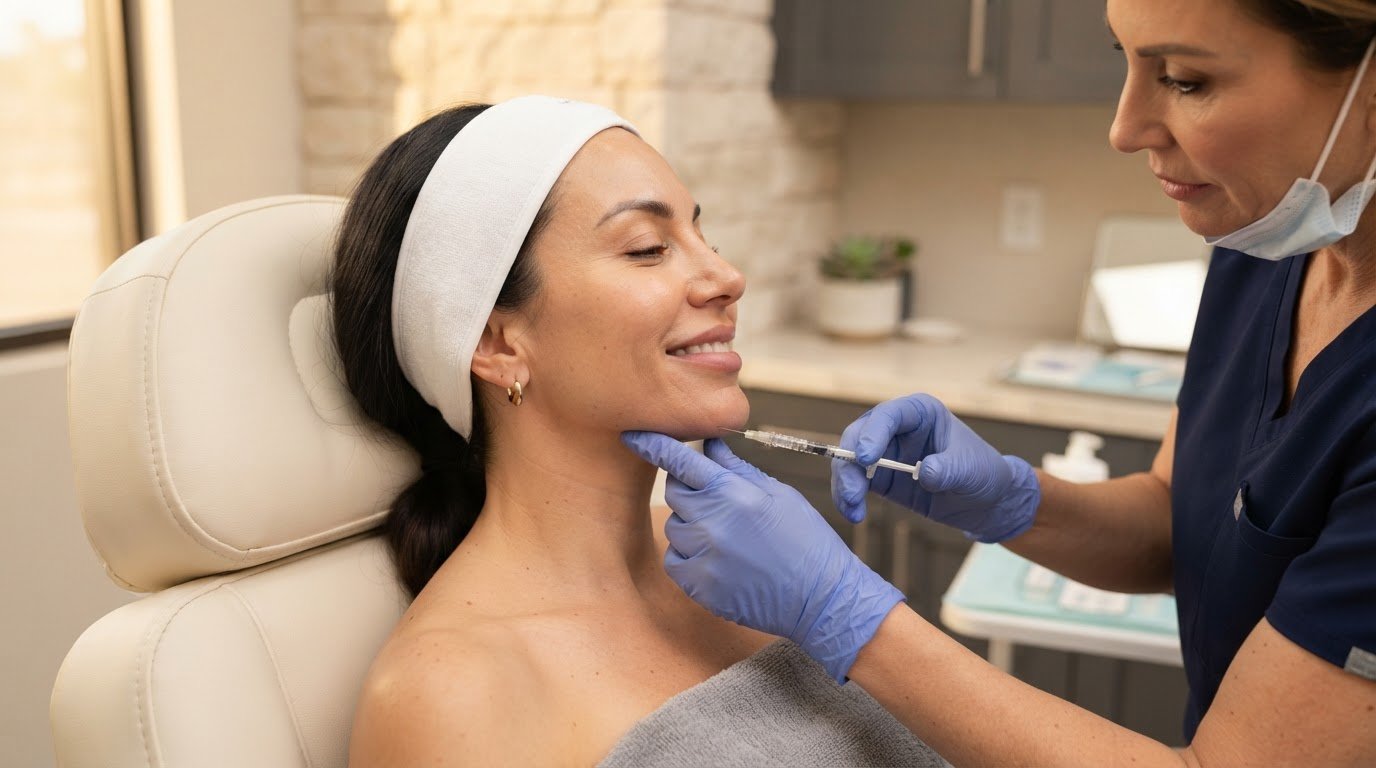
Age alone doesn’t determine when jawline contouring may be appropriate. In Eastvale, it’s commonly performed for adults in their 20s and older, with younger adults often seeking more definition and people in their 40s or 50s often addressing early jowling or skin laxity. The right approach depends on the concern and the facial features you want to refine.
A more defined jawline can bring balance to the lower face, but the goal is usually a considered contour, not simply a sharper outline. Changes in weight can affect facial fullness and how the jawline appears, so they are worth discussing when planning jawline contouring in Eastvale.
This guide explains how age, weight fluctuation, and treatment goals shape jawline contouring in Eastvale. You’ll also learn what non-surgical options can involve, when results may appear, and how long liquid contouring may last, typically 6 to 12 months or longer depending on the filler and individual factors.
Key Takeaways
- Use your facial anatomy and the concern you want to address, not age alone, to guide treatment decisions.
- Understand how changes in body weight can affect facial fullness and the appearance of jawline definition over time.
- Compare non-surgical options by what they’re designed to address, including contour, chin balance, or fullness beneath the chin.
- Plan for results to develop and fade at different rates depending on the treatment and your individual response.
- A personalized assessment can help clarify whether dermal fillers or another aesthetic approach better fits your goals.
At what age is jawline contouring appropriate?
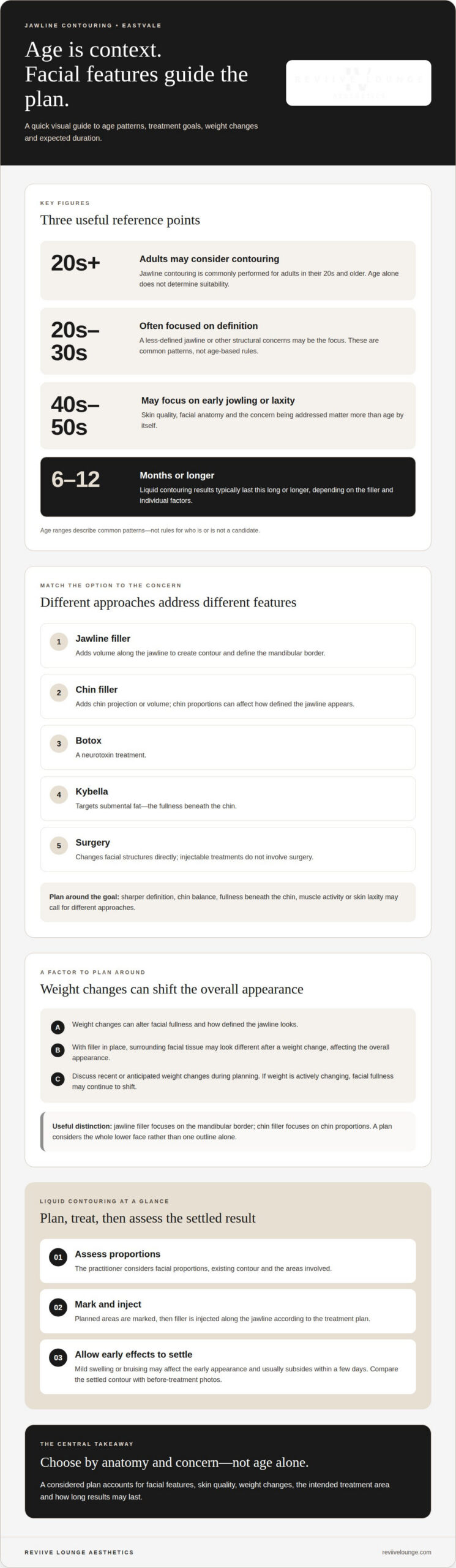
Jawline contouring is commonly performed for adults in their 20s and older, but age alone doesn’t determine suitability. Facial anatomy, skin quality, and the concern being addressed matter more. During a consultation, identify whether the goal is sharper definition, improved chin balance, or a softer transition around early jowling. Each goal can point toward a different treatment plan.
People in their 20s and 30s more often seek contouring for structural concerns, such as a less-defined jawline. In their 40s or 50s, people may focus on early jowling or skin laxity. These are common patterns, not age-based rules. A careful assessment considers the whole lower face, including the chin and the area beneath it, rather than treating one outline in isolation.
What is the difference between jawline filler, Botox, Kybella, and surgical jawline contouring? Filler adds volume to define the jawline. Botox is a neurotoxin treatment, while Kybella targets submental fat. Surgery changes facial structures directly; injectable treatments do not involve surgery.
What treatments are available near Eastvale, California? Options can include dermal fillers, neurotoxin injections, Kybella for submental fat, and surgery. The right approach depends on whether the concern is facial structure, muscle activity, fullness beneath the chin, or skin laxity. A consultation helps assess which options fit your goals and individual features.
With liquid contouring, a qualified injector assesses facial proportions, marks the planned areas, and injects filler along the jawline. The injection process is tailored to the treatment plan. Results typically last 6 to 12 months or longer, depending on filler and individual factors. A consultation should also cover expected duration, follow-up, and how weight changes could alter facial fullness and appearance.
Combining treatments means matching each option to a distinct concern. For example, filler may add contour while another treatment addresses a separate issue. A plan should explain the purpose and sequence of each procedure rather than combining treatments by default. Your goals, anatomy, and changes in weight all affect the recommendation, since weight fluctuations can alter facial fullness and the appearance of jawline definition.
Are treatments covered by insurance or financing in Eastvale? Coverage and financing depend on the policy and financing terms. Review the proposed treatment and payment terms before making a decision; don’t assume coverage applies.
Which Eastvale-area clinics offer contouring, and what are their credentials? Clinics may offer injectable or surgical approaches, but credentials differ by practitioner. Look for relevant medical training, experience with facial anatomy, and a clear explanation of the proposed procedure and alternatives.
How do I choose a qualified provider near Eastvale? Ask how the provider’s experience relates to your specific concern, review the proposed plan, and make sure the consultation covers risks, expected results, and duration. A useful estimate should reflect your anatomy, chosen treatment, and goals, not age alone.
How does weight fluctuation affect long-term jawline sculpting results?
Weight changes can alter facial fullness and shift how defined the jawline appears. Hyaluronic acid dermal fillers add volume along the jawline to create contour without changing the underlying bone. If your weight changes afterward, the surrounding facial tissue may look different while the filler remains in place. That contrast can affect the overall appearance, even if the treated border itself has not changed.
Liquid jawline contouring uses hyaluronic acid filler injected along the jawline. The aim is to define the mandibular border, where the lower face meets the neck. A practitioner considers your existing contour and how added volume may affect facial balance. Weight changes also matter because fullness around the cheeks, chin, and lower face can influence how prominent the border appears.
Chin filler addresses a related but distinct feature. Adding projection or volume to the chin can change its proportions in relation to the jawline. For example, a recessed-looking chin may make the jaw appear less defined, while added chin volume may create a more balanced profile. A treatment plan should distinguish a concern about chin proportions from one focused on the mandibular border.
Juvederm is a filler brand used for facial rejuvenation. Juvederm Volux XC is used for jawline contouring and chin augmentation and is FDA-approved for jawline contouring. Product choice depends on the treatment area and desired contour. Weight changes can still affect how the surrounding face frames the result, so planning should take your current appearance and goals into account.
Discuss recent or anticipated weight changes during your consultation. A practical sequence is to identify your main concern, review the facial areas involved, and then consider whether filler suits your goal. If your weight is actively changing, facial fullness may continue to shift, making it harder to assess the contour you want to maintain. A stable weight can make comparisons over time more useful.
Downtime after liquid contouring is generally brief, but mild swelling or bruising can affect the early appearance. These effects usually subside within a few days. Avoid judging definition during this initial period; compare the settled contour with photos taken before treatment. Later weight shifts may alter facial proportions, so changes in the surrounding face can affect how the jawline looks over time.
For a personalized discussion, connect your weight goals with your desired facial definition during a facial contouring consultation. A thoughtful plan accounts for jawline and chin proportions together, rather than treating filler as a fixed outline. That distinction helps set realistic expectations about how weight fluctuation can influence the overall result.
Expected results and duration
Liquid jawline contouring adds shape with hyaluronic acid filler, while surgery changes the jawline through an operation. With filler, contour may be noticeable after treatment, but swelling can affect the early appearance. Nonsurgical results may develop gradually over several weeks as the area settles. Surgical results may emerge over several months.
Natural-looking results depend on proportion, not simply on adding more definition. A plan can consider the jawline alongside the chin and surrounding facial features. For example, a subtle change along the mandibular border may support balance without making the lower face look overly angular. The amount and placement of filler should reflect your anatomy and specific concerns.
After liquid contouring, mild swelling or bruising usually subsides within a few days. These temporary effects can make the area look uneven at first, so assess the settled appearance rather than judging the result immediately. Follow your treating professional’s aftercare directions, and raise concerns about discomfort or changing symptoms with them.
Duration varies by filler and individual factors. Liquid jawline contouring results typically last 6 to 12 months or longer. Jawline filler results commonly last nine to 12 months, while Juvederm filler results may last from 6 months to 2 years, depending on the filler and individual factors. These ranges describe different products and uses, not a guaranteed timeline for every patient.
Specific formulations also have distinct reported durations. Juvederm Vollure XC results are described as lasting up to 18 months. That figure is an upper duration, not a promise that every patient will retain the same degree of definition for that long. The product used, the treated area, and how an individual responds all influence how results appear over time.
To track changes, compare photos taken before treatment with later images in similar lighting and facial positions. Note when definition begins to soften rather than relying on memory alone. This can help you discuss how long the result lasts and future treatment timing during follow-up. Weight fluctuations can also change facial fullness and affect how a sculpted jawline appears.
Choose an approach based on your goals and the recovery you can accommodate. Filler offers a nonsurgical option, while surgery involves a different process and timeline. A consultation can clarify whether your concern involves contour, chin balance, or another feature. Ask how the proposed product and treatment plan relate to your goals, expected recovery, and likely duration.
Non-surgical jawline and chin enhancement
Non-surgical contouring uses injectable treatments to enhance selected areas without an operation. Hyaluronic acid-based dermal fillers can add volume along the jawline or chin, helping create definition and adjust facial proportions. The treatment plan depends on whether the goal is a clearer mandibular border, greater chin projection, or both. A medical assessment helps distinguish these concerns before treatment.
Jawline contouring and chin augmentation address connected but distinct features. Filler along the jawline can define its border, while chin filler can change the chin’s projection and its relationship to the lower face. Juvederm Volux XC is used for jawline contouring and chin augmentation and is FDA-approved for jawline contouring. The areas treated and amount of filler should follow your individual plan.
Another injectable option addresses fullness beneath the chin rather than adding structure. Kybella is the only FDA-approved injectable for moderate-to-severe submental fat. It destroys treated submental fat cells, which do not regenerate. Treatment may involve up to six sessions, with sessions spaced at least a month apart. This approach targets fullness beneath the chin, not the jawline border itself.
These options differ from chin augmentation with jaw implants. Implants are a surgical approach, while fillers and Kybella are nonsurgical injectables. Surgery changes structure through an operation; injectables add volume or target fat, depending on the product. Understanding the difference helps match the procedure to your concern instead of treating every lower-face goal alike.
After liquid jawline contouring, most patients can return to normal activities within a day. Aftercare includes avoiding intense exercise for the first 24 hours and avoiding touching the treated area for a day or two. Mild swelling or bruising usually subsides within a few days. These timelines describe common recovery expectations, while the treatment plan should include specific aftercare instructions.
Before choosing, clarify the result you want and how progress will be assessed. A useful consultation distinguishes between structural definition, chin proportions, and fullness beneath the chin. It should also explain whether the proposed approach is filler, Kybella, or surgery, and what that option can address. For instance, seeking more chin projection is different from focusing on submental fat.
Nonsurgical treatments can enhance contour without surgical jaw or chin implants, but each option has a specific purpose. Filler adds volume; Kybella targets submental fat; surgery changes structure. Choosing among them starts with the feature you want to improve, your preferred approach, and the treatment’s recovery and session schedule.
Benefits of jawline contouring
A defined jawline can bring visual structure to the lower face. Dermal fillers add volume at selected points, such as along the mandibular border, to refine its appearance. This can help balance the transition between the chin, jaw, and neck. The goal is targeted contour, not a change to the underlying bone.
Personalization matters in aesthetic treatment. You may want a more visible jawline angle, or you may want the chin and jaw to appear more proportionate. A treatment plan can address those distinct goals instead of applying the same placement to every face. This helps align the proposed approach with your features and preferences.
Hyaluronic acid fillers offer a nonsurgical way to add definition. A named filler can address contour goals without surgery, but the product and placement still need to suit the treatment area and your individual plan.
Contour can also be considered alongside overall facial balance. For example, adding definition only at the jawline may not address a chin that appears recessed in profile. A practitioner can assess both areas and explain whether treating one feature or combining areas better supports your goal. The benefit comes from matching treatment to your anatomy, not maximizing volume.
Another advantage is the ability to focus on a specific concern. Filler can add volume and shape, while Kybella targets submental fat. These treatments serve different purposes, so identifying whether your concern is jawline definition or fullness beneath the chin helps narrow the options. Clear goals make it easier to assess whether a proposed approach fits.
Expected duration is also part of weighing the benefit. Liquid jawline contouring results typically last 6 to 12 months or longer, depending on the filler and individual factors. That timeframe helps frame maintenance expectations, rather than implying a permanent change. Juvederm filler results vary by product and individual response, so product choice matters.
Before treatment, write down the change you want to see, such as a clearer jaw angle or improved chin balance. Bring that goal to your consultation and discuss how the plan would address it. Photos taken in consistent lighting can help compare your appearance before and after treatment. This practical step keeps the discussion focused on your priorities.
For a tailored discussion of facial proportions and dermal fillers, explore your jawline contouring options. A focused consultation can connect your desired definition with an appropriate treatment plan, including the intended areas, product, and duration. That conversation helps determine whether filler aligns with the result you want to achieve.
Reviive Lounge Aesthetics: Botox & Neurotoxin Injections
Reviive Lounge Aesthetics is a physician-led practice in Chino where you can discuss facial goals and suitable aesthetic options. Its services include Botox & Neurotoxin Injections and dermal fillers, which address different concerns. A conversation about jawline definition can clarify whether adding volume with filler fits your goals or whether another approach deserves consideration.
If weight changes are part of your planning, Reviive Lounge Aesthetics also offers Medical Weight Loss Programs. Discussing that context alongside your facial goals can help shape a considered plan. Microneedling with PRP is another available aesthetic service, although it addresses different concerns from jawline contouring.
For a personalized discussion of your options, contact Reviive Lounge Aesthetics or visit reviivelounge.com.
Take the Next Step With a Clear Goal
Before choosing a treatment, decide what you want to notice in your everyday appearance. You might prioritize a more defined profile, improved chin balance, or a softer transition beneath the jaw. Naming your main goal helps keep your consultation focused on the change that matters most to you.
For jawline contouring in Eastvale, bring your priorities and questions to a discussion of suitable options. Consider how much change feels right, your preferences around maintenance, and whether your goals may shift with changes in weight or facial fullness. An individualized assessment can help determine which approach aligns with your features and preferences.
You can take that next step at your own pace. Contact Reviive Lounge Aesthetics to discuss your goals and explore a thoughtful path forward. A well-informed decision starts with your priorities, and you deserve to feel comfortable with the direction you choose.
Frequently Asked Questions
Can They Be Combined With Other Treatments?
Yes, a treatment plan can address more than one concern, but each option should have a clear purpose. For example, filler may add definition while another treatment addresses a separate aesthetic goal. Describe the changes you want and ask how each proposed treatment contributes. Your provider can discuss whether treatments should be combined or sequenced based on your goals, facial features, and medical history.
How Long Do They Last?
Longevity depends on the treatment, product, and individual response. For hyaluronic acid filler, jawline results typically last 6 to 12 months or longer. The treated area and how your facial appearance changes over time also matter. Kybella works differently from filler, so filler timelines don’t apply to it. Ask which treatment duration is relevant to your plan, and how changes will be assessed at follow-up.
Is There Downtime?
Most patients return to normal activities within a day after liquid jawline contouring. After treatment, avoid intense exercise for the first 24 hours and avoid touching the treated area for a day or two. Mild swelling or bruising usually subsides within a few days. Plan around an important event by allowing time for these temporary effects to settle, and follow the aftercare instructions provided for your treatment.
When Will I See the Results?
Filler may create visible contour soon after treatment, though swelling can affect the early appearance. Nonsurgical jawline results may develop gradually over several weeks. For a useful comparison, take a clear photo before treatment and compare it with later photos taken in similar lighting and position. This can help distinguish a change in contour from temporary differences caused by swelling or facial expression.
Why Does the Jawline Change Over Time?
Changes in weight can affect facial fullness and make the jawline look more or less defined. Skin laxity and early jowling can also alter the lower-face contour, including in people in their 40s or 50s. These changes may happen independently of filler. If your appearance shifts, note which area changed, such as the chin, jaw border, or fullness beneath the chin, before discussing treatment options.
How much does jawline contouring cost in Eastvale and nearby cities?
Cost depends on the treatment, product, treatment area, and amount of filler used. Reviive Lounge Aesthetics discusses pricing during a consultation, when the proposed plan and injection needs can be reviewed. Ask for the expected total for your specific treatment plan, including any areas you want addressed. This keeps the discussion tied to your goals and proposed care.
What happens during a jawline contouring consultation and treatment?
A consultation typically starts with discussing your goals and the facial features you want to refine. The plan can identify whether your concern relates to jawline definition, chin proportions, or fullness beneath the chin. If filler is selected, the injector plans placement in the intended area and performs the injections. Before proceeding, make sure the plan explains the expected result, aftercare, and follow-up approach.
How long do jawline contouring results last for each treatment?
For jawline filler, results typically last nine to 12 months; liquid contouring results may last 6 to 12 months or longer, depending on the filler and individual factors. Juvederm filler results may last 6 months to 2 years, depending on product and response. Kybella can involve up to six treatments, but that session count isn’t a result-duration estimate. Surgical results may emerge over several months.