

More filler isn’t always the answer to tired-looking eyes. Under-eye filler in Pomona uses hyaluronic acid to soften hollows and shadows, and visible improvement may appear immediately, with full results developing within two weeks. It’s best suited to concerns caused by volume loss, not every kind of dark circle or puffiness.
If you’re considering treatment, it’s natural to want a refreshed look and have questions about bruising, risks, and whether filler is right for you. Those details matter because the under-eye area is delicate. An individualized assessment helps clarify what filler may and may not address.
This guide explains what consultation and injections involve, what to know about results and temporary bruising, and why relevant provider experience matters. You’ll also learn when under-eye filler may not be a good fit, so you can weigh the options with a clear understanding of the trade-offs.
Key Takeaways
- Under-eye filler is intended to soften hollows and shadows, but it won’t address every cause of dark circles or puffiness.
- A careful consultation considers whether volume loss, cheek support, or another factor is contributing to the under-eye concern.
- Bruising and swelling are common temporary effects; understanding the recovery timeline can help you plan treatment around daily activities.
- Injector experience matters in this delicate area, where precise placement and conservative treatment support a natural-looking result.
- Learn which under-eye features may make filler a poor fit and what risks to weigh before deciding on treatment.
Treatment consultation and injection process
Planning under-eye filler starts with identifying whether hollows, shadows, or loss of cheek volume contribute to your concern. The consultation helps shape the product choice, placement, and aftercare plan.
Consultation and Treatment Planning
A consultation assesses the under-eye hollow and surrounding cheek support before a treatment plan is made. This matters because adding filler beneath the eyes isn’t always the most conservative approach. For example, cheek filler may support the area and reduce the amount needed in the tear trough. Under-eye filler is generally used sparingly, with the plan tailored to the pattern of volume loss.
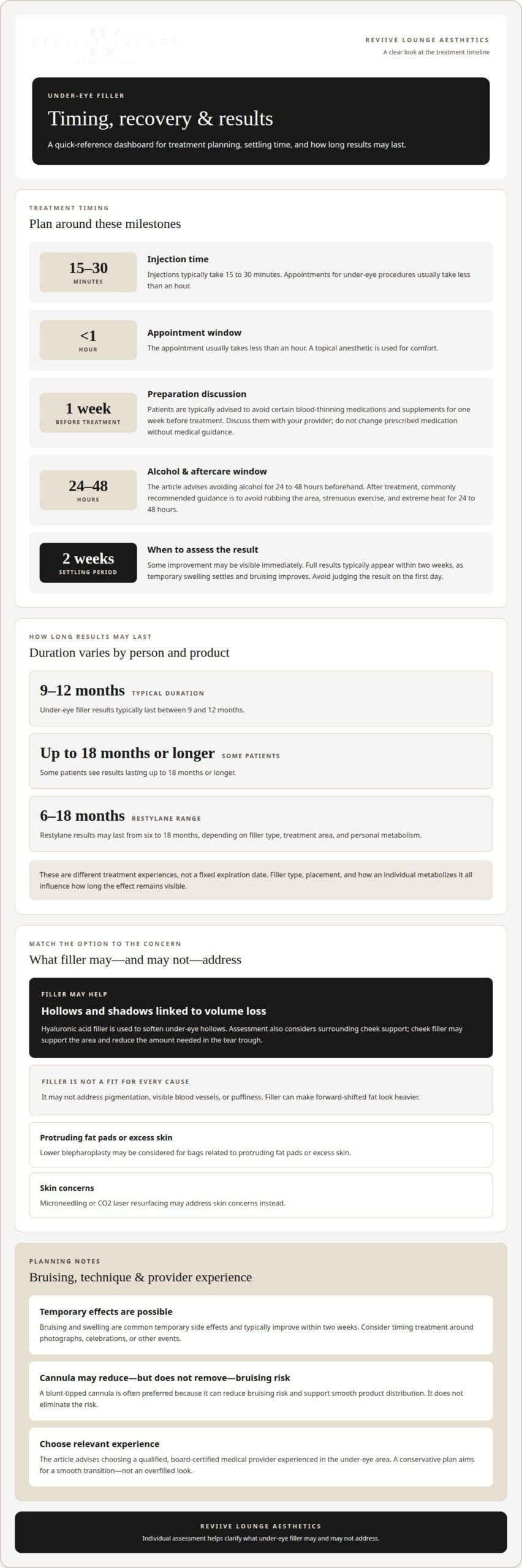
Preparation also affects the treatment timeline. Patients are typically advised to avoid certain blood-thinning medications and supplements for one week before treatment, and alcohol for 24 to 48 hours beforehand. These steps can help limit bruising risk. Discuss medications and supplements during the consultation rather than changing prescribed medication without medical guidance.
Filler Types and Alternatives
Hyaluronic acid fillers are used to soften under-eye hollows, and Juvederm, Restylane, and Belotero have subtle differences. Restylane Eyelight is the first FDA-approved hyaluronic acid dermal filler specifically designed for the delicate eye area. Product selection depends on the treatment goal and the anatomy being addressed, rather than a single filler being right for every tear trough.
Alternatives depend on what causes the under-eye concern. For bags related to protruding fat pads or excess skin, lower blepharoplasty may be considered; filler can make forward-shifted fat look heavier. Microneedling or CO2 laser resurfacing may address skin concerns instead. These options target different features, so the consultation should distinguish hollowness from pigmentation, visible blood vessels, or puffiness.
Injection Procedure and Recovery
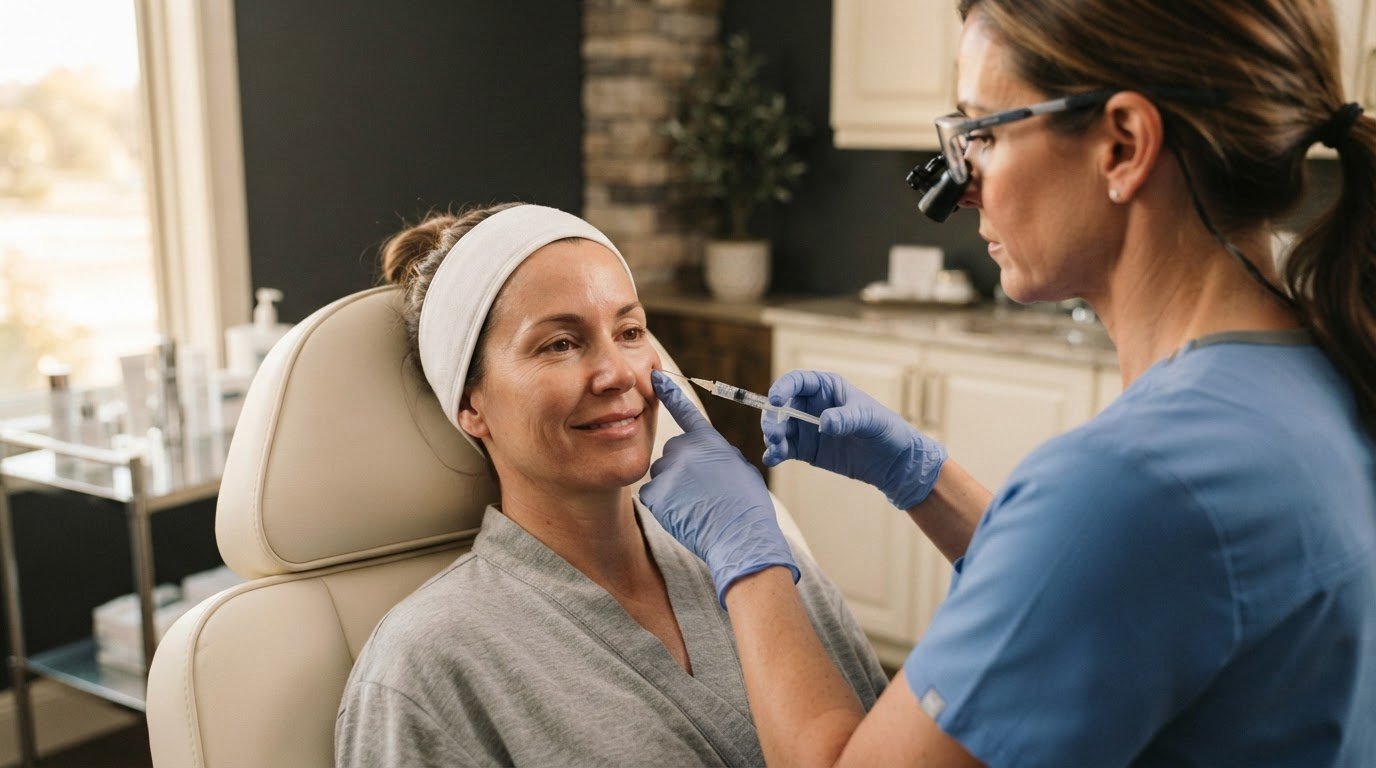
The injection procedure places a small amount of filler beneath the eye to soften the hollow and create a smoother transition. Injections typically take 15 to 30 minutes, while appointments for under-eye procedures usually take less than an hour. A topical anesthetic is used for comfort, and a blunt-tipped cannula may be used to place product with controlled distribution.
Most patients can return to work and normal daily routines immediately after treatment. Recovery guidance commonly includes avoiding rubbing the area, strenuous exercise, and extreme heat for 24 to 48 hours. Temporary bruising or swelling can still occur, so consider timing before an event. Following the aftercare instructions supports a more settled result.
Choosing an Injector
Choose a qualified, board-certified medical provider with experience treating the under-eye area. The tear trough is delicate, and placement must account for nearby structures and thin skin. Ask how the plan addresses your concern, including whether cheek support could reduce the amount of under-eye filler needed.
Representative before-and-after photos can help you understand a provider’s approach to under-eye filler. Look for examples showing subtle changes, not simply added volume. A clear explanation of product choice, injection technique, and aftercare can also help you understand the procedure. The aim is a smooth transition beneath the eye, not an overfilled look.
Bruising and natural-looking results
Under-eye filler may soften a hollow and the shadow it creates. Temporary bruising or swelling can affect the early appearance, so judging the result immediately after treatment can be misleading.
Bruising and Swelling
Bruising and swelling are the most common temporary side effects of under-eye filler. They typically improve within two weeks, though their visibility can influence how the area looks during recovery. A blunt-tipped cannula is often preferred because it reduces bruising risk and supports smooth, even product distribution.
If you have photographs, a celebration, or another event coming up, consider how possible bruising or swelling could affect your plans. Treatment shortly before a special occasion may leave visible changes on the day. A cannula does not eliminate bruising risk. Follow the aftercare guidance provided for your procedure, and allow the area time to settle before assessing its appearance.
When Results Appear
Some improvement may be visible immediately after injections, as filler adds volume beneath the hollow. The appearance continues to settle as temporary swelling resolves. Full results typically appear within two weeks, which is also the period in which bruising and swelling should improve.
Avoid judging the result on the first day. For instance, early swelling can make the tear trough look fuller than it will once the area settles. A thorough assessment considers how the under-eye area looks as recovery progresses, rather than relying only on immediate post-treatment changes.
How Long Results Last
Under-eye filler results typically last between 9 and 12 months. Some patients see results lasting up to 18 months or longer. Restylane results may last from six to 18 months, depending on filler type, treatment area, and personal metabolism.
These ranges describe different treatment experiences, not a fixed expiration date. The specific filler, its placement, and how an individual metabolizes it all influence how long the effect remains visible. As the product is gradually metabolized, the original hollow or shadow may become more noticeable again. Tracking changes over time helps distinguish gradual fading from short-term swelling during the first two weeks.
What Supports a Natural Appearance
A natural-looking result depends on treating the hollow conservatively and distributing product smoothly. The under-eye skin is thin, so excess filler or an unsuitable placement can make the area look puffy rather than refreshed. A blunt-tipped cannula is often chosen for controlled placement and may reduce bruising risk.
Hyaluronic acid filler can soften shadows created by volume loss, but the result should preserve the natural contours around the eyes. Compare the immediate appearance with the settled result after two weeks. That timing accounts for temporary swelling and gives a clearer sense of how the treated hollow looks once recovery progresses.
Provider experience and qualifications
Under-eye filler requires careful judgment because the tear trough has thin skin and little margin for excess volume. A qualified medical provider assesses facial anatomy, the source of volume loss, and whether hyaluronic acid filler fits your treatment goal. Those decisions shape placement and help ensure the plan addresses the actual concern.
Why Under-Eye Experience Matters
The under-eye area differs from broader facial regions, so familiarity with tear trough anatomy matters. An experienced provider can assess whether a concern is related to hollowing, puffiness, or skin discoloration. For example, adding volume to a hollow may soften its shadow, while adding it beneath a prominent fat pad can make the area look heavier.
Conservative planning is important. Under-eye filler is generally used sparingly, and cheek support may affect how much is needed near the lower eyelid. A provider can explain how these areas relate and how that informs the plan. The goal is a balanced, refreshed appearance, not simply adding volume.
Credentials and Treatment Records
Look for a board-certified medical provider with experience treating the under-eye area. Representative photos of patients with similar concerns can illustrate the provider’s approach. Look for changes to hollows and shadows, not just added fullness. The relevant comparison is whether the eye area looks refreshed while retaining its natural contours.
Hyaluronic acid fillers are FDA-approved for specific uses, but that does not replace an individualized assessment of the person, product, and placement. A thorough consultation should explain why a particular filler is being considered, how the plan addresses your concern, and what the treatment is intended to achieve.
Questions a Careful Consultation Addresses
A focused discussion clarifies the reasoning behind a proposed treatment. Your provider can explain whether the main concern is a tear trough hollow, cheek volume loss, or another feature. The product choice should relate to the area being treated and the desired effect.
It’s reasonable to discuss the provider’s experience with tear trough procedures and review representative results. Ask how the plan avoids overfilling and how cheek support affects placement. These questions help show whether the assessment considers the whole under-eye area rather than treating one shadow in isolation.
Provider experience doesn’t mean every under-eye concern calls for filler. An important part of assessment is identifying when the anatomy or concern may call for another approach. For instance, volume loss differs from pigmentation, visible vessels, or prominent under-eye bags. Matching the treatment to the cause is central to a considered plan.
Filler risks and complications
The under-eye area is a higher-risk location for filler because injections near veins can cause blindness. Anatomy and injector skill are therefore important safety considerations. A qualified provider experienced in under-eye treatment can assess whether filler suits your concern and explain the risks before proceeding. Patients should understand both common temporary effects and less common, serious complications. A careful discussion also clarifies how the proposed placement relates to delicate tissue around the eyes.
Swelling and bruising are common after under-eye injections and usually temporary, but other changes can appear later. Filler can create a Tyndall effect, which makes the treated area look gray or darker. It can also contribute to a skin-colored or bluish pocket beneath the eye after 18 months, potentially persisting for several years. These effects can change the appearance even after the initial treatment has settled, so the possibility of delayed concerns belongs in the decision.
Existing puffiness deserves particular attention. Under-eye filler may worsen significant puffiness or fat prolapse. Adding volume beneath bags caused by forward-shifted fat can make the area look heavier. A hollow caused by volume loss differs from a bulge caused by fat pushing forward. These concerns can appear close together, but they don’t call for the same approach. Assessment should distinguish them before any product is placed.
Placement also affects how filler looks beneath thin under-eye skin. A bluish or gray cast, known as the Tyndall effect, may occur when filler is placed too superficially. Excess product may contribute to puffiness or a visible pocket. These issues differ from ordinary early swelling. Ask about the intended placement, amount, and potential complications. A qualified medical provider can explain the risks relevant to your treatment plan.
Lower blepharoplasty, a form of plastic surgery, may be considered for bags related to protruding fat pads or excess skin. It addresses a different concern from filler, which may soften hollowness and shadows. Adding volume to prominent bags can make the area look heavier rather than smoother. A qualified medical provider can explain when under-eye filler may not suit your anatomy and why another approach might be more appropriate.
Before treatment, discuss risks such as blindness from injections near veins, Tyndall discoloration, persistent pockets, and worsening puffiness. Ask your provider to explain how each risk relates to the proposed treatment area and plan. This helps you weigh potential benefits against specific risks, rather than treating filler as a simple fix for every under-eye concern.
Good and poor candidate profiles
Under-eye filler may be appropriate to discuss when a hollow or tear trough creates a shadow beneath the eyes. Hyaluronic acid filler adds volume in the hollow, which may soften the transition between the lower eyelid and cheek. First identify the cause of the concern: volume loss differs from pigmentation, visible blood vessels, or muscle showing through thin skin. Those distinctions help determine whether filler addresses the actual issue.
Filler may suit people whose main concern is hollowing and who want a subtle change. It does not treat every kind of dark circle: filler adds volume, but doesn’t change pigment or conceal visible vessels. For example, filling the tear trough won’t address brown discoloration from hyperpigmentation. Matching treatment to the concern helps avoid adding product where it won’t address the cause.
Pronounced bags call for particular caution. Under-eye filler may worsen significant puffiness or fat prolapse, and adding volume beneath bags caused by forward-shifted fat can make the eye area look heavier. A hollow and a bulge can appear together, so assessment should distinguish the shadow from the underlying contour. Treating the hollow alone may not resolve a prominent bag.
Excess skin or protruding fat pads may point toward a different discussion. Lower blepharoplasty, a surgical procedure, may be considered for those concerns; filler doesn’t remove skin or reposition fat. Modern lower blepharoplasty often preserves or repositions fat to maintain volume and avoid a hollow or over-operated appearance. This is a different path from injections, and it’s important to understand which feature each option is designed to address.
Even if downtime is limited, filler isn’t the right choice for every under-eye concern. The decision depends on whether hollowness is the main issue, whether puffiness or fat prolapse is present, and whether filler suits the desired change. A qualified provider can assess these features and explain when another approach may better fit the anatomy. Conservative planning also helps avoid adding volume where fullness is already the concern.
Before proceeding, clarify the goal in specific terms: soften a hollow, reduce a shadow, or address a bag. Then connect that goal to the visible cause and the treatment’s limits. For under-eye concerns involving excess skin or protruding fat, ask how a surgical option differs from filler. Schedule a consultation to discuss your under-eye goals and whether dermal filler fits the concern.
Reviive Lounge Aesthetics: Lip Filler
Reviive Lounge Aesthetics offers dermal fillers for patients exploring options to address under-eye hollows and shadows. A personalized consultation can help clarify whether volume loss is the main concern and whether filler fits your goals. If under-eye puffiness, prominent fat, or excess skin is the primary issue, filler may not be the right approach. Understanding that distinction is part of making an informed decision.
If hollowing is your main concern, the next step is a personalized discussion about your goals, product choice, placement, and potential risks. Reviive Lounge Aesthetics can help you understand how dermal fillers may fit your aesthetic goals. Schedule a consultation at Reviive Lounge Aesthetics serving Pomona to discuss your under-eye concerns and treatment options.
Make Your Next Step an Informed One
Before deciding on under-eye filler in Pomona, clarify what you want to change and what would feel like a natural result to you. Discuss your priorities, facial anatomy, treatment options, and the limits of filler. Your individual concern and anatomy determine whether filler is a suitable choice.
A measured decision doesn’t need to happen quickly. Take time to consider the trade-offs, discuss any concerns, and choose a plan that aligns with your goals. If you’re ready to explore those questions with Reviive Lounge Aesthetics, contact the team to discuss your aesthetic goals. A thoughtful conversation can help you move forward with greater clarity and confidence.
Frequently Asked Questions
What Is Under-Eye Filler?
Under-eye filler is an injectable treatment that uses hyaluronic acid gel to add volume beneath the lower eyelids. It may soften a hollow that creates a shadow, but it doesn’t change skin pigment or remove a fat pad. For example, a tear trough caused by volume loss differs from brown discoloration. Identifying the source of your concern helps clarify whether filler’s effects match your goal.
Are there any side effects?
Yes. Bruising and swelling are possible temporary effects, and the area may look uneven while it settles. Other possible complications include the Tyndall effect, which can make skin look gray or darker, and persistent swelling or a visible pocket. Injections near veins can cause blindness, making the under-eye area a higher-risk location. Tell the treating professional about unexpected or worsening changes after treatment.
Are there any special aftercare instructions?
Yes. For the first 24 to 48 hours after treatment, avoid rubbing the area, strenuous exercise, and extreme heat. After Restylane Eyelight injections, avoid makeup and creams on the treated area for 24 hours, and don’t sleep on your face for the first three days. These precautions help protect the injection area while it settles. Follow the specific aftercare instructions provided for your treatment.
When will I see the results?
Some improvement may be visible immediately, but the appearance continues to change as swelling settles. Full results typically appear within two weeks. For a practical comparison, take note of the initial appearance and reassess after that settling period, rather than judging the outcome on the day of injection. This gives temporary swelling and bruising time to improve before you evaluate the contour beneath your eyes.
What should I look for when comparing under-eye filler providers in Pomona?
Look for a board-certified physician experienced in treating the under-eye area, and review representative photos of patients treated for similar concerns. Ask how the proposed plan addresses your specific anatomy, including whether cheek support affects placement. A qualified provider should explain product choice, injection technique, realistic benefits, and risks such as discoloration or vascular complications. For under-eye filler in Pomona, prioritize relevant experience over a general focus on injectables.
Who is a good candidate for under-eye filler, and who should avoid it?
Filler may be worth discussing if your main concern is hollowness related to volume loss. It doesn’t address dark circles caused by hyperpigmentation or visible blood vessels, because adding volume doesn’t treat those causes. Significant puffiness or forward-shifted fat may also worsen with filler. For bags related to protruding fat or excess skin, lower blepharoplasty may be considered instead of adding volume beneath the eyes.
What is the under-eye filler procedure and how long does it take?
The procedure involves placing hyaluronic acid filler beneath the eye to soften a hollow; a topical anesthetic may be used for comfort. Injections typically take 15 to 30 minutes, and under-eye appointments usually take less than an hour. A cannula may be used for placement. Most patients can return to work and normal daily routines immediately, while following aftercare guidance for the treated area.
How long do under-eye fillers last, and when are touch-ups needed?
Under-eye filler results typically last 9 to 12 months, while some patients see results for up to 18 months or longer. Duration depends on the filler type, treatment area, and personal metabolism. A touch-up schedule isn’t a universal calendar rule; the relevant sign is how much correction remains as the filler gradually fades. A clinician can assess the treated area before additional product is considered.